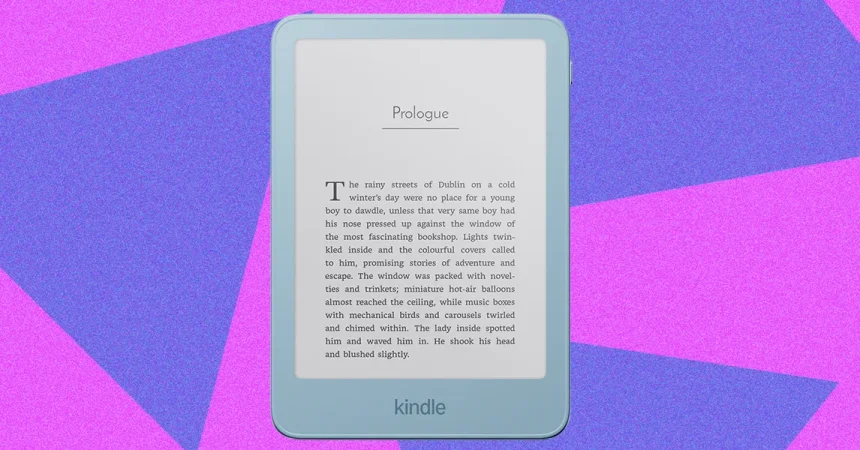
Amazon seems to have looked at Apple’s iPhone playbook and decided that the Kindle should get the same treatment. You know the drill: every couple of years, Apple releases a new iPhone that looks almost exactly like the old one, but with a slightly different camera arrangement or a new shade of blue, and millions of people convince themselves that the upgrade is necessary. Amazon appears to want that same energy for its e-readers. The idea is that you’ll see a new Kindle in a pretty color, feel that familiar itch of desire, and decide that your old model—which still works perfectly fine, by the way—is suddenly obsolete. It’s a clever strategy, because the Kindle has a much lower cost of entry than a smartphone. But that lower price tag comes with a catch: a smartphone is a pocket computer, a camera, a music player, a navigation device, and a communication hub all in one. A Kindle is an e-reader. That’s it. It shows you books. It does that one thing very well, but it doesn’t have a dozen other features to justify the constant upgrade cycle. So when Amazon releases a new Kindle that is essentially the same device with a new finish, you have to ask yourself whether you’re actually getting an upgrade or just being nudged toward a purchase you don’t need.
Let’s be fair, though: this new Kindle isn’t a totally pointless refresh. It opens books faster, which is one of those small quality-of-life improvements that you don’t appreciate until you’ve experienced it. The front light is also slightly warmer than before, though it’s still not truly warm in the way that the Paperwhite’s adjustable warmth is. And it doubles the storage of the previous model, so you can pack more books onto the device without worrying about running out of space. Those are legitimate improvements, especially if you’re coming from an older Kindle that’s starting to feel sluggish. But here’s where the comparison to the newer Kindle Scribe gets interesting. Amazon isn’t giving this Kindle the new homepage experience that the Scribe models received. You won’t get the same redesigned interface that makes it easier to jump back into your reading. Instead, you’re getting two AI-powered features that are also coming to the Scribes: Story So Far, which gives you a quick recap of where you left off in a story, and Ask This Book, which is coming soon and will let you ask questions about the book you’re reading. That’s nice in theory, but it’s a pretty thin list of new tricks for a device that’s supposed to make you want to upgrade. You’re also not getting the auto-adjusting light that the aluminum versions of the Paperwhite and Colorsoft will have. That feature is genuinely useful because it means the screen brightness adjusts to your surroundings without you having to fiddle with settings. Its absence here feels like a deliberate choice to push you toward the more expensive models.
The accessory situation makes the decision even more confusing. Amazon is introducing a new Kindle Page Turn Cover that costs $80 and gives you physical page-turn buttons on the device itself. For people who like to read one-handed or who find tapping the screen annoying, that sounds like a wonderful accessory. But here’s the kicker: the new Page Turn Cover will only be compatible with the Paperwhite and Colorsoft Signature Editions. The 2026 Kindle Aluminum—the very device that Amazon seems to be pushing as the shiny new thing—won’t work with it. Neither will the cheaper plastic version. So if you buy this new Kindle, you’re locked out of the most interesting accessory that Amazon is launching alongside it. You can still use the Kindle Click remote, which costs $35 and lets you turn pages from a distance, but that’s not quite the same as having buttons right on the device. This is a strange move, because it means the headline Kindle of this generation is actually the least compatible with the new ecosystem. It’s hard not to see this as a deliberate nudge: buy the Signature Editions if you want the full experience. The basic Kindle, despite its pretty new look, is being treated as the entry-level option, and the accessory lineup makes that painfully clear.
So who is this Kindle actually for? It’s a good Christmas gift for someone who already has everything, or for a person who has been holding onto an ancient Kindle for years and is finally ready to upgrade because the battery dies in two hours and the screen is cracked. If that sounds like you, then this new model will feel like a revelation. The faster page turns, the extra storage, and the slightly better light will all be noticeable improvements over whatever dusty old e-reader you’ve been dragging around. But if you already own a 2024 Kindle or even a moderately recent model, there’s very little here to tempt you. You might want to wait and see if the Paperwhite or Colorsoft Signature Editions are the better choice, especially since those are the models that will support the new Page Turn Cover. The Signature Editions are more expensive, sure, but they come with the auto-adjusting light, the better accessory support, and the kind of premium feel that makes the price difference feel justified. Meanwhile, the plastic Ube version of the Kindle—the one with the pretty purple color—will cost between $20 and $40 less than the aluminum model, depending on whether you want ads on your lockscreen. That’s a significant savings, and for most people, the plastic body is completely fine. You’re giving up half the storage, dropping from 32 GB to 16 GB, but realistically, how many books do you need on your device at once? Probably not that many.
Let’s talk about money, because this is where things get a little uncomfortable. Amazon is asking almost $200 for this new basic Kindle. That’s a much higher price than basic Kindles used to cost. For years, the entry-level Kindle was the budget option, the thing you bought for $80 or $90 when you wanted a cheap way to read without staring at your phone. Those days are gone. The new model, even the plastic version, is priced like a midrange gadget, not an impulse buy. And while the aluminum build is nice, and the new colors are lovely, you have to wonder whether the premium is really about the materials or just about Amazon’s desire to make more money off a device that hasn’t fundamentally changed in years. The value proposition is murky. If you’re someone who reads voraciously and uses your Kindle every single day, spending $200 on a device that will last you years might be completely reasonable. But if you’re a casual reader, or if you already have a Kindle that works, it’s hard to justify spending that kind of money for a slightly faster page turn and a marginally warmer light. Hopefully, we’ll see these Kindles on sale for Black Friday, but I wouldn’t hold my breath for any particularly good deals this year. Supply chain issues, inflation, and the general economic climate have made discounts less generous across the board, and Amazon knows that the Kindle has a loyal fanbase that will buy it anyway.
At the end of the day, this isn’t a bad Kindle. It’s actually a very good one. It’s pretty, it’s fast enough, and it does exactly what an e-reader is supposed to do: it gets out of the way and lets you read. The problem is that Amazon is trying to sell it to you as an exciting upgrade when it’s really just a small step forward. The iPhone comparison is telling, because with a smartphone, the upgrade cycle makes sense—you’re getting a better camera, a faster processor, new software features, and improved battery life every couple of years. With a Kindle, the core experience hasn’t changed in over a decade. You’re still reading text on an e-ink screen. The magic of the Kindle was never about the hardware; it was about the simplicity of having an entire library in your pocket, free from notifications and distractions. That magic is still here, and this new Kindle delivers it beautifully. But you don’t need to buy a new Kindle to rediscover it. Your old device will still do that. The best advice is to resist the hype, ignore the pretty colors, and think honestly about whether your current Kindle is actually holding you back. If it is, this new model is a lovely way to treat yourself. If it isn’t, put your wallet away and go read a book on the device you already own. That’s the most human response to a marketing campaign like this: not to chase the next shiny thing, but to appreciate what you already have.