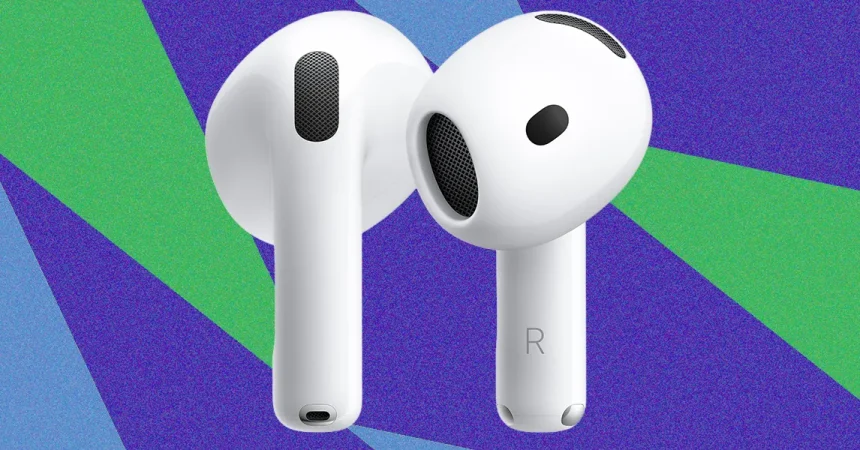
There is a quiet revolution happening in the world of wireless earbuds, and Apple just fired the loudest shot yet with the release of the AirPods 5. For years, the company has followed a predictable, almost cynical pattern: you could buy the basic AirPods for a reasonable price, but if you wanted the glorious relief of active noise cancellation (ANC), you had to shell out a hefty premium for the “Pro” model. That artificial divide has now been completely demolished. Both variants of the AirPods 5 now include ANC as a standard feature, not a luxury add-on. This is a massive strategic shift that recalibrates the entire market. For the first time, the $129 price point doesn’t feel like a compromise—it feels like a steal. It makes the older AirPods 4, which lacked this essential feature, feel hopelessly outdated. The message is clear: Apple is no longer rationing silence. The era of paying extra just to block out the drone of an airplane engine or the chatter of a busy office has ended. Instead, they’ve wrapped some of their most sophisticated audio technology into a product that is accessible to the average consumer. This move not only pressures Android competitors but also forces users to completely rethink their expectations of what a “standard” earbud can do. From the moment you open the polished white case, you’re greeted with a level of craftsmanship and acoustic intelligence that feels distinctly “Pro-like,” yet it’s all part of the baseline experience now. It’s a democratization of a premium feature, and it’s genuinely exciting.
Of course, including a feature is one thing; making it actually work well is another entirely. My initial skepticism about the ANC on a semi-open earbud—a design that lacks the physical seal of silicone tips—was quickly vanquished during a grueling domestic flight. The low-frequency rumble of the plane’s engines—that persistent, droning hum that makes you feel like you’re trapped inside a metal hive—was suppressed with startling efficiency. Apple claims that the AirPods 5 removes up to 50% more external noise than the previous-generation AirPods 4 with ANC, thanks to a redesigned multi-port acoustic architecture and improved audio processing. I cannot scientifically verify that exact percentage, but the empirical evidence during my testing was obvious. The cabin didn’t fall silent—that would be asking for a miracle given the open-ear design—but the noise was reduced to a faint, distant whisper. It’s the difference between sitting in a room with a loud, rattling fan and sitting in a room with a gentle breeze. The silence isn’t absolute, but it’s brilliantly managed. Compared to my memory of the AirPods 4 with ANC, the improvement is staggering; it felt like a whole generation of development packed into a single product cycle. You could actually listen to a podcast at a reasonable volume without cranking it to maximum just to overcome the engine noise. For everyday environments on the ground—a bustling café, a noisy subway platform, or an open-plan office—the AirPods 5 create a protective bubble of personal space. The background chatter fades into a pleasant murmur rather than an intrusive assault on your concentration. It’s a quiet revolution, literally.
What truly sets the AirPods 5 apart, however, is not just the raw power of the ANC, but how elegantly it interacts with Transparency mode. Apple’s Adaptive Audio feature has existed in some form before, but it feels significantly more mature, intuitive, and almost sentient here. The earbuds are constantly listening, not to your music, but to your environment, and they adjust the sound profile in real-time. I experienced this most vividly on a morning run through a city park. A jogger approaching from behind initially triggered the ANC to intensify, but as they drew closer, the algorithm smoothly lowered the volume of my music and allowed the external sound—footsteps, breathing, the rustling of leaves—to bleed through the mix. It feels less like a switch being flipped and more like the music is physically receding into the background to make way for the real world, only to swell back to the forefront once the person passes. This is not a jarring, robotic transition; it’s a fluid, almost organic change that you notice only in hindsight. It’s the closest I’ve ever felt to having a set of earbuds that truly understands the context of my life. For commuters who need to hear approaching traffic, for parents who want to monitor a child while listening to a podcast, or for office workers who need to hear a colleague call their name, this feature is a godsend. The semi-open ear design inherently allows for a more natural soundstage, but Adaptive Audio takes it a step further, blending the digital and physical worlds so seamlessly that you genuinely forget you’re wearing anything at all. You remain fully present in your surroundings without being distracted by every niggling little noise around you.
However, in my experience, there is no such thing as a perfect earbud, and the AirPods 5’s greatest strength—their uncluttered, open-air fit—becomes their Achilles’ heel in certain high-stakes situations. I have to admit, I am a bit of a convert to the silicone-tipped world of the AirPods Pro 3. The Pro 3 creates a snug, hermetic seal that feels confiding yet never makes your ears feel clogged or suffocated, thanks to the interchangeable tip sizes. That seal is everything when you’re working out. During a high-intensity interval session, a sweaty long-distance run, or even an aggressive gym session, the AirPods 5 have a tendency to slowly migrate out of your ear canal. It starts as a subtle slippage—you notice the bass response thinning out as the acoustic seal breaks—but it quickly progresses into a constant, annoying push-back ritual. I found myself repeatedly pausing mid-exercise to press them back in, which completely breaks the flow and rhythm of a workout. The Pros, on the other hand, stayed rock-solid in my experience. Their secure fit naturally anchors them in place, and by maintaining that physical seal, they passively block out a significant amount of noise before the ANC even kicks in. This is the fundamental trade-off. The AirPods 5 offer a featherweight, “barely there” feeling that is undeniably comfortable for hours of listening, but they sacrifice stability and passive isolation for that delicate, airy feel. You have to decide what matters more to you: the sensation of weightlessness or the confidence that they won’t fall out when you start sweating.
So, who are these AirPods 5 actually for? The answer is wonderfully nuanced. They are the perfect companions for the city walker, the dog owner, the cyclist, or the office worker who despises the feeling of being “plugged up” all day. They are for people who value situational awareness just as much as they value sound quality. If you’re frequently in environments where you need to hear a car horn, an announcement, or a spoken word, the open-ear design is not a bug—it’s a highly deliberate feature. The open architecture also means your ears remain aerated, avoiding the uncomfortable pressure build-up that can occur during long listening sessions with deeply inserted tips. But for the gym rat, the frequent business traveler, the commuter who wants total silence from the roaring subway, or the audiophile who wants to isolate every nuance of a song, the AirPods Pro 3 remain the superior choice. The choice isn’t about which is objectively better; it’s about which aligns with your daily reality. I found myself switching back and forth between them during my testing period. In a quiet cafe, the 5s were perfect—light, spacious, and unobtrusive. On a stuffy, noisy bus, I desperately craved the secure seal of the Pros. This isn’t a flaw in the AirPods 5; it’s a brilliant diversification strategy from Apple. They aren’t telling you that one is better than the other. Instead, they are offering two distinct philosophies of listening, and empowering you to choose the one that matches your lifestyle.
In the end, the AirPods 5 represent a significant maturation of Apple’s audio lineup, and they are a monumental step forward in accessibility. They bring premium, adaptive noise control technology down to a price point that will make the current AirPods 4s seem like a historical artifact. They are a phenomenal all-rounder: supremely comfortable for all-day wear, with an adaptive noise control system that is genuinely intelligent and a live translation feature that feels like science fiction come to life. Yes, they have their limitations—the inevitable slippage during sweaty workouts and a lack of ultimate isolation compared to the Pros are the most notable. But these are the inherent consequences of the semi-open design philosophy, not signs of manufacturing shortcuts or cost-cutting. At their sub-$150 price point, they are arguably the best value in the entire AirPods family. If you’ve been sitting on the sidelines, hesitant about the cost or disappointed by the lack of ANC in past models, the AirPods 5 are the definitive moment to jump in. They prove, beyond any doubt, that you don’t need to spend a fortune to get a premium, thoughtful listening experience. The absolute peak of isolation and stability still rightfully belongs to the Pros, but for the vast majority of people—the commuters, the walkers, the content consumers, and the listeners who just want a little peace in a chaotic world—the AirPods 5 are not just a compromise. They are the perfect sweet spot, and a revelation for your ears.