Google has been making waves in the wearable world with some pretty bold experiments, but for people who actually like looking at a screen on their wrist, the last few years have felt a little stale. The screenless Fitbit Air grabbed headlines with its radically minimal, display-free design, but it clearly wasn’t for everyone. Meanwhile, the trusty Fitbit Charge 6, the last display-equipped tracker worth talking about, has quietly sat on shelves for three years without a refresh. And it’s starting to show its age. No newer automatic workout detection, no deeper wellness metrics, no IP68 rating to shrug off a dunk in the pool. If you wanted a Fitbit with a screen that didn’t feel like a relic, you were basically out of luck. That’s exactly the void the new Fitbit Edge is designed to fill. Announced on Monday, the Edge is the successor that fans of the classic Fitbit tracker have been waiting for, and it lands in a surprisingly sweet spot. At $180, it’s noticeably cheaper than a Google Pixel Watch, yet it promises a similar high-end experience in a much slimmer, more athletic package. It also fixes one of the biggest frustrations with Google’s own smartwatch: compatibility. Unlike the Pixel Watch, the Edge works with both Android and iPhone through the Google Health app, which makes it instantly more appealing to a much wider audience. Preorders are already open, and the device officially goes on sale on October 27, just in time for anyone looking to upgrade their fitness setup before the holiday season kicks into high gear.
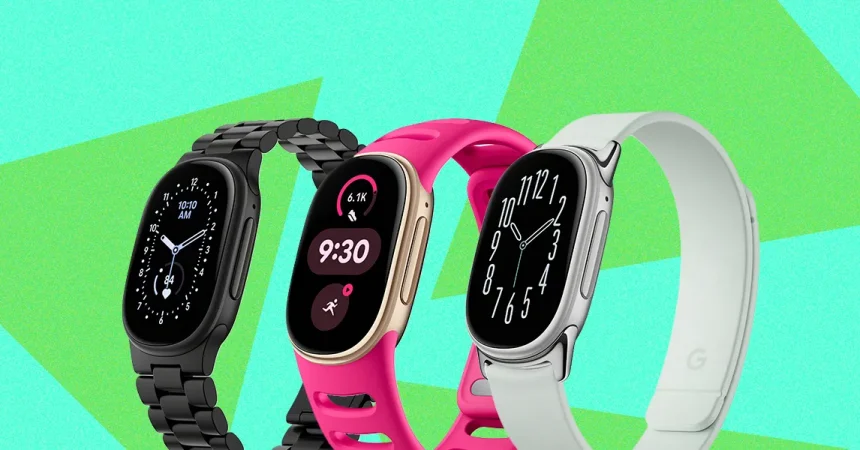
Let’s talk design, because this is where the Edge really wins over people who’ve been wrestling with the modern smartwatch shape. The Pixel Watch, with its round, polished face, is a beautiful device, but it can feel overwhelmingly bulky on smaller wrists, especially if you’re used to the slim, unobtrusive feel of a dedicated fitness band. The Edge takes a different approach, going with a capsule-shaped body that hugs the wrist more naturally and feels far less like you’re strapping a miniature smart TV to your arm. It’s a shape that says “fitness first,” but it doesn’t look cheap or clunky. Google has clearly put thought into the materials and finish, and the whole thing feels like a premium piece of kit rather than a plastic step-counter. The display also gets a meaningful upgrade. The Charge 6’s 1.04-inch screen always felt a little cramped, especially when you’re trying to read your stats mid-sprint or in bright sunlight. The Edge bumps that up to a larger 1.34-inch display, and the difference is immediately obvious. That extra real estate isn’t just about aesthetics; it means bigger numbers, clearer maps, and more glanceable metrics when you’re gasping for air during a workout. You can see what you need to see without squinting or pausing your run. For anyone who has ever felt that Fitbit was a little behind on screen quality, this is a welcome leap forward, and it’s the kind of upgrade that makes the Charge 6 feel positively ancient in comparison.
One of the most exciting surprises is that the Fitbit Edge has a user-replaceable battery. This is a first for Fitbit, and it’s a huge deal for anyone who has ever had to retire a perfectly good wearable because the battery inside it eventually gave up and became impossible to swap. In recent years, Google has been making an effort to improve repairability across its hardware lineup, most notably with the Pixel Watch, and the Edge continues that trend. It’s also a smart move ahead of new European Union battery regulations that are set to come into force next year, which will require devices to be more repairable and replaceable. That kind of regulatory pressure is long overdue, and it’s nice to see a mainstream fitness tracker embracing it rather than fighting it. Of course, the actual repair options will vary depending on where you live and what services are available, so not everyone is going to get the same level of support right out of the gate. But the fact that the conversation is even happening is a win for consumers. A replaceable battery means you’re not throwing the whole device into a landfill when the battery degrades after a couple of years. It means you can keep using the same tracker, the same bands, the same cherished little streak data, long after the initial buzz of the purchase has faded. In a world where so many gadgets are intentionally sealed shut, this feels refreshingly honest.
Beyond the design and repairability, the Edge borrows some serious hardware from Google’s premium Pixel Watch lineup, and that’s where the real magic happens. One of the biggest additions is an altimeter, which uses atmospheric pressure to measure changes in elevation. That might sound like a boring technical spec, but it has a very real impact on how you experience your outdoor activities. With an altimeter, your tracker can accurately record elevation gain and loss during hikes, trail runs, and mountain bike rides. It can count the floors you climb during the day, even when you’re just taking the stairs in an office building. More importantly, it adds real context to your stats, so instead of just telling you that you went for a run, it can show you how much vertical terrain you conquered, which changes the story entirely. For anyone who trains in hilly areas or enjoys outdoor adventures, this is the kind of feature that turns a decent fitness tracker into an indispensable training partner. The Edge also includes a far-field skin temperature sensor, which is a step up from the standard device temperature sensor used in other Fitbits. The difference is subtle but important: a far-field sensor is designed to measure your skin’s temperature more consistently and accurately, even as external conditions change. That data can help you understand recovery, detect early signs of illness, or simply notice patterns in how your body responds to stress and sleep. It’s advanced health tracking that used to be reserved for much more expensive smartwatches, and now it’s sitting inside a $180 fitness-first wearable.
What really makes the Fitbit Edge special is how it balances all these advanced features with genuine accessibility. Google has been pushing hard to make its Pixel Watch the go-to wearable for Android users, but that approach always left iPhone owners out in the cold. The Edge breaks down that wall. By offering compatibility with both Android and iOS through the Google Health app, Google is acknowledging that not everyone wants to switch their entire phone ecosystem just to wear a decent fitness tracker. This is a huge deal for the Fitbit community, which has always been a mix of Android and iPhone users. You no longer have to choose between your phone preference and your wrist-wear preferences; they can coexist peacefully. That “middle-ground” positioning also feels like a smart business move. The Pixel Watch is arguably a great smartwatch, but it’s also a luxury item with a luxury price tag. The Edge, by contrast, is for people who want the tracking chops, the health sensors, and the modern display without paying for a full smartwatch experience they may never use. There’s no need for app-heavy everyday wear when you really just want something that can keep up with your training, monitor your sleep, and tell you how many floors you’ve climbed. It’s a fitness-first device, and it doesn’t try to be anything else. That focus is refreshing, especially in a market where every new wearable seems to be trying to replace your phone, your wallet, and your entire wardrobe.
At the end of the day, the Fitbit Edge feels like a product Google has been building toward for a long time. It takes everything people loved about the classic Fitbit line—the comfortable design, the focused fitness tracking, the reliable battery life—and brings it into the modern era with a sharper screen, smarter sensors, and a repairability ethos that actually respects the buyer. It’s not trying to be a full smartwatch, and that’s precisely why it succeeds. The Edge is for the person who wants more than a simple step counter but doesn’t want to strapped to their notifications all day. It’s for the hiker who wants elevation data, the gym-goer who wants a clear view of their workout stats, and the everyday user who wants a tracker that will still be running strong years down the road. The fact that it’s $180, while offering so much of what makes the Pixel Watch compelling, makes it an incredibly easy recommendation. It also doesn’t hurt that the Edge comes in a sleek Obsidian finish with a variety of bands to match your style, from the sporty Active Band to the more polished Magnet Band and the rugged Performance Loop Band. Preorders are live now, and the official launch is October 27. If you’ve been holding out for a Fitbit that finally feels like a true successor to the Charge line, this is almost certainly the one. It’s a little bit smarter, a little bit more repairable, and a whole lot more human—a reminder that the best wearables aren’t necessarily the most powerful, but the ones you actually want to wear every day.