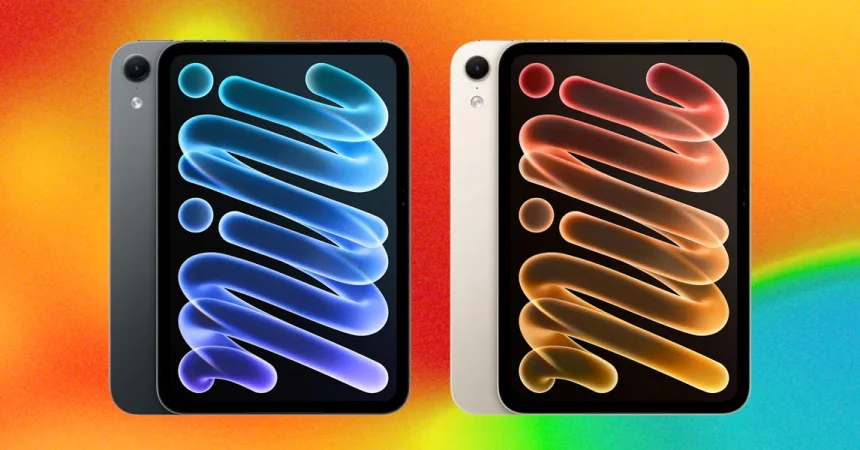
The new iPad Mini doesn’t announce itself with a flashy redesign. It arrives quietly, the same familiar rounded slab, and only when you turn it on does the change hit you. The star attraction is the 8.5-inch display, which sounds like a minor bump over the previous size. But the real leap is the move from IPS to OLED, and not just any OLED. This is a Tandem OLED Super Retina XDR panel, sharing the same basic architecture as the iPad Pro. It lacks the Pro’s 120Hz ProMotion refresh rate, and its brightness maxes out at 600 nits in SDR and 1,200 nits in HDR—400 nits below the Pro. If you keep score by spec sheets, that might seem like a compromise. In practice, the screen is more than capable. It lands somewhere near the M6 MacBook Pro (the Mini-LED one, not the OLED model), which is a solid place to be. Colors feel rich without becoming cartoonish; blacks are genuinely deep; and the extra real estate, though small, makes reading articles or annotating documents a little more comfortable. The overall size of the device is barely bigger than before, which means you get a slightly larger canvas without having to stretch your hands. And because it’s OLED, there’s no backlight bleeding around the edges at night. Everything feels more precise, more like a printed object than a glowing piece of plastic. You don’t need to be a display snob to notice the difference. You just open a photo, tilt the screen, and realize how much more alive the image looks.
But here’s where the iPad Mini gets genuinely special: the nano-texture display. For an extra $100, Apple gives you a surface that isn’t a typical antireflective coating or a simple matte layer. The glass is actually etched, so it scatters outside light rather than reflecting it straight back at you. The result is almost magical. It doesn’t dull the image or add that grainy haze you get from cheap matte screen protectors. Instead, it diffuses glare while preserving perceived brightness, and the text somehow gains a paperlike crispness. Reading outside with the Mini becomes a real pleasure. You can sit in direct sunlight, hold the screen at any angle, and still see what’s on it without squinting or contorting your body. It’s a strange, tactile thing: run your finger across the surface and it feels smooth, not rough, yet visually it behaves like the pages of a fine book. This option is already available on the MacBook Pro and iPad Pro, and there’s still nothing else like it in the industry. Some people will balk at paying $100 for what sounds like a fancy screen treatment, but for anyone who uses the Mini as a travel companion, a reading device, or an outdoor sketchbook, it’s the upgrade that changes how the device feels in your hand. It transforms a very good display into one that seems to absorb sunlight and turn it into clarity. The lack of a 120Hz refresh rate is less noticeable than you’d expect, especially if you’re not constantly switching between the Mini and a Pro model. And the brightness, while not class-leading, is more than enough for most real-world situations. The nano-texture display doesn’t just reduce glare; it makes you forget the screen is there at all. That’s a rare thing in a world of glossy, reflective tablets.
The sharpness is another triumph, and it’s one of those specs that actually means something when you hold the device in your hands. Because the Mini is smaller than its siblings, it packs about 19 percent higher pixel density than every other iPad. That number might sound like marketing jargon, but when you hold the screen close—which you inevitably do—the text looks as if it’s printed rather than rendered. Icons have crisp edges, small fonts are effortless to read, and photos look almost like physical prints. There’s a reason why the Mini has always been a favorite among people who read a lot: it combines that density with a truly portable shape. And this new version weighs barely over half a pound, so in the hand it feels closer to a large phone than a full tablet. Holding it one-handed for long stretches is completely natural. It doesn’t dig into your wrist, and it doesn’t fatigue your arm the way a heavier iPad Pro can. That lightness isn’t just a comfort issue; it changes how you use the device. You’ll pick it up to check a message, then realize an hour later that you’ve been reading an article, scrolling through comics, or scribbling notes without ever feeling the urge to put it down. The previous Mini already had this quality, but the latest model leans into it even more. It feels less like a gadget and more like a trusty notebook you keep within reach. Part of the magic is that it doesn’t demand attention. It sits quietly on a table, and when you pick it up, it adapts to you, not the other way around.
The design choices around the Mini also reflect a more mature, understated personality. Apple has pared the color options down from four to just two: the warm, champagne-ish Starlight and the new dark navy-ish Midnight. That’s it. If you loved the playful Blue or Purple of earlier Minis, they’re gone, and so is Space Gray. It’s easy to mourn the fun colors, but for a device that starts at $700, the more professional palette makes sense. Midnight is the finish borrowed from the MacBook Air, and it looks sleek and unobtrusive, the kind of shade that fits in a boardroom or a coffee shop without shouting. Starlight is still there for anyone who wants a little warmth. More choices would obviously be welcome, and it’s hard not to wish Apple had kept one or two brighter options for people who like a bit of personality in their tech. But there’s also a quiet confidence in a product that knows exactly what it wants to be. This is a serious tool with a price to match, not a toy for experimenting with rainbow finishes. The deeper blue-black also hides fingerprints well, which is a practical advantage for a device that’s going to be held constantly. And the build quality is as solid as ever, with an aluminum body that feels cool and dense in the hand. In a way, the restrained colors are a signal: the iPad Mini has grown up. It’s no longer the playful little brother of the iPad lineup; it’s a refined, premium companion for people who want the best in a small package.
Apple also completely redesigned the four-speaker sound system, and this is where the engineering gets wonderfully strange. To make the Mini IP67 water-resistant, Apple had to eliminate the speaker grilles along the sides, creating a fully sealed enclosure. Instead, the tweeters now sit behind two small slits at the edges of the display glass, while the bass drivers are built directly into the display itself. Apple calls it an Acoustic Display, which is a lovely phrase for a bizarre idea: the whole screen becomes part of the speaker system. In portrait orientation, the stereo image is full and spacious, provided you don’t cover the display with your fingers. That last part takes some getting used to, because our instinct when holding a small tablet is to wrap our thumbs around the bezels. When you do, you can muffle the sound a bit. The vibration from the bass drivers is subtle enough to ignore unless you’re blasting music at maximum volume, at which point you’ll feel the entire device humming gently in your hands. That’s a fair trade for the peace of mind that comes with water resistance, especially if you like to read by the pool or watch videos in the kitchen. The audio quality itself is decent for something this small. Voices are clear, instruments separate nicely, and there’s enough low-end to keep a podcast or a movie from sounding tinny. But it won’t outgun an iPad Air or a MacBook Air, and it certainly won’t replace a dedicated speaker. It’s fine for YouTube, a long flight, or a late-night movie, and it’s especially fine when you’re holding the device in your hands, because the sound seems to come from the screen itself. It’s not a concert hall, but it doesn’t need to be. It’s a personal bubble, and for a device this small, that’s exactly the right goal.
So what is the new iPad Mini, ultimately? It’s not a laptop replacement, and it’s not trying to be. It’s a personal, almost intimate device—a premium little window into your apps, books, shows, and scribbles. The display is the star, especially with the nano-texture option, and the combination of OLED contrast, brightness, and pixel density makes every interface feel like a printed page. The lightness invites you to carry it everywhere, one-handed, no bag, no fuss. The sealed design and water resistance make it a better travel companion than ever, and the clever speaker setup, while quirky, is good enough for everyday entertainment. There are still compromises, of course. The price is high, especially when you add the nano-texture upgrade. The refresh rate isn’t the silky 120Hz of the Pro, and the speaker vibration might make you lower the volume from time to time. But none of these things ruin the experience. In fact, they almost add to the charm. This is a device that doesn’t beg to be noticed. It doesn’t try to be the most powerful computer you own. Instead, it waits for you to pick it up, and then it makes you want to keep holding it. Whether you’re curled up on the couch with a book, sitting in the sun with a coffee, or standing on a crowded train with one hand on the rail, the iPad Mini is the kind of device that disappears into the moment. It’s a small luxury, but that might be exactly what makes it so appealing. If you’ve ever wanted an iPad you can genuinely forget in your hands, this is the one.