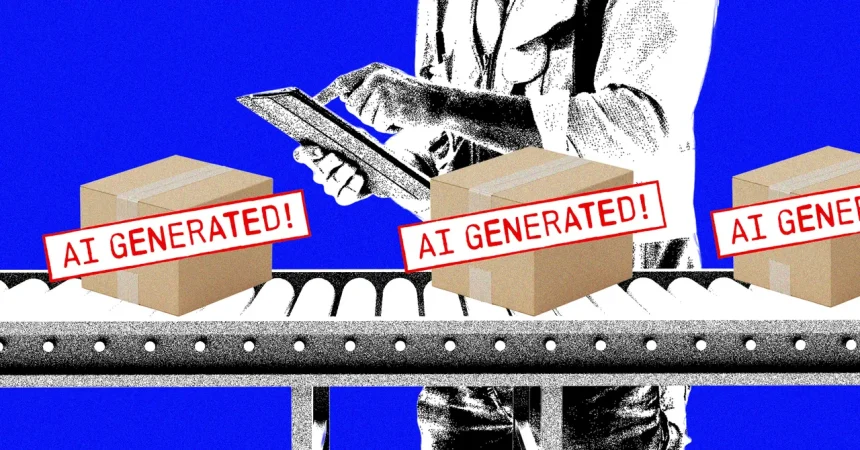
The rapid integration of generative AI into our digital lives has sparked a profound, visceral sense of powerlessness. For many, the turning point arrives when they discover their personal data—or even their likeness—has been co-opted without permission to train opaque models. This realization often leads to a “tech-burnout” fantasy: the dream of escaping the hyper-connected, algorithmically driven world for a simpler, analog existence. Whether it’s an intrusive deepfake feature on Instagram or a cluttered Google search page, the feeling of having our digital spaces invaded by unasked-for automation is universal. We are no longer just users of technology; we are the unwilling raw material fueling a revolution that many of us never signed up for, leaving us to wonder if the convenience of these tools is worth the erosion of our digital autonomy.
This sentiment is far from an outlier; it has become a defining cultural tension of our time. Research suggests that the more familiar the public becomes with generative AI, the more skeptical and resentful they grow toward it. This is particularly striking among younger generations, who are arguably the most tech-literate, yet increasingly view these developments as a net negative for society. Experts like Meredith Broussard have noted that the “AI revolution” feels like an experiment being conducted upon the public rather than a service provided for them. When technology is force-fed into every app and interface, the initial novelty wears off, replaced by a deep-seated frustration with companies that prioritize rapid deployment over human-centric design.
The core of this rebellion is a fundamental breakdown of consent. For years, users operated under the assumption that their social media interactions or search queries were private exchanges or creative outlets, not fodder for massive data-scraping operations. When generative AI features were suddenly “stuffed” into our software, it felt less like innovation and more like a violation. This lack of agency is particularly grating because tech companies have a historically poor track record regarding the protection of marginalized communities. When the same patterns of exploitation are scaled up by AI, it feels like an intensification of old problems, where individual agency is sacrificed at the altar of corporate scalability.
However, the tide is beginning to turn, as public pushback is proving to be an unexpectedly effective mechanism for corporate accountability. Companies are noticing that the “move fast and break things” philosophy is losing its luster; consequently, we are seeing a strange pivot where platforms like LinkedIn, Snapchat, and Substack are introducing tools specifically designed to identify or mitigate AI “slop.” When users speak up—as they did recently when Meta quickly retracted a controversial deepfake feature following a massive outcry—companies are forced to recalculate. This shift demonstrates that the public is not just a passive consumer base; when mobilized, they possess the power to force corporations to pull back from features that feel invasive or low-quality.
The rejection of AI is also manifesting in a cultural pushback against the “artificiality” of modern advertising. When global brands like Coca-Cola or local businesses use soulless, generated imagery, the response is increasingly one of distaste rather than engagement. People are beginning to crave the human touch, showing a preference for art, writing, and design that is clearly the product of human effort. This reaction isn’t just about aesthetics; it is a moral stance. By favoring human-made content over AI-generated alternatives, the public is drawing a line in the sand, signaling that they value the intentionality and personality that algorithms simply cannot replicate.
Finally, the protest against AI has moved from the digital sphere into the physical world, focusing on the environmental and economic infrastructure that keeps these models running. The construction of massive data centers—which consume vast amounts of electricity and water—has become a flashpoint for bipartisan concern. People are increasingly questioning the real-world cost of a “smart” search result or an AI-generated image. By organizing against these facilities, communities are successfully grounding the abstract concept of AI into physical reality, highlighting the tangible damage that the digital boom can cause. Ultimately, the current backlash is a healthy, necessary reaction—a collective effort to reclaim our consent, our environment, and our human relevance in an increasingly automated world.