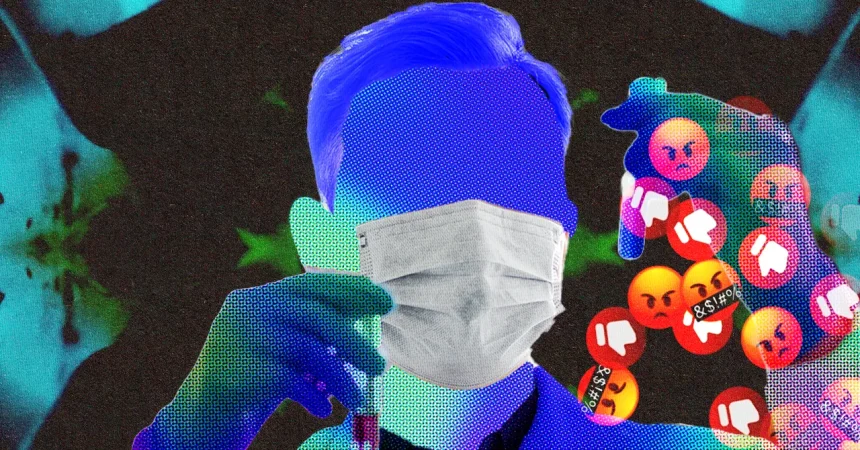
The story of Myco, a 38-year-old Boston native now living in Puerto Rico, is a polarizing look at the underground world of psychedelic education. As an influential figure in the digital “pro-psychedelic” space, Myco found his operations disrupted when Patreon—the platform he relied on to fund his team—abruptly terminated his account. The company cited a strict policy against providing instructions for manufacturing controlled substances, marking a significant hurdle for a creator who frames his work not as drug promotion, but as scientific harm reduction. For Myco, the loss of this platform isn’t just a financial blow; it represents a clash between the institutional guardrails of modern technology and his personal mission to democratize chemistry. He remains determined to appeal the decision, arguing that his role is to educate, not to facilitate reckless behavior, even if his methods put him on the fringes of the law.
To understand Myco’s philosophy, one must look back to his formative experiences in 2002. Struggling with a deep, crushing depression following his parents’ divorce and the death of his uncle, Myco turned to DMT. He describes his experience with the substance as a “transformative” turning point where he felt he was able to communicate with his late uncle, receiving a sense of peace that would set him on his current path. Having studied microbiology in college, he quickly found that the existing online communities for chemistry and mycology were often unwelcoming to newcomers. Disillusioned by the “cliquish” gatekeeping he encountered on forums like the Shroomery and Mycotopia, he sought to create a more accessible, open-source space for those interested in the craft. This desire for inclusivity would eventually lead him to abandon a lucrative career in the pharmaceutical industry to go public with his tutorials.
Myco’s rise to prominence began in 2014 when he uploaded his first instructional video on cultivating psilocybin mushrooms while wearing a gas mask. The response was immediate and overwhelming, as thousands of followers flocked to his content, eager to learn the techniques that were previously hidden behind academic jargon or obscure forum threads. By monetizing his tutorials through platforms like Patreon, he built a “Trip Team family,” positioning himself as a bridge between high-level laboratory chemistry and the curious “average Joe.” While his supporters hail him as a pioneer of radical self-sufficiency, his critics remain skeptical. They point out that his passion occasionally outpaces his technical rigor and that his penchant for secrecy leaves many of his claims difficult to verify, prompting a heated debate over whether he is a democratizing force or an irresponsible agitator.
The tension between Myco and regulatory bodies is escalating as he moves toward increasingly complex substances. While the mainstream medical establishment pushes for a sanitized, clinical path for psychedelics—regulated by doctors and guarded by high-cost trip-sitters—Myco is leaning hard in the opposite direction. He envisions a world where the knowledge of synthesis is decentralized and widely available, effectively stripping the “gatekeepers” of their power. His latest ambition, to bring the complex recipes of legendary chemists like Albert Hofmann and Sasha Shulgin to the screen, serves as a direct challenge to the establishment. By attempting to simplify these “hieroglyphic” chemical schematics for a lay audience, he is effectively trying to make high-stakes chemistry a household skill, a prospect that deeply alarms regulators and law enforcement.
Myco’s strategy for avoiding legal fallout has become as elaborate as the chemistry he teaches. He claims that in May 2024, he secured a partnership with a university laboratory in Pakistan, which he asserts has received government approval to produce psychedelics for legitimate research. By situating his work within the framework of scientific study, he hopes to create a layer of legitimacy that could insulate him from the consequences of his educational videos. Whether this international collaboration will actually provide the protection he expects, or if it will only serve to draw more scrutiny from authorities, remains to be seen. It is a high-stakes gamble that highlights his willingness to break the law in pursuit of what he calls “psychedelic history.”
Ultimately, the controversy surrounding Myco highlights a broader societal tension as hallucinogens inch closer to becoming a part of mainstream medicine. We are currently witnessing a tug-of-war between those who want to integrate these substances into a controlled, professionalized clinical environment and those like Myco who are committed to a DIY, grassroots revolution. His journey from a depressed college student to a renegade chemist captures the complexity of a movement that is as much about human agency and self-exploration as it is about chemistry. While society grapples with how to regulate substances that have historically been banned, Myco remains at the center of the storm, challenging us to decide whether the knowledge of how to change one’s consciousness should be a guarded secret of the elite or a piece of public information available to everyone.