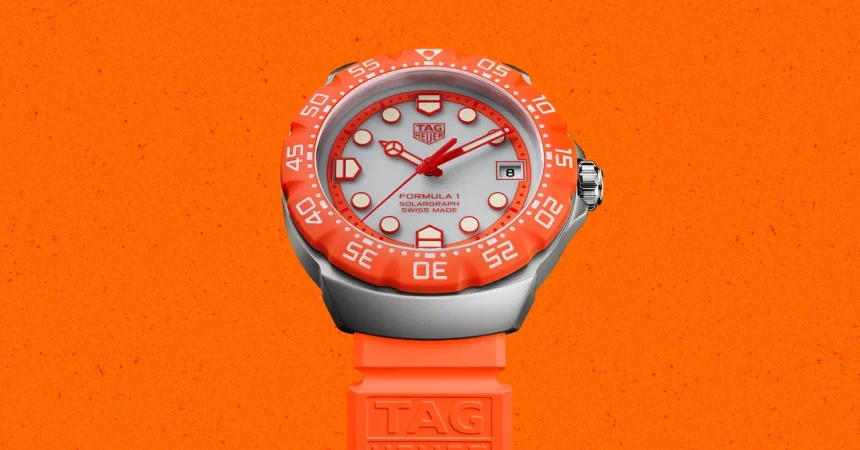
The TAG Heuer Formula 1—or just the “F1,” as fans affectionately call it—is more than just a timepiece; it is a vivid, plastic-cased time capsule from the 1980s that refuses to go out of style. While the modern versions of this watch are sleek and sophisticated, they have intentionally left behind one of the most curious quirks of the originals: the V-shaped grooves molded into the bottom of the rubber straps. Back in the day, these straps were intentionally oversized, designed to be worn over the thick neoprene of a wetsuit. Those grooves were essentially guide marks for a pair of scissors, allowing surfers and divers to trim the excess rubber for a perfect fit on their bare wrists. The fact that these markings are gone from the new collection serves as a quiet reminder from TAG Heuer: please, keep your scissors in the drawer.
My personal obsession with the F1 began years ago, but it wasn’t until recently that I finally managed to track down an original orange WA1213 model for my own collection. There is something intoxicating about the way those vintage pieces pop; they don’t look like serious luxury tools, which is exactly why they are so captivating. This aesthetic wasn’t an accident. Eddy Burgener, the visionary behind the original F1 design, has been vocal about the fact that these watches weren’t actually intended to be the “Formula 1” racing icons we think of today. Instead, they were designed for the sun-drenched beaches of the eighties, inspired by the neon surfboards and vibrant apparel that defined the youth culture of the era.
It is fascinating to realize that the Formula 1 was, at its inception, a “surf watch” rather than a “car watch.” In an interview with Hodinkee, Burgener explained that the brief was to capture the energy of American beach life. TAG was searching for a way to appeal to a younger, more active demographic—folks who spent their days in the waves rather than in the pits of a racetrack. The watch had to be fun, approachable, and impossible to miss. That mandate for “popping colors” actually drove the technological evolution of the watch; to achieve those specific, saturated hues, the designers had to abandon traditional stainless steel in favor of synthetic materials, a pivot that was considered quite risky for a Swiss watchmaker in the mid-eighties.
Developing a true diver’s watch out of plastic was a massive engineering hurdle at the time. The materials had to be light enough to be comfortable for active surfers but resilient enough to handle the pressures of the ocean. The solution was a clever composite, blending fiberglass and plastic to ensure the cases possessed the necessary hardness and structural stability. That “Arnite” thermoplastic material became the backbone of the original collection, providing a unique tactile feel that collectors still hunt for today. It was a bold experiment in material science that happened to result in one of the most successful commercial watch lines in history.
Looking at the new generation of solar-powered F1s, it is clear that the spirit of that innovation remains, even if the chemistry has evolved. The brand has moved away from the original Arnite, opting instead for a modern, eco-friendly alternative known as TH-Polylight. This castor-based polyamide represents a significant step forward in sustainability without sacrificing the lightweight durability that defined the eighties originals. By molding this new bioplastic over a steel inner core, TAG Heuer has managed to maintain the essential “toughness” of the original design while bringing the manufacturing process into the 21st century.
Ultimately, my own WA1213 remains a testament to the longevity of that original design philosophy. It is a 35mm splash of orange that feels just as relevant today as it did decades ago. While the modern, updated models are undoubtedly more refined and better for the planet, there is a certain charm in the original, with its long, scissor-ready strap and its bright, synthetic soul. Whether you are wearing it on a surfboard or just around the office, the TAG F1 remains a beautiful reminder that sometimes, the most serious watch brands are at their best when they decide to stop being serious and just have a little fun.