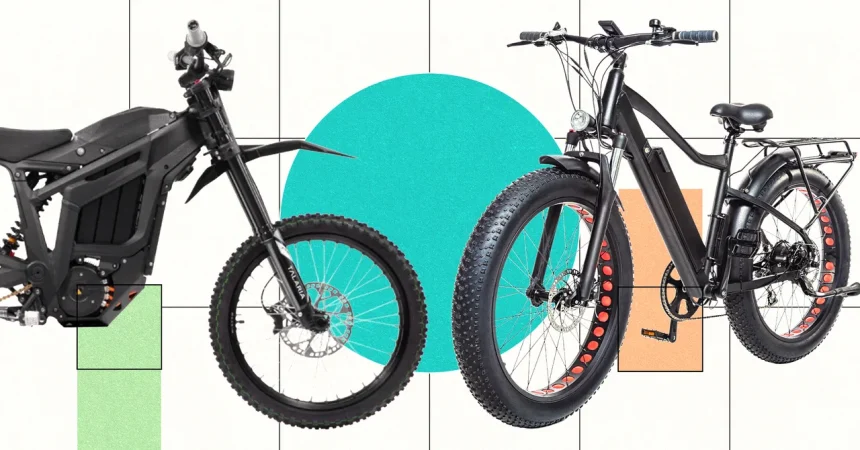
The world of electric bikes is a strange and contradictory place right now. On one hand, these machines are enjoying a massive surge in popularity; they’re getting people out of their cars, back onto two wheels, and allowing them to travel farther and faster than ever before with minimal physical effort. On the other hand, the industry itself is facing a serious slump, with sales dropping from their pandemic-era highs and many manufacturers struggling to stay afloat. Adding to the confusion, the very definition of what makes an “ebike” is becoming increasingly blurred, leading to a rise in injuries, new laws clamoring to control them, and a general sense of uncertainty among consumers. The heart of the problem isn’t just the technology, but the fact that most people—and sometimes even the lawmakers and retailers themselves—are having a hard time distinguishing between a simple, legal electric bicycle and a high-powered, off-road electric dirt bike that has no business being on the street.
This confusion is perfectly understandable. The market has exploded with a dizzying array of electric micromobility vehicles, and the lines between categories have been intentionally blurred by slick marketing and eager sellers. For the average person, it’s nearly impossible to tell the difference between a legal, pedal-assist ebike that tops out at 20 mph and a heavy-duty electric motorbike that can hit 40 mph or more. This isn’t just a matter of technicality; it has serious safety and legal implications. A prime example of this is when a 14-year-old sees an online ad for a powerful electric dirt bike, begs their parents to buy it, and within a week is tearing down a public street on a machine that can exceed highway speeds. They have no license, no training, no helmet, and a vehicle that is explicitly illegal for them to operate on public roads. The parent and the teen are both unaware that they’ve just purchased a vehicle, not a toy, and that the law considers them just as responsible as if they’d bought a 600cc motorcycle.
So, how do you make sense of it all? The best place to start is with the categories the industry and most state laws have established. For traditional electric bicycles, there are three distinct “classes” that define their capabilities and legal standing. Class 1 ebikes are the most straightforward. They are pedal-assist only, meaning the motor provides power only when you are pedaling, and it stops helping once you reach 20 miles per hour. This is the type of ebike that feels most like a regular bicycle, just with a helpful tailwind. Class 2 ebikes also have pedal assist and a top speed of 20 mph, but they also come with a throttle. This means you can cruise along at up to 20 mph without pedaling at all, giving you that effortless feel. Class 3 ebikes are the speedsters of the group. They are pedal-assist only, but their motors will keep helping you until you reach 28 mph. These are designed for speedier commutes and longer distances.
These three classes aren’t just arbitrary marketing labels; they form the backbone of ebike legislation in a large portion of the United States. Thirty-nine states have adopted this three-class system in their laws, which means they recognize the differences and apply specific rules to each. For the most part, the regulations are fairly straightforward and safety-focused. Typically, riders of faster Class 3 ebikes are required to wear a helmet and must be at least 16 years old. Some states have their own unique minimum age requirements for riding any ebike, which can range from 14 to 15 years old. Beyond these specific rules, however, ebikes are treated very much like standard bicycles. Riders are expected to obey the same traffic laws, use bike lanes when available, and follow the rules of the road just as they would on a traditional cycle.
One of the most significant points of confusion is licensing and registration. In most states, you do not need a driver’s license, a special permit, or a registration plate to ride an ebike. They are considered bicycles, not motor vehicles. But there are exceptions, which is why it’s so crucial to do your homework. As of 2026, for example, New Jersey and Alaska stand out. New Jersey requires all ebikes to be registered and licensed, and it even mandates insurance for Class 3 models. Alaska, on the other hand, has no statewide ebike laws at all, leaving regulations up to individual municipalities. In a place like Anchorage, you might find that any ebike with a motor that puts out more than 750 watts—which is powerful enough to hit speeds between 20 and 28 mph—is treated like a motor vehicle and requires a license to operate. These local quirks are exactly why a car or motorcycle dealer’s advice, or a manufacturer’s marketing, should never be your final source of truth before making a purchase.
The real danger lies in the products that sit firmly outside these three classes. When a vehicle has a motor that exceeds the power limits for a Class 3 ebike, or is designed to be ridden with a throttle at speeds well beyond 28 mph, it ceases to be an ebike in the eyes of the law. These are e-motos, electric motorcycles, or electric dirt bikes. They are not governed by bicycle laws but by the same regulations as their gas-powered counterparts. This means riders are required to have a valid motorcycle endorsement on their license, the vehicle must be registered and insured, and it must be equipped with proper safety features like headlights, taillights, and turn signals. More importantly, minors are absolutely not allowed to operate them on public streets, because they are legally considered full-fledged motor vehicles. The fact that they are electric and often sold in the same online marketplaces as ebikes creates a dangerous illusion that they are simply faster, more thrilling versions of the same thing. They are not. They are motorcycles, and they carry all the legal and safety baggage that comes with that label.
The takeaway for anyone interested in buying an electric bike is simple: be an informed consumer. Ignore the marketing hype and the salesperson’s pitch. Instead, dig into the specifics. Look at the motor’s wattage, the top speed, and whether it has a throttle. Determine if it fits into Class 1, 2, or 3, or if it’s actually an e-moto that should be treated as a motor vehicle. Most critically, research your local laws. A quick search of your city and state regulations will tell you everything you need to know about age restrictions, helmet requirements, and whether a license or registration is needed. Yes, an ebike can be the best, most joyful commute you’ll ever have, and a practical antidote to car-centric cities. But it’s not a toy. It’s a vehicle that shares the road with others, and like any vehicle, it demands respect, responsibility, and a clear understanding of the rules that govern it. By taking the time to learn the difference, you can ensure that your experience is not only fast and fun, but safe and, most importantly, legal.