Paragraph 1: The Fairphone Ethos and First Impressions
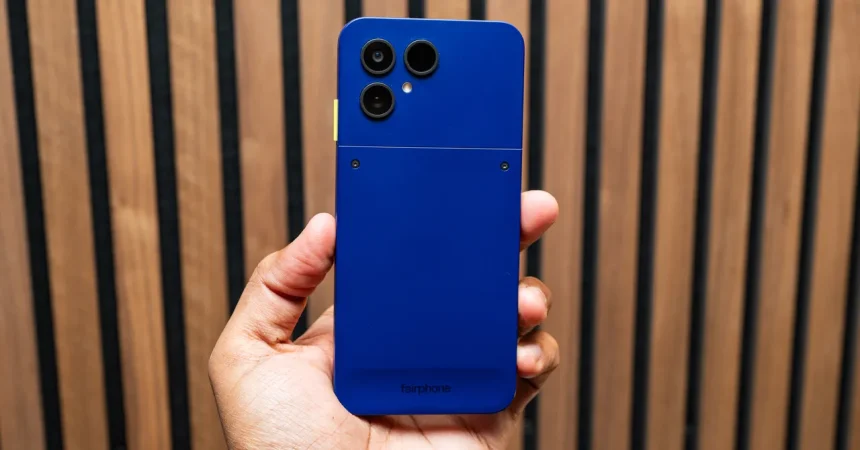
There’s something quietly subversive about the Fairphone. In a world where every flagship launch promises a thinner chassis, a more dazzling display, and a camera system that can allegedly see in the dark, Fairphone has always been the thoughtful, slightly nerdy kid in the corner, reminding everyone that our gadgets don’t have to cost the Earth. That philosophy hasn’t changed with the latest model. From the moment you slide it out of the box, you realize this is not just another smartphone; it’s a statement about longevity, repairability, and reducing e-waste. The packaging is minimalist, and yes, you might notice something missing: a USB-C cable. At first, that feels like a petty annoyance. You’ve just spent a good chunk of money on a phone, and they can’t even include a basic cord? But then the logic sinks in. Most of us have a tangled drawer full of old chargers and cables, and forcing another one into existence is exactly the kind of waste Fairphone is trying to avoid. It’s a small gesture, but it sets the tone: this is a phone for people who think about their stuff, who want to hold onto it longer, and who understand that sustainability sometimes means making do with what you already have. The phone itself doesn’t scream for attention. It’s not trying to be the most glamorous device on the table, but it feels solid and intentional. The 6.3-inch AMOLED display with a 120-Hz refresh rate is genuinely lovely to look at, with rich, vibrant colors and enough brightness to cut through harsh sunlight when you’re squinting at a map on a summer afternoon. It’s not the absolute best screen you can buy, but it’s more than adequate for scrolling, streaming, and gaming. You won’t find yourself wishing for more, which is a compliment in itself. The screen is the window to everything you do, and Fairphone has made sure it’s a good one, without chasing unnecessary extremes.
Paragraph 2: Living With the Display and Adaptive Brightness
The thing that really stands out about this screen, beyond the sharpness and color, is how it behaves in real life. The 120-Hz refresh rate makes everything feel smooth and responsive. Swiping through social media, scrolling through long articles, and bouncing between apps all feel effortless, with no noticeable stutter or lag. It’s one of those features that, once you’ve experienced it, you can’t really go back. But there’s one small quirk that might test your patience: the adaptive brightness. Fairphone’s implementation can be a little too aggressive for its own good. You’ll be sitting in a comfortably lit room, reading a book on your phone, and suddenly the screen dims down as if the sun just went behind a cloud. Or you’ll step outside, and it will crank the brightness up so high that it feels like you’re staring into a spotlight. This means you might find yourself constantly fighting with the manual brightness slider, nudging it up and down to match your mood and environment. It’s not a deal-breaker, but it is a reminder that even the smartest algorithms can’t always read your mind. There were days when I just switched off adaptive brightness altogether and took control myself. That little bit of manual fiddling is a minor inconvenience, but it’s worth noting because it affects how you interact with the device every single day. The screen itself, though, is a genuine highlight. Colors are punchy without being oversaturated, text is crisp and easy to read, and the touch response feels accurate and immediate. Whether you’re watching a YouTube video, editing a photo, or just checking your notifications, the display does its job without complaint. It’s not the kind of panel that will blow you away with insane peak brightness numbers or bezel-free aesthetics, but it’s reliable, beautiful, and easy to live with. For most people, that’s exactly what you want. The Fairphone isn’t trying to win a specs war; it’s trying to win the long game, and the screen is a big part of that.
Paragraph 3: Battery Life and Charging Realities
Battery life is one of those things that can make or break a phone, and here the Fairphone lands in a strange middle ground. The 4,415-mAh cell is respectable on paper, and in practice, it gets you through a full day, but just barely. I’m someone who uses their phone a lot—streaming music, checking messages, taking photos, and doom-scrolling before bed—and I consistently ended my days with around 20 percent left by the time I was ready to sleep. That’s with about five to six hours of screen-on time, which is decent but not stellar. If you’re a heavy user who constantly has your eyes glued to the display, you might find yourself reaching for a charger earlier than you’d like. But for most people, it’s enough. You can leave the house in the morning, go to work, run errands, meet friends for dinner, and still have enough juice to get through the commute home. There’s no need to carry a power bank everywhere you go, and that’s a relief. However, there are a couple of compromises that might make you pause. There’s no wireless charging, which is a bummer if you’ve already invested in charging pads for your nightstand or desk. It’s not a deal-breaker—wireless charging is a nice-to-have, not a necessity—but it feels like a missed opportunity, especially for a phone that’s all about convenience and longevity. More curious is the decision to ship the phone without a USB-C cable in the box. As I mentioned, the logic is about reducing e-waste, and it’s a noble sentiment. But if you’re coming from an older device or you’re new to the Fairphone ecosystem, you might find yourself scrambling to find a compatible cable before you can even charge your new phone. Most people probably have one lying around, but it’s still a bit of an assumption. The upside is that you’re not contributing to the mountain of discarded cables that ends up in landfills every year. It’s a small sacrifice for a bigger cause, and once you get past the initial inconvenience, you’ll appreciate the thoughtfulness.
Paragraph 4: The Camera Experience and Its Limitations
Cameras are the battleground where every smartphone wants to prove itself, and the Fairphone is honest about its limitations. It has a dual-camera system on the back, with a 50-megapixel main sensor and a 13-megapixel ultrawide lens, plus a 32-megapixel front camera for selfies. In good light, it produces perfectly solid images. Colors are natural, details are sharp enough, and the ultrawide gives you a nice, expansive perspective for landscapes or group shots. You’ll be happy with the photos you take on a sunny afternoon. But here’s the thing: Fairphone isn’t trying to compete with Google, Apple, or Samsung when it comes to camera prowess. That’s a league where every flagship has a dedicated image signal processor, advanced computational photography, and years of software tuning behind it. The Fairphone simply can’t match that level of polish, and the gap becomes most obvious in low-light situations. When the sun goes down, the camera starts to struggle. Shadows become muddy, details get lost in the darkness, and you really need to hold the phone steady to avoid a blurry image. If you’re not careful, you’ll end up with a photo that looks like a watercolor painting. It’s not unusable, but it’s not great. The selfie camera has a similar issue—it tends to produce images that look a little soft, like the focus is just a hair off, and skin tones can be a bit washed out. For the average person who just wants to snap a quick photo for Instagram or a video call with friends, this is absolutely fine. But if you’re someone who relies on your phone as your primary camera, whether for content creation, family memories, or travel photography, you’re probably going to be disappointed. You might find yourself carrying a dedicated camera more often, or looking enviously at friends with the latest Pixel or iPhone. The camera is serviceable, not spectacular. It’s the one area where the Fairphone’s philosophy of sustainability over performance feels like a real trade-off. You’re not getting the best camera in the world, but you’re also not contributing to e-waste, and for some people, that’s a trade they’re willing to make.
Paragraph 5: Software, the Yellow Switch, and Fairphone Moments
Software is where the Fairphone really tries to carve out its own identity. It runs on Android 16, which is already a breath of fresh air in a world of heavily skinned interfaces that pile on bloatware and unwanted apps. Fairphone keeps things mostly clean, letting Android do what Android does best. But there’s one feature that stands out, and it’s tied to that little yellow switch on the right edge of the phone. It’s called Fairphone Moments, and it’s a clever idea. Flick the switch, and your phone transforms into a minimalist device. The interface goes basic, stripping away all the distractions and only giving you access to a handful of apps that you’ve chosen in advance. You can create up to five apps in a Moment, tailored to specific situations. For example, if you’re driving, you can set up a Moment that only lets you access Google Maps, Spotify, and your phone app. That way, when you get behind the wheel, you flick the switch, and suddenly all the temptation to check Instagram or scroll through TikTok disappears. It’s like having a digital detox button right at your fingertips. The idea is genuinely thoughtful, and it speaks to a deeper understanding of how our phones can be both tools and distractions. But here’s the catch: its practicality depends entirely on your willpower. The phone can’t force you to stay focused. You could easily flick the switch, feel a brief sense of calm, and then immediately flick it back because you want to check your messages. It’s a tool for self-discipline, not a replacement for it. If you’re the kind of person who actually uses these features, you’ll love it. If you’re not, it’s a novelty that you’ll show your friends once and then forget about. Either way, it’s refreshing to see a phone company try something different, something that acknowledges that our relationship with technology is complicated. The software experience overall is smooth, stable, and free of the usual bloatware that plagues other Android phones. You get timely updates and a clean interface, which is exactly what you want from a phone that’s designed to last for years.
Paragraph 6: The Bigger Picture and Who This Phone Is For
At the end of the day, the Fairphone is not just a phone; it’s a movement. It’s for people who care about where their electronics come from, who worry about the mountains of e-waste piling up in developing countries, and who want to make a difference with their purchasing power. It’s for the person who keeps their phone for five years instead of two, who fixes a cracked screen instead of buying a new device, and who understands that sustainability is more than just a marketing buzzword. That ethos comes at a cost, though. The Fairphone doesn’t have the absolute best screen, the longest battery life, the fastest charging, or the most impressive camera. It makes compromises in exchange for repairability, modularity, and ethical manufacturing. If you’re a power user who needs the latest and greatest specs, this probably isn’t the phone for you. You’ll find yourself frustrated by the camera’s low-light performance or the lack of wireless charging. But if you’re someone who values peace of mind over peak performance, who wants to know that your phone was made by people paid fairly and that it can be repaired rather than thrown away, the Fairphone is a genuinely compelling choice. It’s a phone that you can feel good about carrying in your pocket, not because it’s flashy or luxurious, but because it’s honest. It doesn’t pretend to be something it’s not. It’s a solid, capable, everyday device that makes a positive impact on the world, one small step at a time. The screen is great, the battery gets you through the day, the camera is good enough, and the software has a unique personality. It’s not perfect, but it doesn’t need to be. It just needs to be good enough to keep you coming back, and for the right person, it absolutely is. So if you’re tired of the endless upgrade cycle, if you’re ready to stop throwing away your electronics every couple of years, and if you want a phone that aligns with your values, the Fairphone deserves a serious look. It won’t wow you with every spec, but it will win your heart with its principles. And in a world full of disposable gadgets, that’s something truly special.