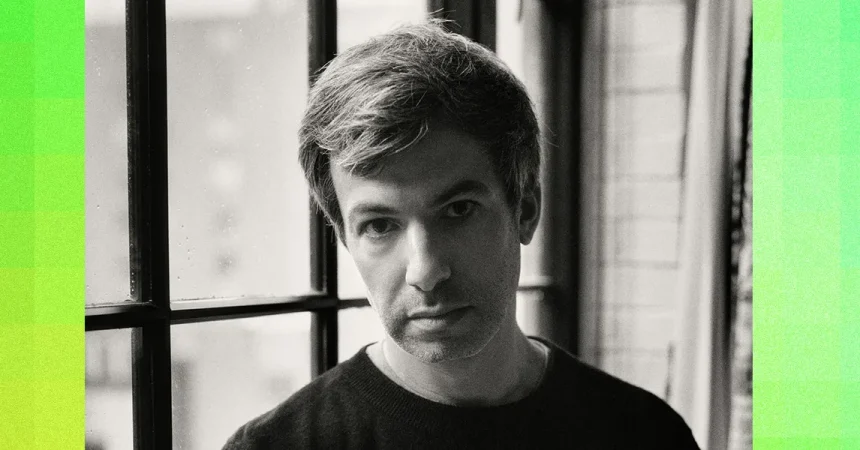
There is a peculiar sort of vertigo that grips you these days when the news cycle feels less like journalism and more like a fever dream. You scroll past a headline about a man rehearsing a conversation with his estranged father in a mock-up of a dive bar, only to land on a story about a tech mogul proposing to build a cloud city above the Amazon, and then your thumb comes to a dead stop on a breaking report about white powder sent to a county clerk’s office in rural Pennsylvania. It all feels detached, a little too absurd to be genuinely real. This week on “Uncanny Valley,” we decided to lean directly into that absurdity, because our latest episode functions less like a traditional podcast and more like a guided tour through the funhouse mirrors of contemporary America. We spend a considerable portion of the show pulling back the curtain on our own extensive Nathan Fielder cover story, digging into the strange, unsettling, and meticulously crafted chaos of the comedian’s universe. But we don’t stop there. With a deep breath and a slight wince, we pivot to the gilded promises of Silicon Valley’s ruling class, interrogating whether their grandiose visions for humanity are genuine acts of salvation or simply the most expensive branding exercises in human history. And just when you think the emotional whiplash can’t get any worse, we open the mailbox—quite literally—to examine the disturbing trend of suspicious letters arriving at US election offices. These three threads might seem arbitrarily stitched together, but as we discovered in the production room, they are woven from the very same fabric of performance, power, and palpable panic that defines our era.
Let’s begin with the architect of awkwardness himself. Nathan Fielder doesn’t just make comedy; he conducts a psychological excavation of everyone he meets, including his own audience. Our cover story took nearly four months to develop, and the behind-the-scenes process revealed that the cringe-inducing pauses, the misread social cues, and the dead-eyed stares on screen are not a lack of talent, but perhaps the most sophisticated use of talent we’ve ever witnessed. The reporters who spent time embedded with him described a curious phenomenon: after just a few hours in his presence, you start to question your own reality. Is the barista at the coffee shop in on the joke? Is this entire conversation scripted? Fielder’s show, The Rehearsal, takes this existential dread to a terrifying extreme, allowing real people to practice difficult conversations in elaborate, simulated environments—a confessional with a friend, a discussion with a landlord, a declaration of love. Our deep dive explores the morality of this approach. Is he exploiting the profoundly lonely and socially anxious, or is he offering them a strange, unconventional gift? We interviewed former participants who felt deeply seen by the process, and critics who felt profoundly manipulated. The emotional core of the story, however, lies in the raw human vulnerability hiding beneath the layers of deadpan delivery. Fielder is a mirror held up to our own social anxieties, showing us how desperately we all perform for one another, even when we believe we are being wholly authentic. His work is a masterclass in the uncanny—the heartbreaking feeling of being close to something real, but never quite able to touch it, forever separated by the glass of our own crafted personas.
If Fielder uses discomfort to reveal the cracks in human interaction, the tech billionaires of the world use overwhelming comfort to seal those cracks shut. Sitting on pristine roundtables at Davos, or tweeting from the sun-drenched decks of superyachts, figures like Elon Musk, Sam Altman, and Jeff Bezos issue grand proclamations about the future of humanity—curing aging, ending the energy crisis, colonizing Mars, and banishing the specter of AI doom. The sheer, staggering scale of their proposed generosity makes the headlines pop, but when you scrape away the glossy press releases and the carefully curated keynote streams, the promises start to resemble the CGI landscapes in a blockbuster movie—vast, breathtakingly beautiful, and ultimately digitally intangible. Our segment unpacks the bizarre vocabulary of these moguls, the way they speak with the unwavering confidence of deities while operating with the accountability of a startup that just filed for bankruptcy. Why does Elon get to decide the future of interstellar travel? Why is Sam Altman the arbiter of human-level intelligence? These aren’t just business decisions; they are acts of world-building that rely entirely on our collective awe. The moment we begin to doubt their ability to deliver, they simply pivot to a new, even more impressive vision—a hyperloop, a brain implant, a robotaxi—to keep our eyes fixed firmly on the horizon and away from the ground beneath our feet. This is where the true genius of their marketing lies: in the distraction of the spectacular.
The uncomfortable truth we unpack in this week’s episode is that these utopian promises are less about actually solving problems and more about perpetuating an image of omnipotence. When a billionaire promises a million people a ticket to Mars, the intended reaction is not critical inquiry, but absolute, wide-eyed wonder. We are supposed to be so distracted by the shiny, phallic rocket that we conveniently forget the labor disputes at the gig-economy factories, the labyrinthine tax shelters, the algorithmic disruptions that radicalize our social media feeds, or the fact that said billionaire is also building an underground bunker in New Zealand to survive the apocalypse he claims to be solving. It’s a monumental sleight of hand, an act of misdirection on a planetary scale. But we also make space for nuance in our conversation—many of these individuals genuinely believe they are saviors, and their brilliant engineers are, in fact, solving real problems that could benefit humankind. The issue is the cultural shift that results: we have allowed private charity to replace public duty, and engineered spectacle to replace democratic governance. As one of our guests pointed out, we are waiting for a magical solution to climate change from a man who flies private jets to meetings about climate change. The human element gets lost in the rocket fuel and the neural links. While these titans look upward to the stars, they leave the rest of us to deal with the crumbling infrastructure, the unaffordable housing crises, and the raging wildfires down here on Earth, which feels less like a shared future and more like a VIP departure lounge for the super-rich, preparing to abandon the messy, chaotic terminal of our planet.
As if to ground us in the grim, tactile reality that these tech dreamers are so eager to escape, we turn to the disquieting story of the election letters. Across the United States, state and local election offices have been grappling with a wave of suspicious mail—envelopes containing white powders, threatening diatribes, and chemical irritants that have triggered mass evacuations and temporary lockdowns. The FBI has issued warnings, postal inspectors have scanned package after package, and terrified clerks have donned hazmat suits just to screen the day’s ballots. These are not acts of sophisticated espionage; they are crude, blunt, and intentionally terrifying. But as we spoke to the officials and volunteers on the front lines of our democracy, a haunting realization settled in: these letters are a form of performance art, too. They are a theater of intimidation designed to make democracy feel fragile and to make the simple, sacred act of casting a ballot feel like a dangerous gamble. The anxiety is the point. One county registrar described the profound moral fatigue of having to reassure her staff every morning while simultaneously wondering if the next envelope would contain fentanyl or just a sprinkle of baby powder. This isn’t just a security issue; it’s a psychological war conducted through the USPS, echoing the dark history of voter suppression and intimidation from the Civil Rights era to the anthrax attacks of 2001. The goal is to create uncertainty, to make people whisper, “Is it safe? Should I just skip it?” and ultimately to erode the very integrity of the electoral process by turning the neighborhood polling place into a scene of paranoia.
By the time the credits roll on this week’s episode, you might feel an overwhelming urge to step away from the screen and take a long, hot shower, to wash off the residual cynicism and paranoia that clings to each narrative like a sticky film. But that sense of unease is precisely where the value lives. Whether we are watching Nathan Fielder manipulate a poorly lit conference room to rehearse a break-up, listening to a tech titan promise a utopia that smells of recycled oxygen and rebranded optimism, or witnessing someone attempt to poison a ballot box, we are witnessing a profound crisis of trust. The common thread that binds these three stories is our collective, desperate craving for authenticity—for a moment that doesn’t feel staged, a promise that doesn’t hide a cynical pitch, and a civic process that doesn’t feel like a haunted house. Our conclusion, however, is not nihilistic. Rather, the episode serves as a call to arms for a specific kind of grounded curiosity. We have to be willing to laugh at the absurdity of Fielder’s constructs while recognizing the rigid scripts we all follow in our daily lives. We have to hold our leaders to the fire of their promises, demanding accountability rather than simply awe. And we have to show up to vote, fully aware that fear is a weapon we can choose to disarm with our presence. In a world so thoroughly saturated with edits, so rich with spectacle, and so perfectly rehearsed, the most radical act we have left is to demand the unvarnished truth—and to refuse, adamantly, to let anyone turn our polling places into a stage. This episode is a handrail in the dark, a reminder that while the ocean of rhetoric and fear rises around us, our foothold on reality is something we must guard together, one awkward conversation, one honest promise, and one counted ballot at a time.