If you’ve ever found yourself half-watching cable news while scrolling your phone, you know the feeling: there are certain faces that have become part of the national furniture. Chris Hayes, with his thoughtful late-night intensity. Stephanie Ruhle, sharp and relentlessly curious. And Rachel Maddow, the one-name icon who turned cable news into something close to appointment viewing. For years, these anchors have built something that most news organizations only dream of: a loyal audience that doesn’t just tune in, but actually cares. They have fans in the way musicians have fans, or maybe in the way that beloved local diners have regulars. And now the network behind them—formerly MSNBC, now rebranded as MS NOW—wants to take that emotional connection and turn it into something more structured, more personal, and, frankly, more sustainable. Rebecca Kutler, the network’s president, is the person leading that charge. She’s launching a subscription program called Membership, and her ambition is simple to state but hard to pull off: transform an audience of casual viewers and devoted superfans into paying members of a larger media universe. It’s a bold bet, and it says a lot about where news is headed—and about what we, as viewers, are really looking for when we turn on the TV.
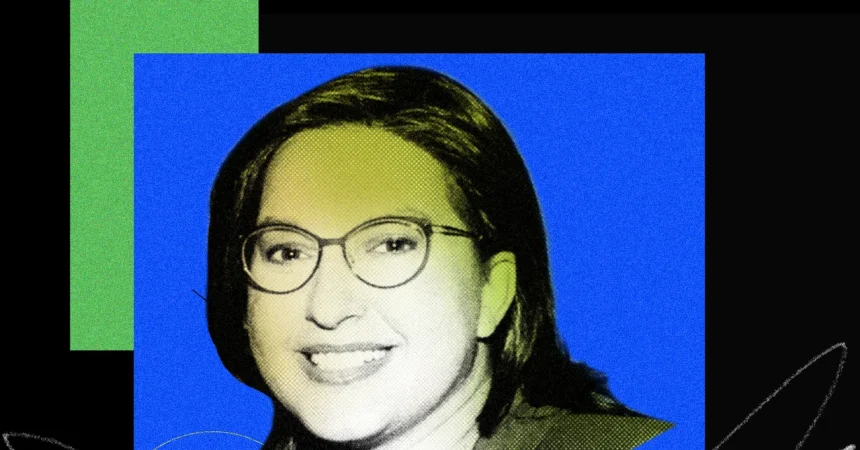
Kutler’s path to this moment is as much about timing as it is about vision. She joined the network just before the 2022 midterms, after spending more than two decades at CNN. She had grown up there, professionally speaking, and when she left earlier that year, she wasn’t necessarily looking for a new home. But then some people she knew and respected reached out from MSNBC. They described a role that had a lot of running room and was a little ambiguous, but in the best way. That kind of open-ended invitation can be terrifying or exhilarating, depending on the person. For Kutler, it was clearly the latter. She started by running the network’s digital and nonlinear businesses, which gave her a bird’s-eye view of the organization without the weight of the daily broadcast grind. It was a chance to learn the place, to see what made it tick, and, most importantly, to spot the missed opportunities. When she eventually took over the whole operation, she had a clear sense of what she wanted to do. But her first big insight wasn’t about technology or distribution or even the decline of linear TV. It was about the audience. She had worked in other newsrooms, and she had friends in other newsrooms, and she loved the news and what it could do. But she had never worked at a place where the audience really saw themselves as fans. Not just viewers. Fans. People with a deep, almost personal connection to the talent on screen. That distinction—between watching someone and rooting for someone—became the seed of everything that came next.
The moment that crystallized this for Kutler was almost accidental. When she joined, Jen Psaki had just joined as well, and the two of them knew each other a little from a previous life. They went out into the field together to do some straightforward reporting pieces. Nothing flashy, just the kind of on-the-ground work that news networks love to show off. But something unexpected happened. Kutler had walked through airports with plenty of anchors and newspeople over the course of her career, and she had never experienced anything like what happened with Jen. People didn’t just notice her. They lit up. They approached her with warmth, with enthusiasm, with a sense that they were in the presence of someone they already knew and trusted. They were behind her. They were rooting for her. And that, to Kutler, was the signal. It wasn’t just that Psaki was famous or recognizable. It was that the relationship felt reciprocal. The audience had invested in her, and she, in turn, seemed to give something back. That kind of dynamic can’t be manufactured, but it can be nurtured. And Kutler realized that the network had a deep bench of people who inspired that exact feeling—Hayes, Ruhle, Maddow, and so many others. The challenge was figuring out how to take that natural chemistry and build a business around it without ruining the very thing that made it special.
That’s where Membership comes in. It’s a subscription program designed to connect MS NOW consumers much more directly to the anchors and personalities they love. The idea isn’t entirely new—plenty of news providers have jumped into the subscription game, and WIRED itself has its own paid offering. But what sets this effort apart is the methodical, almost obsessive way Kutler and her team approached it. Before they landed on the final offering, they surveyed 18,000 people. That’s not a focus group; that’s a research project. They wanted to know what people actually valued, what they would pay for, and what would make them feel like they weren’t just buying a product but joining a community. The answer, unsurprisingly, was the talent. People don’t subscribe to MS NOW because of a corporate logo or a programming grid. They subscribe because they want to be closer to the people who help them make sense of the world. So Membership is built around that. It’s not just about bonus content or ad-free viewing, though those things may be part of it. It’s about creating a space where the Hayeses and Maddows of the world can interact with their audience in a more direct, meaningful way. It’s the influencer playbook applied to cable news: build a parasocial relationship, deepen it, and then give people a way to support the thing they love. In a world where influencers are the new newscasters, and where the old model of selling ads against linear TV is fading, this feels less like a gimmick and more like survival.
Kutler is clear-eyed about the broader industry context. Linear television is in inevitable decline, and every network is trying to figure out what comes next. Some are chasing streaming deals. Others are betting on aggregation. MS NOW is betting on fandom. It’s a risky strategy, but it’s also a human one. Because the truth is that people have always watched the news not just for information, but for companionship. We invite these anchors into our living rooms, our kitchens, our bedrooms. We listen to their voices when we’re getting ready in the morning or winding down at night. We trust them, sometimes more than we trust our own neighbors. That’s a powerful bond, and it’s one that can’t be replicated by an algorithm or a recommendation engine. The question is whether that bond can be monetized without feeling exploitative. Kutler seems to think it can, as long as the value exchange is real. If people are going to pay, they need to feel like they’re getting something genuine in return—not just access, but intimacy. Not just content, but connection. That’s a delicate balance, and it’s one that the network is still figuring out. But the early signs are promising. The survey data showed that people are hungry for exactly this kind of relationship. They want to feel like they’re part of something bigger than themselves. And in a media landscape that often feels cold and transactional, MS NOW is trying to offer warmth.
Of course, it’s not all warm feelings and airport encounters. Kutler also has her eye on the competition. When asked about beating Fox, she doesn’t shy away from the challenge. She talks about it with the kind of competitive energy that suggests she’s been thinking about it for a long time. And she’s also thinking about consolidation. The media industry is going through a wave of mergers and acquisitions, and conventional wisdom says that bigger is better. But Kutler sees opportunity in the chaos. She argues that consolidation can actually be good news for a network like MS NOW, because it creates space for distinctive voices to stand out. When everything is owned by everyone, the only thing that separates one outlet from another is the people on screen. That’s an argument for doubling down on talent, not trimming it. It’s also an argument for building a direct relationship with the audience, so that no matter what happens to the distribution platform, the connection remains. In that sense, Membership is more than just a revenue stream. It’s a hedge against the future. It’s a way of saying that even if the cable bundle crumbles, even if the streaming wars consolidate into a handful of giants, even if the algorithms change overnight, there will still be a group of people who want to hear what Rachel Maddow thinks about the world—and who are willing to pay to be part of that conversation. That’s the bet. And if Kutler is right, it could be the model for how news survives the next great audience pivot. But even if it doesn’t work perfectly, it’s already changing the way the network thinks about its viewers. Not as eyeballs, not as clicks, but as people. Fans. Members. The kind of people who walk through an airport and light up when they see someone they trust. That’s not just a business strategy. That’s something worth rooting for.