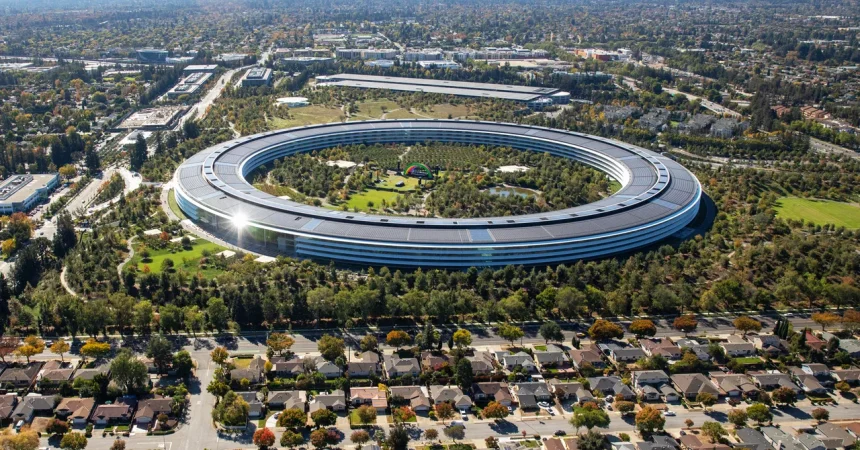
Good morning, everyone, and welcome to our live coverage of Apple’s latest media showcase, coming to you straight from Apple Park in Cupertino. This is the kind of event that Apple fans circle on their calendars months in advance, and we’re excited to be bringing you every announcement as it happens. We have two reporters on the ground at Apple Park, soaking up the atmosphere and keeping their eyes on the stage, while back in the virtual newsroom we have a team of five veteran Apple watchers—Julian Chokkattu, Boutayna Chokrane, Lauren Goode, Reece Rogers, and Michael Calore—ready to offer context, analysis, and maybe a little healthy skepticism. There’s also a chance that a few special guests will pop in during our live coverage, so keep the tab open and check back often. The main presentation is scheduled for 10 a.m. Pacific, which is 1 p.m. Eastern and 6 p.m. in the UK. We’ll be posting frequent news updates throughout the event right here, and the biggest moments will also appear across our social platforms, so you can follow along even if you’re stuck in a meeting or trying to pretend to work. If you want to get into the live experience early, we suggest coming back about 30 minutes before the show starts—roughly 9:30 a.m. in California—because that’s when this page will transform from a simple preview into a rolling live blog with real-time updates, photos, and commentary. There’s always a certain energy that comes with an Apple event, and today’s feels especially charged. So grab your coffee, find a comfortable chair, and let us handle the refreshing. We’re about to see what Apple has been working on, and it looks like it’s going to be a big one.
The short version of what to expect is this: Apple is finally expected to release a folding iPhone. The device has been rumored for years, and it looks like today is the day we’ll get an official look. According to the latest reports, the foldable could be called the iPhone Ultra, which fits with Apple’s recent habit of using “Ultra” to designate its most premium products. The price, however, might make even loyal fans pause: it could cost more than $2,000. That would make it the most expensive iPhone Apple has ever sold, and it’s clearly meant to be a statement product—something that proves Apple can still innovate and justify a hefty premium. We’re also expecting new Pro models today, likely the next iPhone Pro and Pro Max, and the word from supply chain sources is that both the folding iPhone and the Pro lineup could go on sale later in September. That’s a relatively quick turnaround, which suggests Apple has been preparing inventory behind the scenes for a while. A foldable iPhone is about more than just a hinge, of course. It’s about how the software adapts to a screen that bends, how multitasking works when you’re folding and unfolding, and how Apple balances durability with elegance. There are lingering questions about the crease in the middle of the display, battery life, and whether the device will feel good in your pocket, but that’s part of the excitement. Apple has been known to skip trends until it feels it can do them right, so the fact that it’s finally entering the foldable market says a lot about how confident the company is in its design.
If you’re more interested in the standard iPhone, here’s the catch: the base model iPhone 18 might not arrive until early next year. Even though Apple could tease it today, the launch appears to have been pushed back. There are a few reasons for the delay, and they’re worth understanding. First, manufacturing costs have been climbing, which makes it harder to launch a more affordable phone at the usual time and still hit the expected price point. Second, the tech industry is in the middle of what people are calling a memory crisis—memory chips have become more expensive and harder to obtain, and that’s affecting everything from smartphones to laptops. Apple, despite its enormous supply chain power, isn’t immune to those pressures. But there may also be a strategic reason for the delay. By holding back the next generation of cheaper iPhones—the iPhone 18, the iPhone 18e, and the iPhone Air—Apple can focus all of its attention on the premium devices that generate the most buzz and the highest margins. When you’re trying to sell a $2,000 folding phone, you don’t necessarily want a modestly upgraded budget phone stealing the spotlight. It’s better to let the flagship moment breathe, and then bring out the more accessible options a few months later when the hype starts to settle down. So even if we see a quick glimpse of the iPhone 18 today, don’t expect preorders anytime soon. Apple is playing the long game, and the memory crisis means the company has to make tough choices about what gets built first.
Beyond the phones, we’re likely to see new Apple Watch models today, including the next Apple Watch and the Apple Watch Ultra. The smartwatch has become an essential part of many people’s daily routines, tracking everything from heart rate to sleep patterns to workouts, and the new versions are expected to bring faster processors, improved sensors, and possibly new health features that make the watches even more useful. But the biggest theme of the event might be artificial intelligence, specifically the new Siri AI. Apple has been working on a smarter, more capable version of its assistant, and it will likely be a major part of today’s presentation. Both the new iPhones and the new Apple Watches will probably include features that rely on this upgraded Siri, and Apple will spend plenty of time talking about the chips powering those features. The new devices will likely include Apple’s latest silicon, which is designed to handle complex AI tasks directly on the device. That’s what Apple means by “on-device AI,” and it’s an important selling point because it allows for faster response times and better privacy—your personal data doesn’t have to be sent to the cloud to be processed. Apple will also probably highlight secure computing, machine learning improvements, and battery optimization, because running sophisticated AI models on a small device takes serious engineering work. We’ve had some hands-on time with the beta version of Siri AI, and we can say it’s genuinely impressive. It understands context better, handles more natural language, and feels much more useful than the old Siri. But, like every version of Siri before it, there are limitations. It still struggles with some requests, and not everything works perfectly in everyday situations. We’ll be watching closely to see how much of the promise on stage translates into real-world performance.
Now, let’s talk about what we’re probably not going to see today, because the rumor mill has been spinning in some interesting directions. Apple has reportedly been working on a range of smart-home products, but it sounds like none of them are ready to launch at this event. That includes new HomePod speakers, which fans have been waiting for, and a smart home hub that would act as the central brain of your connected living space. There’s also been chatter about a device that uses camera-based Visual Intelligence—essentially letting Siri AI see the world through a camera and understand what it’s looking at. That kind of technology could be a huge step forward for the smart home, but it probably won’t be announced today. Along those same lines, we’ve heard about AirPods with tiny cameras built into them. It sounds a little futuristic, and it is, but the idea is that the cameras would work with voice commands to give Siri AI more context about your surroundings. You could look at a landmark, ask a question, and Siri would understand what you’re seeing. It’s a clever concept, but those earbuds are not expected to show up today either. Instead, Apple might save them for another event later this fall, maybe in late September or October. So don’t be disappointed if the smart home stuff doesn’t appear on stage. Apple is clearly thinking big about AI and the home, but it seems willing to wait until the pieces are ready. And when it does reveal those products, we’ll be there to cover them.
If you want to watch the whole event yourself, you have plenty of options, and all of them are free. The easiest way is to hit Play on the video stream right here on this page—we’ll have it embedded at the top, and you can watch it while following along with our live updates below. But if you want the full experience on your television, you can open YouTube on your smart TV and search for Apple’s official channel. The live stream should be front and center, so you won’t have to dig around to find it. You can also watch on Apple’s own streaming app. If you have an Apple TV or any streaming box, just open the Apple TV app and look for the event at the top of the screen. It will be featured prominently, and you don’t need a paid subscription to watch. There’s no login required, no paywall, no hidden fee—just press play and enjoy. If you’re the kind of person who likes to watch on the big screen while keeping your laptop open for commentary, that’s a great setup. You can have the presentation on your TV and our live blog on your computer, so you won’t miss a single detail. We’ll see you back here about half an hour before the event begins. Until then, we’ll keep an eye on the rumor mill, and you can relax. It’s going to be an exciting morning, and we’re glad you’re here to share it with us.