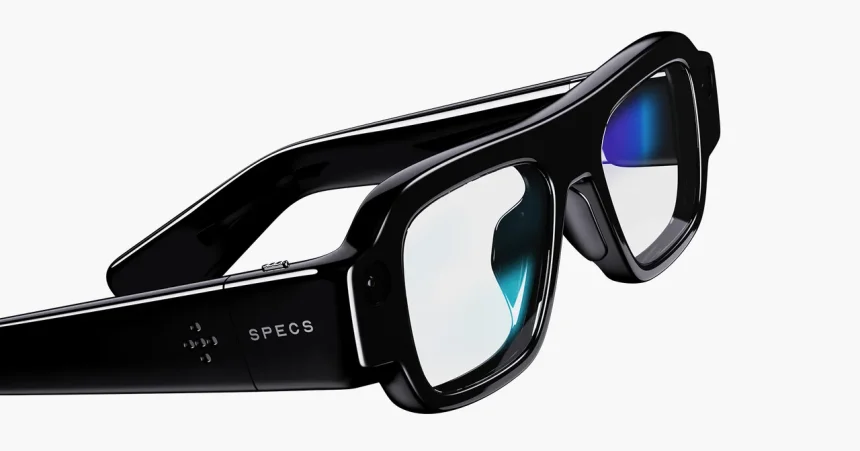
Snap, the company behind the ubiquitous Snapchat app, is finally bringing their vision of the future to the public. After years of testing and iterating behind the scenes, CEO Evan Spiegel recently took the stage at the Augmented World Expo in Long Beach to introduce the latest iteration of “Specs.” Unlike the previous versions, which were reserved exclusively for developers and niche creators, these glasses are being positioned as the first true consumer-ready augmented reality device from the company. It’s a bold shift that signals Snap is no longer just experimenting with hardware; they are actively working to transition AR from a novelty into a tangible part of our daily lives.
The barrier to entry for this new technology is significant, both in terms of price and exclusivity. With a retail cost of $2,195, the Specs are clearly aimed at early adopters and tech enthusiasts rather than the general public. To secure a pair, interested buyers must place a $220 deposit, with shipping expected to begin later this fall across the US, UK, and France. While the price point is steep, it reflects the high-end, complex hardware packed into the frames. Snap is essentially treating this launch as a bridge to the future, betting that there is a dedicated audience willing to invest heavily to be the first to experience the next evolution of personal computing.
In terms of functionality, Snap is steering away from the “content capture” focus that defined earlier versions of their eyewear. Instead, the core experience is designed to weave digital information into the physical world with high precision and minimal latency. The goal is to make AR feel like a natural layer of reality, whether you are interacting with 3D models, following spatial map directions, or even “fingerpainting” in the air. The devices come equipped with private display screens, Bluetooth connectivity, and AI-powered visual assistance, all designed to interpret the objects and environment around you. However, Snap is being characteristically quiet about the specific library of apps, essentially handing the reins to the developer community to build the ecosystem that will make the hardware truly shine.
Physically, the new Specs undergo their own unique evolution in design. They are undeniably “chonky,” featuring thick rims and substantial temple tips that give them a daring, oversized aesthetic. While some might compare them to Meta’s Ray-Ban collaborative glasses, the Specs distinguish themselves with a superior 51-degree field of view that places the digital experience directly in the center of your vision. Spiegel has leaned into the unconventional design, suggesting that rather than chasing traditional fashion trends, the frame’s bulk is a sacrifice made in the name of technical capability. It’s a utilitarian approach that values raw power and the immersive nature of the AR display over the sleek, minimalist profile of standard eyewear.
The success of the new Specs ultimately hinges on the developers who choose to build for Snap’s unique platform. During his keynote, Spiegel emphasized that the value of the device isn’t just in its hardware specs; it is a blank canvas that relies on the creativity of third-party builders to prove why having a computer on your face is actually useful. By opening the doors to a consumer launch, Snap is inviting developers to move beyond prototypes and create the “lenses”—the AR applications—that will define how we interact with technology in the coming decade. Whether these creators can build a “killer app” that justifies the high cost will be the ultimate test for the Lonestar state of this project.
Ultimately, Snap’s latest endeavor is a sophisticated gamble on the maturation of augmented reality. By skipping the fashion-forward, thin-frame routes taken by competitors and opting for a device that puts performance and experience first, Snap is signaling that they are playing a long game. We are moving toward a world where digital data isn’t locked behind a smartphone screen but is pinned to the world around us. With the new Specs, Snap is inviting us to stop watching the future through a display and start living inside of it, provided we are daring enough to wear the tech that makes that shift possible.