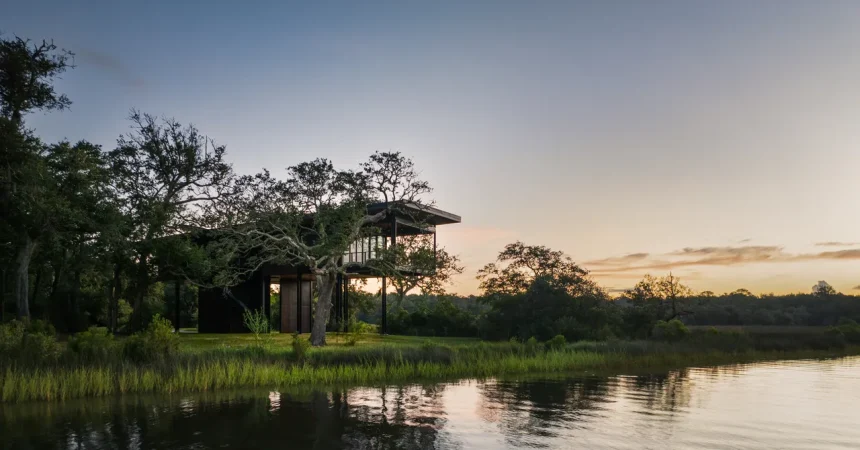
The dialogue surrounding modern architecture is shifting rapidly, moving away from mere aesthetics toward a more urgent conversation about survival and longevity. As climate change transforms once-predictable weather patterns into volatile, extreme phenomena—from raging wildfires to catastrophic storms—architects like Tom Kundig are finding themselves at the forefront of a new design philosophy. For Kundig, who co-founded the renowned firm Olson Kundig in 1986, the goal is no longer just to create beautiful landmarks. Instead, he is helping to rewrite the blueprint for what a home represents: a reliable, enduring sanctuary capable of standing its ground against an increasingly hostile environment.
What makes this movement particularly compelling is the rejection of the “bunker” aesthetic. For years, the idea of a disaster-proof home conjured images of concrete boxes and fortified walls—structures that physically represented fear rather than comfort. Kundig and his contemporaries are proving that resilience does not require sacrificing elegance or human warmth. By utilizing durable, honest materials and intelligent structural engineering, they are designing houses that feel like extensions of the landscape rather than defensive armaments. These homes don’t look like fortresses; they look like dream houses that just happen to possess the internal fortitude to outlive their inhabitants.
Kundig’s approach is rooted in a philosophy of stewardship and long-term utility. When clients approach his firm, they aren’t typically asking for apocalypse-proof shelters; they are asking for houses that require minimal maintenance and possess the structural integrity to be passed down through generations. Kundig points out that these two desires are inherently linked. To build something that lasts for a century—something that can weather the inevitable shifts in temperature, seismic activity, or wind—you must inherently prioritize structural resilience. Sustainability, in his view, is inextricably tied to the lifespan of the building itself.
The global footprint of Olson Kundig serves as a testament to the versatility of this design approach. His projects dot the map across Europe, Asia, Africa, and the Americas, occupying some of the most dramatic and challenging terrains on Earth. Building in such diverse ecosystems requires a deep, site-specific sensitivity; a home built to withstand the high-altitude winds of the Rocky Mountains must be engineered differently than one situated in a fire-prone California canyon or a moisture-heavy coastal region. By learning to work with the natural forces of a specific site rather than fighting against them, Kundig creates residences that are seamlessly integrated into their surroundings while remaining remarkably sturdy.
When asked about the ultimate test of resilience, Kundig’s mind naturally drifts toward the extreme, jokingly musing about the challenges of building in Antarctica—a frontier that would push architectural endurance to its absolute breaking point. It is a playful nod to a serious subject, highlighting the architect’s inherent drive to solve problems through spatial engineering. Yet, when the conversation turns to the space-age pipe dreams of colonizing Mars or the moon, his pragmatic streak takes over. While others look to the stars for the future of human habitation, Kundig remains firmly committed to the problems currently facing our planet.
Ultimately, Kundig’s work underscores a vital truth about the “Future of Home.” As we navigate the uncertainties of a changing climate, our dwellings will need to evolve, but they must also remain deeply human. The architecture of the future shouldn’t just be a technological marvel; it should be a place of quiet confidence, built with the humble understanding that our best chance for survival is to build better, stronger, and more thoughtfully right here on Earth. By focusing on longevity and material intelligence, architects are ensuring that the homes of tomorrow aren’t just surviving the elements, but providing a stable foundation for the generations to follow.