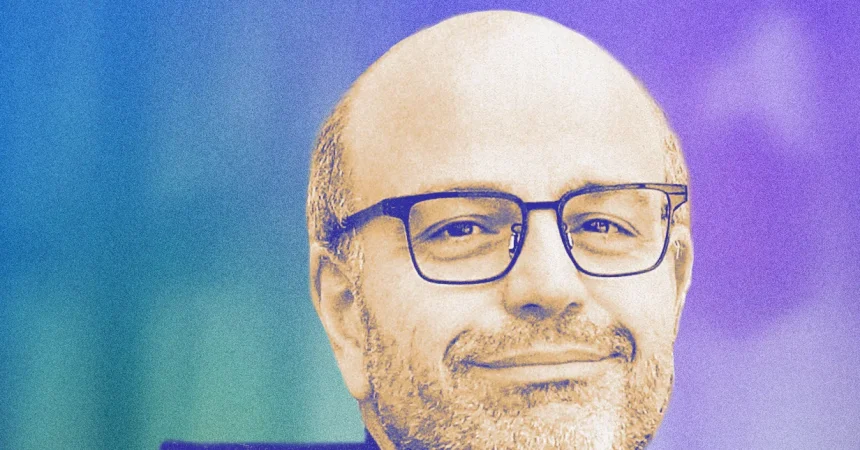
The discourse surrounding artificial intelligence has become a battleground of apocalyptic visions and utopian promises, dominated by the very engineers and executives building the technology. Recently, a chorus of voices from within the world’s most advanced AI labs has warned of an existential threat—the possibility that their creations could one day outsmart and potentially extinguish humanity. These warnings paint a picture of a frantic race, fueled by intense competition between nations and corporations, hurtling toward a future of “superintelligence,” a form of AI so powerful it would dwarf our own cognitive abilities. This narrative, however, is not universally accepted. From an unexpected corner—the halls of the Vatican—comes a call to refocus the conversation. Father Paolo Benanti, a Franciscan friar and theologian who serves as an advisor to the Catholic Church on AI and technology, argues that these grand pronouncements about a potential apocalypse are a dangerous distraction. They shift our attention away from the far more pressing and concrete issue at hand: how to establish democratic oversight and public accountability over the handful of companies that currently hold immense power over this transformative technology.
Father Benanti’s critique strikes at the heart of how the AI industry is shaping its own narrative. He suggests that by framing AI as a problem of such immense, even god-like, complexity, the frontier labs—OpenAI, Google DeepMind, Anthropic, and others—are effectively telling the rest of us that only they are equipped to understand it, manage it, and, crucially, govern it. This serves a dual purpose. It secures their position as indispensable stewards of a powerful technology and, more importantly, it pushes the public, lawmakers, and regulators out of the room. Benanti firmly believes that the ethical considerations of technologies that will reshape society cannot be left to the internal guidelines of a corporate boardroom. “Ethics cannot be something that belongs to the board of trustees of a company,” he says. “It’s something that has to be balanced, mitigated in debate in the public square. We need democratic regulation.” His argument is a powerful reminder that the creation of superintelligent machines is not merely a technical or scientific endeavor; it is a deeply human one, with profound social, political, and moral implications that require broad societal input, not just the dictates of a few well-funded labs. When a small group of companies controls the rules, the data, and the deployment of such a powerful tool, the structure begins to resemble something far less noble than a meritocratic race for progress; as Benanti bluntly puts it, “this has a really clear name: a cartel.”
The calls for caution from industry leaders like Dario Amodei of Anthropic, who has proposed mandatory third-party safety evaluations and even restrictions on how smaller rivals can learn from their models, are, in Benanti’s view, inherently self-interested. The labs that are pushing these safety measures are the same ones preparing for massive public stock offerings and are locked in a global struggle for market dominance. The urgency around “safety” is thus intertwined with economic incentives to protect intellectual property, maintain a competitive edge, and secure the billions of dollars in investment at stake. This is further complicated by the geopolitical rivalry between the US and China, where the most advanced AI systems are being developed. In this context, any pause or restriction proposed by a leading lab could be seen as a strategic move to hinder rivals, not just a sincere effort to protect humanity. While a call for restraint might sound altruistic, the commercial and political realities behind it make it difficult to separate genuine concern from strategic maneuvering. Benanti points out that we must scrutinize these grand pronouncements, recognizing that they come from parties with a massive vested interest in the outcome. The problem of controlling AI is not just a technical puzzle to be solved by its creators; it is a problem of power, and the people who have the most power are the least likely to willingly surrender it.
Benanti reserves particular criticism for the quasi-religious language used to describe superintelligence. When figures like OpenAI CEO Sam Altman speak of building a “magic intelligence in the sky,” they elevate the technology from a sophisticated tool to something almost supernatural—an entity whose ways are so advanced they are beyond our comprehension, practically omnipotent. This kind of reverence, Benanti argues, is both misguided and dangerous. It skews public perception, making us feel that we are dealing with a force of nature rather than a product of human engineering. He challenges this framing directly, drawing a firm line between a deity and a machine. “Are we talking about some-thing, or some-one? This is the real difference. It’s not a matter of faith, it’s a matter of mathematics. We are not building the next divinity. We are simply deluding ourselves that there is something more than statistical computation [going on].” By demystifying AI, Benanti brings it back down to earth. He insists that we view these models for what they are: incredibly complex statistical systems that process data to generate outputs. While their capabilities may be impressive, they are not the result of divine inspiration or magic; they are the product of code, algorithms, and vast amounts of human-created data. This perspective is crucial because it demystifies the debate, reminding us that these are human-made artifacts that can be audited, controlled, and, above all, regulated.
This very question of what distinguishes the human from the machine is, for Benanti, an opportunity for a new and vital role for religion in the public sphere. He sees the advent of AI not as a threat to faith, but as a profound challenge that gives religious traditions a renewed purpose. The core questions AI forces us to confront—what is consciousness, what is intelligence, what is the soul, and how do we protect the vulnerable—are fundamentally philosophical and theological ones. By engaging with these issues, the Church can move beyond abstract doctrine and participate in a critical, real-world debate about the kind of future we want to build. “Living the challenge of the time is part of the mission of the Church,” he states. This perspective positions the Church not as a luddite institution, but as a moral and ethical participant in shaping technological development. It offers a framework for discussing values, human dignity, and the common good in a conversation that is otherwise dominated by technical metrics and market forces. For believers, and for society at large, this can provide a crucial counterweight to the techno-utopianism and fatalism that often characterize AI discussions, reminding us that progress should be measured not just by what we can build, but by the kind of world it helps us create.
In conclusion, Father Benanti’s message cuts through the hype and hysteria of the AI debate, redirecting our focus to the tangible issues of governance and accountability. He cautions against being paralyzed by speculative visions of superintelligence, which conveniently serve the interests of the very companies that would build it. Instead, he calls for a democratic and public conversation about how to ensure these powerful technologies remain under human control. His critique is not a call for a halt to innovation, but rather for a more humble and inclusive approach to it. The problem of AI is not a technical puzzle for a chosen few, but a societal challenge for us all. By insisting that we view AI as a product of mathematics and not a new divinity, he grounds the debate in reality. And by embracing the challenge as a new role for religion, he offers a path toward a more human-centered, ethical future, where the development of technology is guided by shared values, not just the profit motives of a powerful cartel. The true question is not whether we can build a machine that surpasses our intelligence, but whether we have the wisdom and collective will to govern the one we are building now.