

The American opioid epidemic is a story of shifting sands, where the primary agent of lethal overdose has constantly evolved to outpace public health interventions. By 2012, this evolutionary arc had taken a grim turn, moving decisively away from the legal yet deadly prescription pills that flooded pharmacies in the 1990s and towards the unpredictable, fentanyl-laced heroin dominating the illicit street trade. It was within this volatile landscape that Laura Bohn, a scientist at the University of South Florida Health, began a federally funded, almost quixotic quest: to find a chemical key that could unlock pain relief without the terminal consequence of respiratory shutdown. In 2017, her team published groundbreaking research in the scientific journal Cell, describing a class of novel compounds that seemed to defy the pharmacological rules that have governed pain medicine for centuries. Among these molecules, one stood out—a compound designated SR-17018. In laboratory mice, this substance effectively relieved pain, yet astonishingly, it did not trigger the dangerous suppression of the brainstem’s respiratory centers, the hallmark of every traditional opioid from morphine to fentanyl. This respiratory depression is the cruel, mechanistic reality of opioid death—not the euphoric high, but the agonizingly slow cessation of breath that silently claims tens of thousands of lives annually. The initial discovery was nothing short of revolutionary, promising a future where the immense, indispensable potency of opioids could be harnessed for those suffering from acute injuries and chronic agony without the constant, terrifying threat of a fatal overdose lurking behind every carefully calculated dose or illicit baggy.
Yet the initial victory of achieving pain relief without respiratory collapse was merely the opening chapter of Bohn’s astonishing research narrative. As her team delved deeper into the pharmacodynamics of SR-17018, something even more miraculous began to emerge from the dense biological data. Traditional opioids force the brain’s µ-opioid receptors into a vicious cycle of tolerance, where repeated activation leads to receptor desensitization, demanding increasingly higher doses to achieve the same level of analgesia. This neuroadaptation is the biological engine driving addiction, dependency, and the lethal spiral toward overdose, as users chase a fading effect with ever-more-dangerous quantities of the drug. But SR-17018, through its specific “biased agonism” at the receptor, fundamentally altered the rules of engagement. Mice administered the compound showed no significant development of tolerance; their pain relief remained consistent over time, eliminating the desperate need for dose escalation. The most astonishing finding, however, came when the researchers introduced SR-17018 to mice that had been deliberately made dependent on morphine—animals trapped in the throes of physical addiction. Rather than triggering the excruciating, flu-like body aches, gastrointestinal spasms, and psychological despair of withdrawal, SR-17018 successfully reset their established tolerance levels, pulling them back from the precipice of lethal dosing without a single visible sign of distress. It was as if Bohn had discovered a biological wrench that could safely dismantle the engine of addiction, a hope that has eluded researchers and clinicians for decades.
For a long time, this medicinal miracle remained formally confined to the sterile, climate-controlled cages of research laboratories, existing solely in the abstruse language of scientific papers and conferences. However, in our hyper-connected digital age, information travels faster than bureaucratic inertia, and whispers about SR-17018 soon leaked beyond the ivory tower into the sprawling, anonymous corners of the internet—particularly the subreddits and Discord servers where desperate individuals battling opioid addiction search for a lifeline. There, the compound was swiftly lauded as a “godsend,” a golden ticket to sobriety. Jim Bates, a 53-year-old kitchen manager from Duncan, Oklahoma, embodies this desperate hope. Having been hooked on various forms of opioids—prescription pills, street heroin, and the terrifyingly potent synthetic fentanyl—since he was just 25 years old, Bates knows the relentless, crushing grip of chemical dependency intimately. About two years ago, his addiction took yet another twist when he encountered 7-OH, a concentrated alkaloid derived from the botanical kratom, which agonizes the brain’s opioid receptors with alarming potency, acting as a synthetic-style opioid in all but name. Recounting his first encounter at a local vape shop, Bates told WIRED with a mixture of awe and regret, “That shit blew my head off. It was a whole lot like heroin.” His subsequent journey toward the internet forums led him to SR-17018, which he saw as a potential off-ramp from this relentless cycle of highs and withdrawals. Because the compound was not listed as a federally controlled substance, it was relatively easy to purchase legally online from chemical suppliers, despite having no official FDA approval. For thousands of users like Bates, it was not merely a chemical powder; it was the physical embodiment of hope, a way to step down their intake of lethal street drugs without facing the unbearable physical trauma of detoxification.
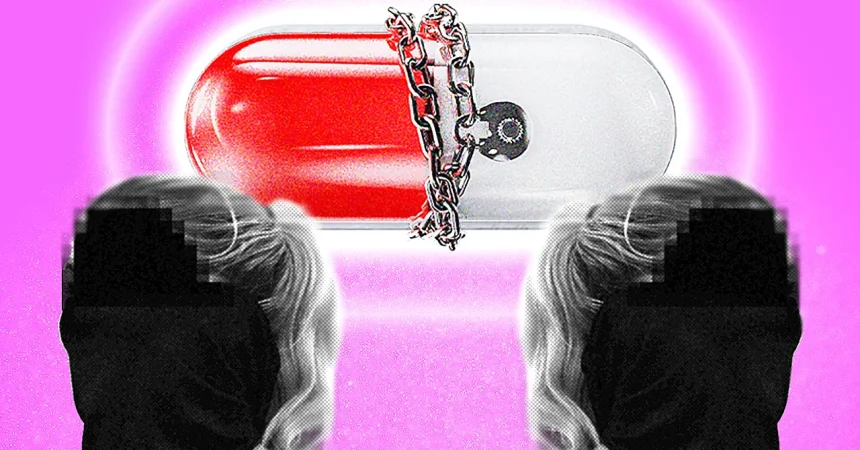
However, this fragile ecosystem of hope and unregulated science came crashing down with the swift, crushing force of a federal hammer. In late August, without prior public fanfare or scientific commentary, the US Drug Enforcement Administration (DEA) issued an emergency scheduling action, classifying SR-17018 as a Schedule I controlled substance. This places it in the most restrictive category of American drug law, the same legal pigeonhole occupied by heroin, LSD, and ecstasy. By definition, Schedule I drugs possess “no currently accepted medical use and a high potential for abuse”—a categorization that strikes Dr. Bohn as not just professionally stifling, but deeply, tragically paradoxical. The very molecule being outlawed for lack of medical utility is positioned in her lab to be the single most promising non-addictive painkiller ever discovered. “It’s a real hassle,” she lamented to WIRED, her frustration palpable. “Right now, I would like to have it tested for additional safety studies, and I can’t have it made, I can’t ship it, I can’t touch it. I can’t do anything.” The emergency scheduling effectively freezes all ongoing and planned research, invoking severe criminal penalties for any scientist who handles it outside of narrowly defined and arduous DEA registrations. For a researcher running intricate receptor binding assays and long-term pharmacokinetic studies, this means her carefully calibrated vials of powder must now be treated as dangerous contraband, requiring hazardous waste clearances and law enforcement oversight. Her entire pre-clinical pipeline, so promising just a month ago, is now a legally menacing liability. The pathway to human clinical trials—which had never even been initiated—has been paved with criminal penalties instead of clinical research protocols, effectively ensuring that any definitive answer on whether this miracle compound works in humans will be delayed by years, if not a decade.
The impact of this scheduling ripples far beyond the confines of Bohn’s laboratory, striking directly at the vulnerable demographic the DEA claims to protect. For the Jim Bateses of the world, the ban is not just a headline; it is the removal of a literal lifeline. Faced with the physical agony of detoxifying from 7-OH and fentanyl, users found that SR-17018 offered a unique and graceful exit ramp—a way to lower their tolerance to manageable levels, allowing them to use less of their dangerous primary drug or sometimes stop altogether, without the nightmarish, torturous withdrawal symptoms that have historically sabotaged countless recovery efforts and driven addicts back to the needle or the pill bottle within days. While the scientific community is rightly adamant that there is a complete absence of rigorous, double-blind clinical trials demonstrating efficacy and safety in humans, the anecdotal evidence flooding online forums cannot be dismissed as mere placebo wishful thinking. These are the raw, unfiltered testament of people clinging to sobriety with white-knuckled determination, who found a chemical that finally made the impossible seem attainable. Upon learning of the scheduling, Bates faced a cruel paradox: the very authorities meant to safeguard public health have inadvertently cut off his best chance to save himself from a lifetime of incarceration, overdose, or early death. The black market will inevitably adapt, making the drug pricier, riskier, and more chemically unstable, but the mainstream avenue for legal, relatively pure access is now completely shut. The psychological blow is profound—knowing that a potential exit exists but is now criminally inaccessible creates a deep, corrosive sense of despair and governmental abandonment among an already marginalized and suffering population.
In the final analysis, the story of SR-17018 is a poignant, cautionary parable of the profound disconnect that often exists between scientific urgency, regulatory rigidity, and human suffering. The DEA’s emergency scheduling reflects a reflexive, decades-old “war on drugs” mentality that equates any unapproved psychoactive compound with imminent societal danger, regardless of its context or potential. While the agency likely fears the diversion of this potent chemical into a recreational black market, its action ignores the specific, desperate, and ultra-narrow context of its actual illicit use—which appears to be overwhelmingly therapeutic in nature, aimed at quitting opioids, not getting high. It is a unilateral decision that sacrifices the long-term potential of transformative pain science for the short-term optics of being seen as “tough on crime.” By banning a compound that preliminary research suggests could end the tolerance and death spiral of opioid addiction, the government has effectively thrown a handful of sand into the gears of a revolutionary breakthrough. The history of medicine is littered with treatments initially dismissed or criminalized before becoming standard of care, methadone being a prime example. Is SR-17018 a miracle cure? Absolutely not—extensive research is critically necessary to validate the promising mouse data in human patients, to assess its long-term toxicity, and to understand how it interacts with other medications. But that vital research can no longer be performed legally within the United States, leaving millions of chronic pain patients and hopeless addicts to suffer while policymakers in Washington fail to grasp the nuanced pharmacological reality. As Laura Bohn contemplates the impending restrictions and the frozen vials she can no longer touch, and as Jim Bates wonders how he will manage his next agonizing withdrawal without his chemical anchor, the tragic irony of the compound’s fate hangs heavy in the air: SR-17018, a legend born from scientific hope, has been locked away not because it is dangerous, but because our rigid drug policy has no framework to embrace a miracle amidst the rubble of an epidemic. The law, built to protect, has once again become the primary barrier to our salvation.