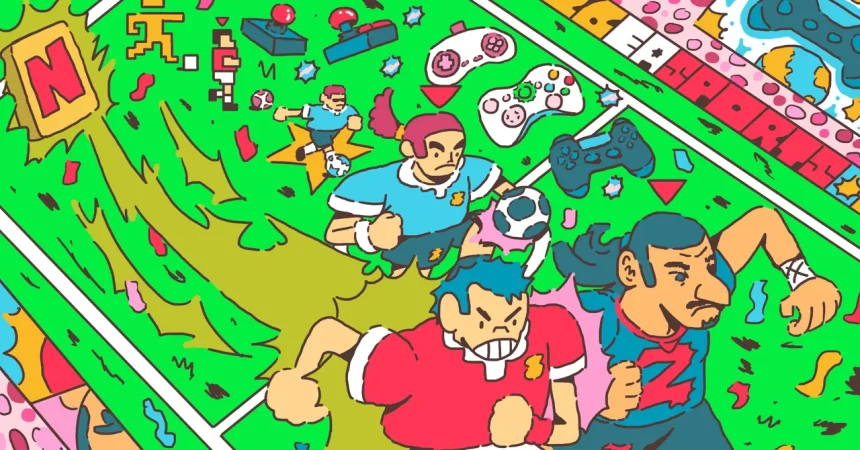
The year 2026 will undoubtedly be remembered as a watershed moment in the history of sports entertainment. With the World Cup expanding to include 48 teams across North America, the real-world spectacle is mirrored by an equally dramatic shift in the digital arena. For decades, Electronic Arts held an iron grip on the soccer gaming market, but a new era of competition has finally broken that monopoly. The industry is currently undergoing a radical transformation, moving away from a singular, repetitive annual release cycle toward a diverse landscape where gamers no longer have to settle for just one “official” version of the sport. We are witnessing a revolution where four distinct titans are fighting for our attention, each offering a radically different vision of what a digital soccer experience should feel like.
EA Sports FC 26 sits at the top of the food chain, proving that the brand didn’t need the FIFA license to maintain its status as an absolute powerhouse. Despite the loss of the historic title, the game continues to top sales charts across Europe, cementing its place as the go-to choice for players who demand a polished, premium, and fully licensed product. With the implementation of HyperMotion V technology, the gameplay has reached a level of visual fidelity that feels indistinguishable from a high-definition television broadcast. Yet, even with its massive budget and state-of-the-art graphics, EA is facing a different kind of pressure—not from a better-looking game, but from rivals who are changing the very rules of the economic game by making soccer accessible to everyone, regardless of their budget.
Enter Konami’s eFootball, the “invisible giant” that has quietly amassed a staggering one billion downloads worldwide. By leaning heavily into a free-to-play model, Konami has successfully tapped into the global market in a way that traditional console games never could. Their platform-agnostic approach allows users to transition seamlessly from playing on a smartphone during a morning commute to finishing a match on a console at home. For many purists, the gameplay experience offered here is superior—it feels organic, tactical, and less reliant on the automated scripts of its competitors. While EA is busy capitalizing on the luxury market, Konami has built an ecosystem that prioritizes accessibility, proving that you don’t need a massive upfront investment to compete with the industry leader.
The competitive landscape is further disrupted by the arrival of UFL, a project fueled by the legendary Cristiano Ronaldo. Having transitioned from the face of EA’s franchises to a major investor, Ronaldo has used his influence to challenge the industry’s reliance on “pay-to-win” mechanics. UFL’s philosophy of “Fair to Play” is a direct critique of the loot-box culture that has frustrated fans for years, rewarding skill, longevity, and genuine player progression rather than the size of a user’s wallet. With 25 million active users already flocking to the platform, UFL has brought a competitive mystique to the table that is forcing established players to sit up, take notice, and seriously reconsider monetization strategies that have kept fans at arm’s length for a decade.
Perhaps the most disruptive development of the year, however, is the surprise alliance between FIFA and Netflix. This partnership signals the end of the “console-only” era of sports gaming. Netflix is essentially turning every living room with a smart TV into a gaming hub, removing the barrier to entry of expensive hardware through cloud gaming technology. By teaming up with Delphi Interactive, Netflix is allowing its 300 million subscribers to pick up their phones and join a World Cup match instantly. It is a bold, future-forward move that makes the traditional requirement of owning a $500 console look increasingly archaic. The convenience of simply opening an app to play a world-class soccer match is a game-changer that has PlayStation and Xbox rethinking their long-term strategies.
As we look back at 2026, it is clear that the status quo has been dismantled. Consumers are the ultimate winners of this clash, as they are no longer tethered to a single developer’s vision or a rigid annual release schedule. Whether you value the cinematic spectacle of EA, the grounded, cross-platform accessibility of Konami, the meritocratic integrity of Ronaldo’s UFL, or the frictionless streaming convenience provided by Netflix, the choices have never been more varied. The digital pitch has opened up, the doors have been thrown wide, and the monopoly of the past has been replaced by a thriving, competitive ecosystem that puts the diverse needs of the global soccer fan front and center.