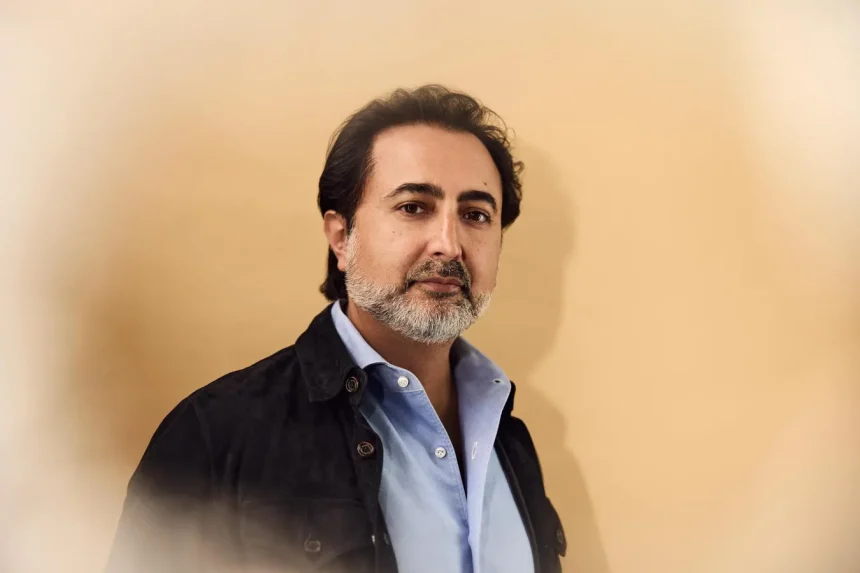
This week’s InnovationRx takes us deep into the boldest experiment happening in American healthcare right now: the attempt to prove that a traditional hospital system can be supercharged by Silicon Valley thinking. Back in October, the venture capital firm General Catalyst paid $485 million to buy Summa Health, a three-hospital system serving five counties in northeast Ohio. At the time, it seemed like a radical move—a tech investor buying an actual health system to prove a thesis. That thesis is simple but powerful: healthcare’s future won’t be built by one giant “Amazon of healthcare,” but by an entire ecosystem of startups working inside a real hospital, fixing actual problems in real time. This week, Summa and General Catalyst named the first nine companies in that ecosystem. They include Clarium, which uses artificial intelligence to make hospital supply chains leaner; Hippocratic AI, a voice agent company that reaches out to patients; Judi Health, a tech-enabled pharmacy benefit manager; and Transcarent, a healthcare navigation firm. Unsurprisingly, all nine are backed by General Catalyst. The idea, as General Catalyst CEO Hemant Taneja puts it, is to cut through the famous inertia of hospitals and show that technology can improve care and finances at the same time. The early signs are encouraging: Summa’s revenue has climbed to $2.3 billion, and while the system still isn’t profitable, its operating EBITDA is now positive—a meaningful shift from the previous year, when revenue hovered around $2 billion and losses were the norm.
The human story behind this experiment is just as important as the numbers. Taneja and his team weren’t satisfied with selling software to hospitals from the outside; they believed that no health system would ever fully embrace technology across every step of its operations, so they bought one and decided to do it themselves. Daryl Tol, the acting CEO of Summa and CEO of HatCo, the General Catalyst entity created to transform healthcare, says the technology is already catching things that might otherwise have slipped through the cracks—Hippocratic AI’s agents have contacted patients and connected them to care they might have missed. There’s also a new leader on the way: Jennifer Eslinger, currently chief operating officer at Rochester Regional Health, will take over as Summa’s CEO in September, while Tol remains CEO of HatCo. The Summa experiment is unfolding at a moment when every hospital in America is trying to figure out what to do with AI. OpenAI has signed deals with eight major health systems, and Khosla Ventures has partnered with the Cleveland Clinic to test everything from AI to digital health to next-generation therapies. But most hospitals are struggling to get fragmented pieces of technology to work together inside ancient systems. Summa’s secret sauce, according to Taneja, is Percepta, a company formed and owned by General Catalyst to focus specifically on AI modernization. Percepta’s CEO, Hirsh Jain, spent seven years at Palantir leading its healthcare and civilian government business, and his job is to make sure all the pieces actually connect. Taneja’s hope is that Summa becomes a proof point—not just for the tech industry, but for every skeptical hospital administrator in the country. “If we are going to fail,” he says, “we are going to fail for the right reasons. We should not fail because of inertia.”
Beyond Summa, this week’s edition also celebrates a group of people who have served their country in uniform and then gone on to shape American healthcare. Forbes’ new Veteran 250 list, released as part of the nation’s 250th birthday celebration, honors the most successful Americans with military service, and the healthcare names on it are genuinely inspiring. Thomas Frist Jr. spent two years as a flight surgeon in Vietnam before co-founding Hospital Corporation of America, which grew into one of the country’s largest healthcare providers and has hired more than 65,000 veterans and their family members. Louis Argenta, a Navy Medical Corps veteran, co-invented vacuum-assisted closure, a wound healing device that has been used on more than 20 million patients since 1995. Alan Miller served in the Army before founding Universal Health Services in 1979, building a net worth of $1.7 billion along the way. Patricia Horoho made history as the first woman to command the U.S. Army Medical Command; after 34 years of service, she retired and became the founding CEO of Optum Serve, UnitedHealth’s federal health services subsidiary. And Daniel Brillman and Taylor Justice, two veterans who met after their service, co-founded Unite Us, a healthtech unicorn whose software helps healthcare providers and social services work together so that patients’ underlying conditions don’t get worse. Brillman is now the director of Medicaid and the Children’s Health Insurance Program, bringing his veteran’s perspective to one of the most important jobs in public health. These stories are a reminder that the discipline, leadership, and sense of mission learned in the armed forces can translate directly into innovations that heal millions of people.
The business side of healthcare also had a major story this week. BioMarin, a biotech with a market cap of about $13 billion, announced it is acquiring an early-stage bone disease therapy from Alesta Therapeutics. The deal is worth $275 million upfront, with up to $125 million more in milestone payments, and it positions BioMarin to potentially challenge AstraZeneca in the rare bone disease market. What makes this deal particularly interesting is its structure: although it’s being framed as an acquisition, Alesta plans to spin out all of its other assets before the deal closes, so BioMarin is getting exactly what it wants—the bone disease therapy—without the baggage of the rest of the pipeline. Rare bone diseases are a niche but growing area of pharmaceutical development, and for a company like BioMarin, which already specializes in rare genetic conditions, this acquisition fits perfectly with its strategy of building a portfolio around patients who have very few treatment options. The move also shows how mid-sized biotechs are using their balance sheets to buy promising science early, rather than waiting for expensive late-stage trials. It’s a calculated bet, but one that could pay off handsomely if the therapy succeeds and earns a place in a market where patients are desperate for options.
There’s always a lot happening in the wider world of health policy and medicine, and this week is no exception. President Trump announced his intention to nominate Heidi Overton to lead the FDA. Overton is a top domestic policy aide, a fierce opponent of abortion rights, and a supporter of RFK Jr.’s “Make America Healthy Again” movement—a nomination that signals a major shift in how the agency might approach drug approval, nutrition policy, and public health regulations. In the private sector, Moderna’s stock is soaring after promising clinical trial results for a cancer vaccine designed to treat melanoma, a sign that the mRNA technology that proved itself during the pandemic may have a second act in oncology. Meanwhile, federal and state investigators are looking into whether Epic Systems, the dominant electronic health records company, has been engaging in anti-competitive practices. The FDA is also considering a fascinating new framework for evaluating AI-enabled medical devices: instead of testing each device in isolation, the agency may assess these tools using a “competency-based approach” similar to how doctors are board-certified. That could speed up innovation while still protecting patients. On the ground, there are stories of hope and alarm. One nursing home that specializes in patients with ALS and multiple sclerosis is earning praise for providing truly compassionate, high-quality care, even as the broader long-term care system struggles. Costco is getting into the Medicare business, partnering with the nonprofit insurer SCAN Group to offer Costco-branded Medicare Advantage plans in two states and a Medicare supplement in a third. And in the Democratic Republic of the Congo, the current Ebola outbreak has become the deadliest ever recorded, with 2,325 deaths and a staggering case fatality rate of 46%. That’s a sobering reminder that global health emergencies are never really over. Closer to home, an arcane budget rule is threatening Medicaid coverage for millions of Americans, and in China, a third patient has died in one of the country’s so-called investigator-initiated trials—a fast, cheap way to test experimental drugs without the oversight regulators normally provide.
Taken together, this week’s news paints a vivid picture of a healthcare system in transition, caught between incredible possibilities and stubborn realities. There is genuine excitement about the promise of AI, the emergence of new therapies, and the courage of leaders who have served their country and then improved it. But there are also deep concerns: regulatory battles, outbreaks, budget threats, and the ethical risks of cutting corners in medical research. The Summa Health experiment is perhaps the clearest symbol of this moment—a real-world test of whether innovation can be systematically installed into an existing institution without losing sight of the patients it serves. If General Catalyst and Summa succeed, they won’t just transform one Ohio health system; they’ll create a blueprint that hospitals everywhere can follow. If they fail, it will be for the right reasons—because they tried something bold, not because they sat still. That spirit of determination is worth holding onto as we watch these stories unfold. InnovationRx will be there every step of the way, bringing you the news, the data, and the human stories that make healthcare so endlessly fascinating. If you want to keep up with it all, the best way is to subscribe and get this briefing delivered straight to your inbox every week. Because if the past seven days are any indication, the next seven will be just as full of surprises.