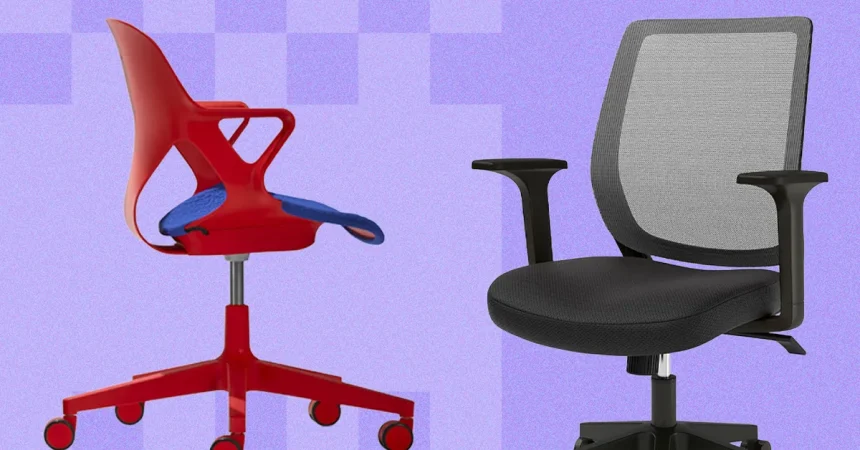
Setting up a healthy home office is about more than just buying a high-end chair; it comes down to how you interact with your workspace daily. Regardless of how ergonomic your furniture is, our bodies aren’t built for endless stationary sitting, which is linked to serious long-term health risks like heart disease and diabetes. The most effective habit you can adopt is a simple one: get up and move every thirty minutes. If possible, alternate between sitting and standing, and use your smartwatch’s movement reminders to ensure you aren’t glued to your seat. If you are experiencing persistent back pain, skip the DIY adjustments and consult a physician first.
When you do sit, your desk and chair settings should create a neutral, stress-free posture. Your chair’s armrests play a crucial role here; they should be adjusted so your elbows sit at a 90-degree angle, allowing your palms to hover naturally over the desk rather than resting firmly on it. This prevents the pressure on your wrists that often leads to carpal tunnel syndrome. Simultaneously, protect your neck and spine by ensuring your monitor or laptop screen is at eye level. If you have to crane your neck up or down, you’re setting yourself up for chronic discomfort. Use a monitor riser or an adjustable laptop stand to bring the screen into natural alignment with your gaze.
When shopping for an office chair, prioritize “adjustability” as the highest metric. A truly supportive chair should feel like it was molded to your body. Look for chairs with multi-directional armrests that lock in place, a pneumatic lift that allows your feet to stay planted on the floor at a 90-degree angle, and seat-depth adjustments to ensure there’s a gap between the chair edge and your knees. Lumbar support is equally vital; it should align with the natural inward curve of your lower spine to maintain proper posture. If your chair lacks these features, you can often bridge the gap with inexpensive, high-quality accessories like memory foam cushions or dedicated lumbar support pillows.
Understanding the “how” behind professional testing can help you make better buying decisions. Expert reviews, like those from the team at WIRED, emphasize long-term durability over first impressions. A chair that feels comfortable for five minutes may reveal design flaws after five hours or five months of use. Testers look for “jiggle” or loose tolerances in mechanical parts, which are early red flags that a product won’t last. Because an office chair is a significant investment for your health and productivity, look for companies that offer extended warranties and have transparent, reliable customer service. Don’t just settle for what is available; research if a brand stands behind their product for the long haul.
Beyond the chair itself, the environment around your desk can significantly improve your comfort. For instance, if your current casters are noisy or damaging your floor, swapping them for soft, polyurethane “rollerblade-style” wheels can make a world of difference. If you have a hard floor, a sturdy glass or polycarbonate mat can prevent scuffs and improve movement. For those who cannot replace their entire seat, ergonomic accessories—such as a memory foam footrest or a posture-correcting backrest—can provide immediate relief. These small, targeted upgrades are often the missing puzzle piece for someone struggling to stay comfortable in a less-than-perfect office setup.
Ultimately, there is no “perfect” chair for every body type. A model that feels like a dream for someone who is 5’1″ might be completely unsupportive for someone over 6′, and vice versa. When selecting your setup, consider the specific nuances of your needs: do you need a wide seat? Do you run warm and require breathable mesh? Are you working in a small space? Avoid falling for marketing aesthetics or gimmick features—like overly complex motors or “active” chairs that cause leg fatigue—if they don’t actually support your natural posture. Take the time to test your setup, make incremental adjustments, and remember that the best desk setup is one that encourages you to stay active, keep your joints loose, and listen to what your body needs throughout the day.