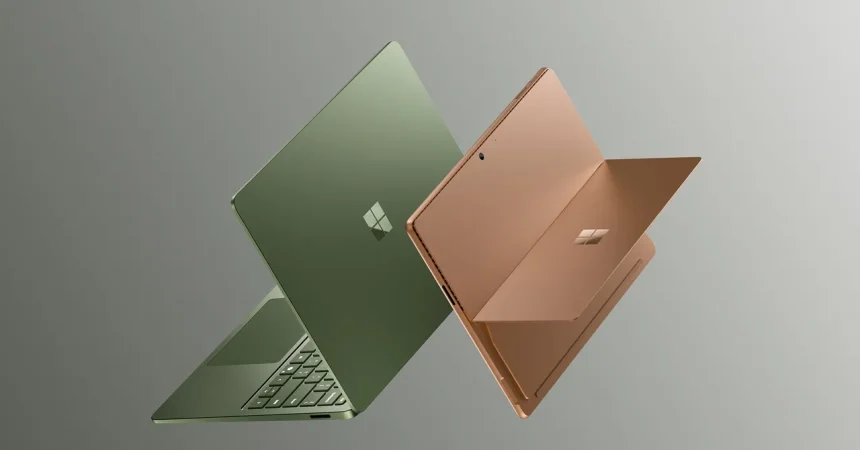
Microsoft has officially unveiled the latest iterations of its flagship hardware, the Surface Laptop 8th Edition and the Surface Pro 12th Edition. These devices arrive equipped with Qualcomm’s formidable Snapdragon X2 chips, a series that has been gradually redefining performance metrics across the Windows ecosystem throughout the year. On paper, the technical upgrades are undeniably impressive; Microsoft claims that these new processors deliver up to 53 percent faster graphics performance compared to their predecessors. Furthermore, users can now expect a substantial 15.5 hours of battery life, making these machines significantly more reliable for long, unplugged work sessions. Yet, despite these internal leaps, the hardware aesthetic remains intentionally familiar, preserving the beloved 3:2 display aspect ratio and the high-quality tactile experience that fans of the Surface line have come to rely on.
However, the real headline surrounding this launch isn’t just the processing power—it is the reality of the price tag. The Surface Laptop 8th Edition now holds a starting price of $1,599. To put that into perspective, the previous generation launched at $999 just a short time ago, representing a staggering $600 increase. Even when accounting for smaller incremental price hikes that occurred over the last year, the jump is difficult to ignore. The Surface Pro 12th Edition isn’t faring much better for the wallet, launching at a $1,499 starting price, which notably excludes the cost of the essential detachable keyboard. For many longtime power users, these figures represent a significant barrier to entry, signaling a pivot toward a more premium, perhaps even prohibitive, market positioning.
This aggressive pricing strategy is not a localized decision by Microsoft, but rather a reflection of the broader,, more difficult environment facing the entire PC industry. The ongoing, lingering effects of component shortages continue to cast a long shadow over manufacturing. Silicon, memory, and high-speed storage components remain uncharacteristically expensive, and companies are feeling the pinch. As supply chains struggle to recover fully, the cost of these premium chips and components is being passed directly to the consumer. It is a sobering look at how inflation and logistical bottlenecks have fundamentally altered the landscape, forcing manufacturers to move away from the “accessible premium” tiers that defined the market just a few years ago.
Despite the sticker shock, the devices themselves retain the refined polish that Microsoft has spent years perfecting. The Surface Laptop continues to be a standout for its build quality and display, and the Surface Pro remains the gold standard for versatility. To signal the new internal improvements, Microsoft has introduced fresh aesthetic options—a soft, muted “Jade” green for the Laptop and an elegant “Dune” gold for the Pro. These additions suggest that while the company is navigating a difficult supply chain, it still prioritizes the user experience and the “feel” of its products. It strikes a balance between the functional necessity of the new hardware and the human desire for a device that looks and feels like a modern luxury tool.
Interestingly, this shift toward higher-end configurations leaves a void at the bottom of the market. While competitors are beginning to cut corners—such as returning to 8GB of RAM to hit lower price points—Microsoft seems to be holding the line for now, at least for its primary offerings. There is speculation that a budget-tier version of the Surface Laptop 13 may follow eventually, but for the immediate future, these machines are aimed squarely at the professional who requires high memory and storage from day one. In the U.S. market, for instance, Microsoft clarified that the base model begins at 512GB of storage, effectively eliminating the cheaper 256GB entry point that was previously available to global markets, reinforcing the “pro” label attached to the new lineup.
Ultimately, these two new machines serve as a bridge to a more experimental future for Microsoft. They arrive on the heels of the company’s buzzworthy announcement of the Surface Laptop Ultra, which is slated to feature the Nvidia RTX Spark chip later this year. That device is intended to be the true, heavy-hitting competitor to Apple’s MacBook Pro. In that context, the Surface Laptop 8th and Surface Pro 12th editions act as the sturdy, reliable stalwarts of the current catalog. They offer a refined, albeit expensive, upgrade for people firmly planted in the Windows ecosystem, capturing a snapshot of a moment in time where technology has achieved new heights of performance, even as the cost of getting there continues to rise.