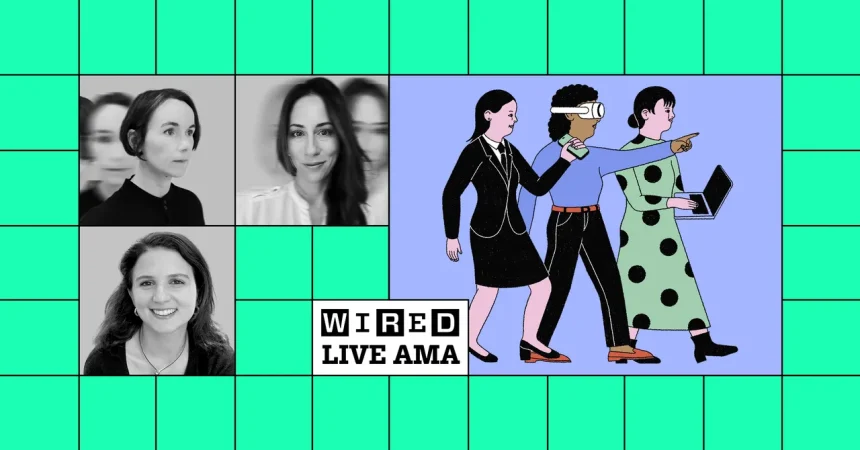
By 2026, the phrase “the future is female” had come to feel less like a rallying cry and more like a museum artifact. The tech industry, which had spent the better part of the last decade awkwardly genuflecting at the altar of diversity, equity, and inclusion, had moved on. Politically, the ground had shifted violently: Donald Trump was back in the White House, Silicon Valley’s most powerful men were falling over themselves to be photographed with him, and the mood in boardrooms and all-hands meetings had gone from cautious to combative. Mark Zuckerberg, who once wore hoodies to congressional hearings and preached the gospel of belonging, now stood on the other side of the line, telling anyone who would listen that companies needed more “masculine energy.” Elon Musk, meanwhile, had transformed his federal workforce into a kind of terrified experiment in efficiency, with women losing their jobs at disproportionately higher rates than men. The message from the top was unmistakable: the experiment of centering gender — of asking uncomfortable questions about power, pay, and who gets to build the future — was officially over. But WIRED wanted to know what that actually meant for the women still inside the machine. So we went looking, expecting to find a clear story of progress or defeat. Instead, we found something far more complicated: frustration, fatigue, confusion, and a lot of women who would rather talk about anything else.
What emerged from the reporting was less a simple backlash and more a kind of collective exhaustion. The female engineers and executives we spoke with were not, by and large, mounting heroic crusades. They were tired. They were sick of being asked to be brave, to lean in, to carry the moral conscience of their companies in their daily Slack messages. The word “girlboss,” once a battle cry for a generation of women who thought they could bend the corporate world to their will, now sounded almost like a joke — a dated relic from the era of glossy conferences, pink business books, and Pinterest boards. In 2026, the new power symbol is not a woman in a bright blazer but an AI model with a female voice who never complains, never asks for a raise, and never posts anything controversial on LinkedIn. That was the most unsettling finding: the figure of the AI girlboss, a chatbot-style embodiment of femininity engineered for speed and subservience, had replaced the messy, ambitious, genuinely difficult women who used to demand table seats. And when we tried to talk about any of this openly, we hit a wall. A total lack of interest, we were told. Women in tech don’t want to be the women-in-tech story anymore. They don’t want to be the token panelist, the obligatory mention in a diversity report, or the subject of yet another sympathetic but ultimately powerless magazine feature. They just want to do their jobs, build their careers, and go home without having their gender dragged into it — a sentiment that is simultaneously a victory for normalcy and a heartbreaking renunciation of the people who fought to make that normalcy possible.
To help make sense of this strange, tense moment, WIRED is hosting a subscriber-only livestream on September 24 at noon Eastern / 9 a.m. Pacific. It’s designed to be less of a lecture and more of an open conversation — a place where people can ask the questions that are awkward to bring up in a meeting or on a group chat without fear of being either cancelled or silently shamed. Why does “feminine energy” suddenly sound like an insult? Are women actually leaving Silicon Valley in bigger numbers, or are they just staying quiet? What exactly is an AI girlboss, and why are we all pretending to be fine with it? Is there still a place for mentorship, for solidarity, for making the industry more humane — or has all of that been officially retired like an old software update nobody wants to install? The point is to move past the echo chamber of think-pieces and get into the kind of messy, honest conversations that happen in kitchens after a second glass of wine, but with better Wi-Fi and a live chat full of like-minded people. The panel will be reflecting on the big findings from WIRED’s deep dive, pushing back on the easy narratives, and answering the questions that have been piling up in the comment section and in the hearts of women who wonder whether they still belong in the industry they helped build.
It takes a particular kind of person to sit in front of the internet and talk about gender without flinching, and WIRED has assembled exactly three of them. Sandra Upson, a features editor at WIRED, will be hosting the livestream; she’s the kind of editor who takes ambitious, future-defining stories and makes them feel urgent and personal rather than abstract and academic. Alongside her is Lauren Goode, a senior correspondent who covers all things Silicon Valley — artificial intelligence, semiconductors, venture capital, startups, workplace culture, and the tech world’s most fascinating power players. Lauren has a knack for asking the question everyone else is tiptoeing around, which is exactly the energy this conversation needs. And then there’s Ej Dickson, a senior culture writer whose work focuses on the internet, with all its weird subcultures and dark corners. One of Ej’s recent features told the story of a college student who fought back against the “burnerverse,” a loosely connected online community of sports fans who dox and humiliate young women — an unsettling reminder that the internet’s gender wars are happening just as fiercely in the comment sections as they are in the executive suites. Together, the three of them bring the reportage, the cultural curiosity, and the hard-won skepticism that a topic like this demands. They aren’t there to offer tired slogans or reassurance; they’re there to dig into the contradictions, including the biggest one of all: that at the very moment no one wants to talk about gender, gender is shaping everything.
For subscribers, the livestream will be available right here on this page, and if you can’t tune in at the scheduled time, don’t worry — a replay will be posted afterward, so you can watch when the children are asleep, the meetings have ended, and you have a quiet hour to yourself. If you’re not a subscriber yet, this is a good moment to consider becoming one: you’ll get access to the livestream, the full WIRED archive, and the kind of long-form journalism that asks tough questions without pretending to have easy answers. In the meantime, while you’re waiting for September 24, there are plenty of past livestreams to get you up to speed — guides to ChatGPT’s essential features, practical advice for getting started with Claude, and other deep dives into the tools and trends that are shaping the near future. It’s all part of WIRED’s broader mission: not just to cover technology but to help you understand what it’s doing to you, to your colleagues, to your relationships, and to the way you think about yourself. And if this particular livestream feels a little more personal than the average teardown of a new gadget, that’s because gender isn’t a feature or a bug — it’s one of the oldest operating systems we have, running underneath every layer of the tech industry, whether anyone admits it or not.
Ultimately, the findings of this investigation are not a clean victory lap or a eulogy. They’re a snapshot of a moment in which a generation of women who were promised open doors are standing in a corridor full of closed ones, wondering if the key was ever really in their hands. Some have responded by doubling down, building their own startups, or quietly mentoring the one or two younger women they trust. Others have simply left, trading the prestige of a Silicon Valley badge for the sanity of a smaller company or a completely different industry. And many more are still there, sitting in meetings where their names are spelled wrong and their ideas are repeated back to them by slightly less qualified men, smiling in a way that is both a refusal to quit and a resignation to the fact that this might be as good as it gets. The journey through this terrain requires everyone — women and men, veterans and newcomers, tech fans and tech skeptics — to set aside the easy labels and listen for a while. So ask your questions. Be honest about your confusion. Let the conversation get uncomfortable. Because the real story isn’t that gender is dead in Silicon Valley; it’s that gender was never going to be settled by a diversity statement or a company-wide email. It’s alive, complicated, and every bit as consequential as the technology itself — and it’s long past time we talked about it with the same care we bring to the products we build.