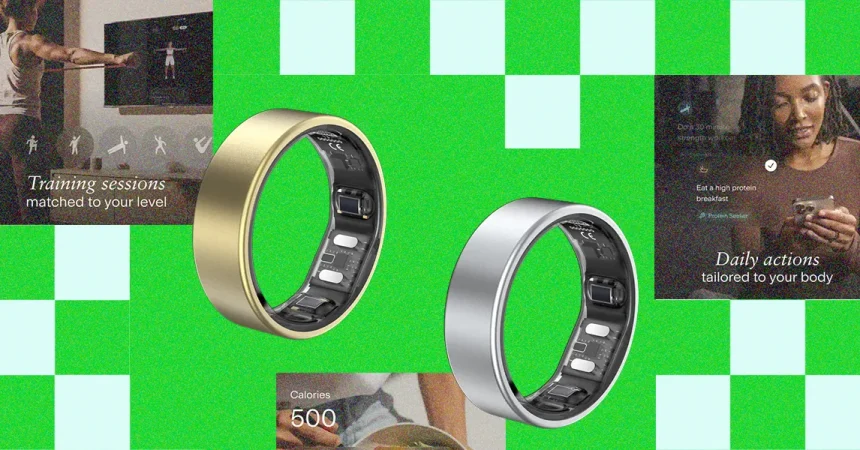
I’ve been wearing the AlterMe ring for a couple of months now, and I’ve come to realize that it’s not just another fitness tracker. It’s more like a coach that lives on my finger. At first glance, it resembles the Oura Ring 5, and indeed it offers the same kind of health tracking you’d expect from Oura. You get your sleep stages, activity levels, resting heart rate, body temperature trends, and all those numbers that tell you how your body is doing. But the more I use it, the more I see the personality of AlterMe. It’s a closed ecosystem in the best sense of the phrase. Instead of just collecting data and handing it over to me in charts, AlterMe takes that data, combines it with genetic insights from my own DNA, and then uses artificial intelligence to create a workout plan for me every single day. That’s a big difference. Oura is brilliant at tracking and interpreting, and it offers guided fitness content and integrates with Apple Health. But its main job is to be a mirror for your health. AlterMe’s main job is to be a personal trainer, using the mirror to decide what you should do next. The distinction matters because it changes the relationship you have with the device. With Oura, I check my readiness and then make my own decisions. With AlterMe, I check my readiness and then receive a concrete plan, tailored to my body’s current state and my long-term genetic tendencies. It feels less like a passive dashboard and more like a conversation with someone who knows me well. That’s not to say one is better than the other; they’re just different approaches to the same problem. If you want deep insight and freedom, Oura is wonderful. If you want insight plus daily direction, AlterMe is the more active partner. I’ve found myself looking forward to the morning recommendation, which is something I never expected from a ring. It’s almost like having a trainer who never sleeps, never gets tired, and never forgets what happened yesterday.
The design of the AlterMe ring is where I have a few mixed feelings. It has a titanium outer frame, and it comes in a gold finish, silver, or Stealth black. I chose gold because it looked beautiful in the photos, and honestly, it still looks great from a distance. The finish is warm and eye-catching, and I’ve gotten a few compliments from friends who thought it was jewelry rather than a fitness device. But after a couple of months of daily wear, the gold finish has picked up some scuff marks. Nothing catastrophic, but enough to notice when the light hits it a certain way. I’m not someone who babies my gadgets, so maybe that’s on me, but I do wish the finish were a bit more durable. More importantly, I found the ring quite bulky. It’s thicker than the sleek Oura Ring 5, and that extra thickness becomes noticeable in real life. When I’m lifting weights, for example, the ring sometimes gets in the way. I’ve had to adjust my grip or take the ring off for certain exercises, which is a little annoying. I understand that the ring needs to house all those sensors and the battery, but the trade-off between functionality and comfort is something I’m still getting used to. It’s not uncomfortable for everyday wear, and I barely notice it when I’m typing or walking. But when I’m doing push-ups, holding a dumbbell, or gripping a barbell, I’m reminded that it’s there. That’s a small price to pay for the data it gives me, but I’d be lying if I said I didn’t occasionally wish it were lighter and slimmer. The design is clearly meant to be both a fitness tool and a lifestyle accessory, and it succeeds at that for the most part. I just think it leans a little more toward “tool” than “accessory” when compared to the competition. Still, the titanium frame feels solid and durable, and I never worry about it breaking or bending. It’s a reassuring piece of engineering, even if it’s not the most elegant thing I’ve ever worn.
Inside the app, the stats section quickly became my favorite place to start the day. The AlterMe ring tracks all the basics: daily calorie burn, step count, distance covered, sleep duration, and a readiness score. The readiness score is particularly interesting because it’s not just a number; it’s a summary of how your body has recovered from the previous day’s activity and sleep. When I wake up, I can glance at that score and immediately know whether I should push myself or take it easy. The app also shows my sleep stages, including deep sleep, REM, and light sleep, along with a sleep efficiency percentage. I’ve always been someone who values sleep, but seeing the data in such detail has made me more disciplined about my bedtime. I’ve noticed that on nights when I go to bed later than usual, my readiness score the next morning is lower, and the workout the app recommends is gentler. That’s exactly the kind of personalized feedback I was hoping for when I started using the ring. What’s more, the app combines my biometric data with genetic insights from my DNA. That means the recommendations aren’t just based on what happened yesterday; they’re based on how my body is built to respond to exercise, recovery, and stress. It’s a level of personalization that feels genuinely futuristic. I don’t have to manually log how I feel or what I did; the ring and the app figure it out. The only thing I need to do is wear the ring and open the app. That simplicity is a huge selling point for me. I’ve tried fitness trackers in the past that required constant input, and I always fell off the wagon. With AlterMe, the experience is effortless. The data is presented in a clean, intuitive way, so I don’t need a degree in sports science to understand what my body is telling me. It’s like having a health report card that writes itself every night.
The daily workout is where AlterMe really sets itself apart. Every morning, the app provides a workout to follow, and that workout is based on my readiness score, sleep data, activity history, and genetic profile. But here’s the thing: I get to choose the level. The workouts can be as low-key or as challenging as I want, depending on how I feel. I can choose from stretch, strength, cardio, yoga, or combat-style sessions. That variety is a lifesaver. Some mornings I wake up feeling great and ready to tackle a hard strength session. Other mornings I feel sluggish or a little sore, and I’ll choose a gentle yoga flow or a light stretching routine instead. The app doesn’t judge me; it just gives me options. That flexibility has kept me consistent in a way that rigid workout plans never could. In the past, I would buy into a program, miss a few days, and then abandon it entirely because I felt like I had failed. With AlterMe, there’s no failure. The workout adapts to me, not the other way around. I can even choose a combat-style session if I want to sweat and punch the air, or a cardio session if I want to get my heart rate up. The guided videos are well-made, and the app tracks my performance throughout the session, so the next day’s recommendation becomes even more accurate. It’s a virtuous cycle. The more I use the ring, the better it knows me, and the better its recommendations become. I’ve also noticed that the workouts are designed to be done at home with minimal equipment, which is perfect for someone like me who doesn’t have a gym membership. I can do everything in my living room with a yoga mat and a pair of dumbbells. That convenience is huge. I’m much more likely to exercise when I don’t have to drive anywhere or wait for equipment.
The philosophy behind AlterMe’s approach is something I’ve come to appreciate more and more. The representatives told me that the biometric data collected by the ring can help make a recommendation, but it can’t capture every detail about how I feel. Soreness, illness, stress, injury, or the demands of the day may all change what feels right, and the ring can’t know those things. That’s why the app gives me the option to choose my level. I think that’s incredibly smart. So many fitness products try to be authoritarian, telling you exactly what to do and when, as if you’re a machine. But life is messy. Some days you wake up with a stiff neck, or you had a stressful meeting planned, or you just didn’t sleep well because your neighbor was loud. A good coach understands that. AlterMe understands that too. The representatives explained it beautifully: “Giving you a choice is also an intentional part of the AlterMe experience. Without choice, it’s hard for you to stay consistent. We want to offer useful guidance while leaving you in control of your effort. Your choice adds context and makes the plan easier to fit into real life.” That statement really resonated with me. It’s not about handing over all control to an algorithm; it’s about creating a partnership between the algorithm and me. The algorithm brings the science, and I bring the humanity. Together, we create a plan that’s both effective and sustainable. I’ve learned to trust the readiness score, but I’ve also learned to trust myself. If I’m feeling great and the score is low, I can choose a more challenging workout. If I’m feeling exhausted and the score is high, I can take it easy. The power is in my hands, and that makes me more engaged, not less. It also removes the guilt that often comes with skipping a workout or modifying a plan. There’s no external pressure to perform; just gentle guidance that respects my body’s signals.
After all these weeks, I’ve realized that AlterMe is not trying to be the thinnest ring or the most passive tracker on the market. It’s trying to be the most useful partner you’ll ever have in your fitness journey. It’s a bit bulkier than the Oura Ring 5, and the gold finish might scuff if you’re hard on it, but those are minor trade-offs for the depth of personalization it offers. The combination of wearable data and genetic insights is rare, and the daily workout recommendations make the whole experience feel active and alive. I no longer have to wonder what I should do for my health today; I just look at my ring, open the app, and follow the plan. That sense of direction has been genuinely transformative for me. I’ve been more consistent with exercise than I have in years, and I’ve also learned to listen to my body better. The readiness score has taught me that rest is not laziness; it’s part of the process. The workout choices have taught me that consistency is more important than intensity. And the genetic insights have given me a deeper understanding of my own body. Is AlterMe perfect? No. The design could be sleeker, the finish more durable, and the price might make some people hesitate. But as a tool for building a healthier lifestyle, it has exceeded my expectations. It doesn’t just tell you what happened while you were asleep or how many steps you took; it tells you what to do next, and then it adapts to how you actually feel. That’s the kind of health tracking I want in my life. It’s personal, it’s human, and it works.