Paragraph 1: A Cosmic Overachiever
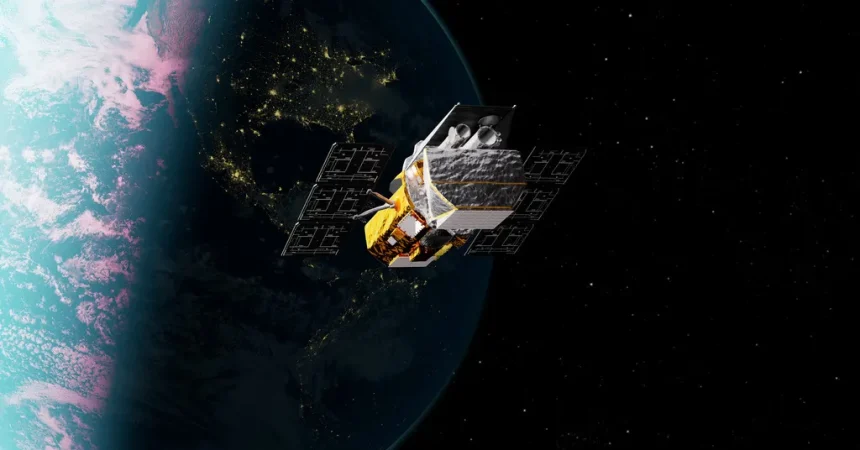
When NASA launched the Swift space observatory back in November 2004, it carried with it the modest expectations of a focused scientific mission. Designed to last just two years, Swift was tasked with a rather extraordinary job: to act as the universe’s cosmic alarm clock. Its primary mission was to detect gamma-ray bursts (GRBs) – the most powerful explosions known to exist in the cosmos, second only to the Big Bang itself. These fleeting, cataclysmic events are thought to signal the birth of black holes or the collision of neutron stars, emitting more energy in a few seconds than our sun will radiate in its entire 10-billion-year lifetime. To catch these fast-fading flashes, Swift was equipped with a suite of telescopes that could rapidly swing toward the burst’s location, capturing data across multiple wavelengths – gamma-ray, X-ray, ultraviolet, and optical – within minutes of detection. What happened next was nothing short of remarkable. Swift didn’t just meet its two-year goal; it absolutely obliterated it, becoming one of the most prolific and beloved observatories in NASA’s fleet. For over two decades, it has tirelessly mapped the high-energy sky, discovering hundreds of thousands of bursts, studying the aftermath of star-deaths, probing the distant early universe, and even shedding light on the mysterious nature of dark matter and the physics of extreme gravity. It has watched supernovae, monitored comets, and provided unprecedented views of exotic objects like magnetars. For a satellite that was never supposed to see the 2010s, let alone the 2020s, Swift became a testament to the value of engineering durability and the sheer longevity of well-built machinery. But like all things, even cosmic workhorses must eventually face their twilight, and as the decades passed, the little observatory began to show signs of a painful, inevitable end – a slow, silent descent toward the Earth’s atmosphere, driven not by any dramatic failure, but by the relentless, invisible drag of the very air that surrounds our planet.
Paragraph 2: The Slow, Silent Sinking
To understand Swift’s predicament, you have to picture its orbital environment. It circles Earth at an altitude of roughly 600 kilometers (about 370 miles) – a region often considered the edge of space, but it’s far from a perfect vacuum. Even at that height, there are stray atmospheric particles, remnants of Earth’s atmosphere that have leaked outward. And while these particles are incredibly sparse, over time, their friction against Swift’s solar panels and body creates a tiny but persistent drag force. This drag continuously saps the spacecraft’s orbital momentum, causing it to lose a minuscule amount of altitude with every single orbit. For most satellites, this decay is a slow, barely perceptible creep. But it’s a death sentence nevertheless. The problem is that Swift, unlike many newer satellites, was never equipped with a propulsion system. It was designed as a short-term mission, so it lacked the fuel tanks and thrusters needed to perform an orbital boost, to climb back to a safer altitude. The mission designers knew that without an orbital boost, its time in orbit was ultimately finite, but they honestly expected that the science would be over and done with long before the drag became a serious issue. They were wrong. As the sun’s natural 11-year activity cycle ramps up toward its solar maximum, the star begins emitting more extreme ultraviolet radiation and solar flares. This additional energy heats the Earth’s upper atmosphere, causing it to expand and thicken. This expansion pushes more air particles into Swift’s orbital path, dramatically increasing the atmospheric drag on the little observatory. Over the past year, the rate of Swift’s descent has noticeably accelerated. The mission team began to run the numbers, and the stark reality hit home: unless something was done, Swift would naturally re-enter the atmosphere and burn up before the end of 2026, condemning all its future science to a fiery end in the ocean. A beloved, irreplaceable scientific asset was slipping away, and the clock was ticking faster every day.
Paragraph 3: A Bold, Sci-Fi Rescue Plan
This is where the story took an unexpected, almost cinematic turn. Instead of merely accepting the inevitable and watching Swift die a slow, dignified death, NASA decided to attempt something that would have been unthinkable just a few years ago: a real-life space rescue. They partnered with a relatively new commercial company called Katalyst Space Technologies, a pioneering outfit focused on the brave new frontier of on-orbit servicing. The plan was audacious, complicated, and full of peril. They would launch a satellite called LINK, a purpose-built robotic servicer, that would catch up to Swift, rendezvous with it, and physically grapple onto the aging observatory. Then, using LINK’s own set of thrusters, the combined stack would perform a series of orbital maneuvers to boost Swift back up to a stable, higher altitude, effectively giving the old telescope a new lease on life. This was a truly novel endeavor because Swift was never designed to be grabbed. It has no docking ports, no grapple fixtures, no handrails. It’s basically a large, smooth, tumbling object moving at thousands of miles per hour. Capturing it would require incredibly precise navigation, sophisticated sensors, and a mechanical arm akin to something out of science fiction. NASA and Katalyst knew the risks were huge. They openly acknowledged that this was a high-risk, high-reward mission, a gamble that could fail at any number of points. But the potential payoff was enormous – not just for Swift, but for the future of space sustainability. If successful, it would prove that we could fix, refuel, and re-boost aging satellites that were never meant to be touched, a capability that could save billions of dollars and tons of space junk in the coming decades. With that vision in mind, the LINK spacecraft was launched into orbit on July 3, 2026, carrying the hopes of an entire space community with it. The initial phase went according to plan, but the true test was still ahead: the delicate, nerve-wracking final approach.
Paragraph 4: The Heartbreak of Failure
And then, tragically, the plan fell apart. Soon after LINK reached its intended orbit and began its final approach toward the tumbling Swift, catastrophic problems emerged. The spacecraft’s attitude control system – the crucial mechanism responsible for keeping it properly oriented and stable in the weightlessness of space – began to fail. Without a functioning attitude control system, LINK could not maintain its pointing, could not accurately track Swift, and could not safely execute the precise maneuvers required to get close enough for a capture. The failure was serious and fundamental. For weeks, a desperate team of engineers on the ground worked feverishly to troubleshoot, to remotely diagnose the fault, and to try to regain a reliable lock on the spacecraft’s orientation. They sent software patches, they attempted to bypass certain electronics, they tried every trick in the book, but the problems persisted. The attitude control system simply would not cooperate. The risk of attempting a blind, uncontrolled grapple with a target moving at 17,000 miles per hour became too great. Any miscalculated movement could cause a catastrophic collision, turning LINK into a 200-pound bullet that would smash into Swift and shatter it into thousands of sharp fragments, creating a massive debris field that could endanger other satellites in the region. The decision was made, with heavy hearts, to cancel the capture portion of the mission. On Wednesday, NASA administrator Jared Isaacman made the announcement official, and the disappointment was palpable. The dream of giving Swift a second life had evaporated. The feeling among the team was akin to watching a beloved patient slip away just as a miracle cure was about to be administered, only for the syringe to break in the doctor’s hand. It was a stark, humbling reminder that space remains a merciless environment, and that even the most carefully engineered plans can be undone by a single malfunctioning component.
Paragraph 5: Finding the Silver Lining in Defeat
Yet, even in the bitter ashes of this setback, there was a glimmer of valuable progress that NASA and Katalyst were determined not to let go to waste. Although LINK could no longer safely capture Swift, it could still perform a different, albeit less dramatic, mission. The spacecraft would still be able to approach Swift, though at a much safer distance, to conduct a series of un-tethered flybys and proximity operations. These maneuvers would allow the onboard sensors, guidance algorithms, and communication systems to be stress-tested against a real, non-cooperative target in a real orbital environment. The data gathered from these close approaches would be absolutely invaluable. It would teach engineers exactly how their radar, lidar, and optical cameras behave when tracking a moving, tumbling object, how well the software commands work when navigating relative to a real satellite, and how the communication systems function in the same orbital regime. This information, while not rescuing Swift, would lay the critical groundwork for the future of satellite servicing, docking, and debris removal. In his statement, Isaacman articulated this philosophy beautifully, noting that while this was not the outcome they had worked toward, it did not negate the reasons why the mission was worth pursuing. He praised the team’s extraordinary speed and effort, and emphasized that the lessons learned from the LINK rendezvous attempt would absolutely be applied to future missions. He framed the failure not as a dead end, but as a necessary stepping stone, a crash course in the difficult art of space-based interaction. It was a classic demonstration of the engineering ethos: you learn more from your failures than from your successes. The grit and determination shown by the mission team turned a heartbreaking loss into a forward-looking investment. They transformed a cosmic fender-bender into a university lecture on the physics and engineering of close-quarters maneuvering, ensuring that the hard-won knowledge would not be lost.
Paragraph 6: A Fiery Farewell and a Legacy of Hope
So, what now for the beloved Swift? Without a successful orbital boost from LINK, the inexorable march of atmospheric drag will claim it. NASA’s current estimates indicate that Swift will likely re-enter the Earth’s atmosphere before the end of 2026, though the exact timing is still uncertain, as it depends on the unpredictable whims of the sun. When it does descend, it will not simply vanish. It will endure a spectacular, violent death. Traveling at incredible speed, the satellite will compress the air in front of it, heating up to thousands of degrees Celsius. The intense friction will cause the spacecraft to disintegrate, and the vast majority of its materials—the aluminum, the titanium, the electronics—will vaporize and melt into a fiery trail, disintegrating into tiny particles high in the sky. Only a few durable fragments, likely made of heat-resistant parts, will survive the plunge and splash down harmlessly into the remote ocean. The end of a life in space is always a somber occasion, particularly for a mission that has given so much to science. We will be losing a dedicated cosmic watchman, a telescope that has defined our understanding of the violent high-energy universe for two decades. But we must not mourn its loss with despair, but rather celebrate its extraordinary legacy. Swift taught us more about gamma-ray bursts, black holes, and the nature of gravity than any single instrument before it. It lived a full and rich life, far exceeding its original promise. And in its final chapter, it even pushed the boundaries of what is possible in space technology, forcing us to consider new ways to operate, maintain, and service our assets beyond Earth. The failure of the LINK rescue underscores a fundamental truth about space exploration: it is hard, it is risky, and it is unforgiving. But it also proves that we are willing to try, that we are continuously learning, and that our drive to understand and preserve our place in the cosmos is unwavering. As Swift falls to meet its fiery end, it will blaze a final, brilliant path across the sky, but its light will continue to glow in the data it sent home and in the lessons it taught us, illuminating the way for the next generation of observatories and the era of in-space servicing that will one day become routine, all thanks to the little telescope that refused to quit.