“It definitely makes you wonder truly who is the real monster in the situation.” That is the kind of question that tends to follow Junji Ito’s work around like a shadow, and it’s the question that director Yûta Shimotsu found himself asking while making a new episode of Strange: Junji Ito’s Tales for Sleepless Nights. The live-action Japanese horror anthology, which ran for twelve episodes on TV Tokyo over the summer, has now found its way to American audiences through HBO Max, bringing with it all the queasy, slow-burning unease that Ito’s fans have learned to crave. There is something almost comforting about the familiarity of his nightmares: the ordinary schoolgirl, the weird new classmate, the face that starts to shift at the edges like wet clay. But then the story turns, and suddenly you are not sure who you should be afraid of, or why. That is the heart of Ito’s particular magic. He never lets you settle. He blurs the line between victim and villain, between the one who is haunted and the one who does the haunting, until horror feels less like a monster under the bed and more like a mirror held up to something deeply human.
The episode that screened at New York Comic Con, “Face Thief,” is a perfect example of that blurriness. Based on Ito’s short story “The Face Burglar,” it follows a new girl at school named Machida, played by Nanami Yamazaki, who catches the attention of a strangely clingy classmate named Kamei, played by Anna Hoshino. At first, Kamei seems like just another lonely kid desperate for friendship. But then Machida notices something impossible: there is another girl in class who looks exactly like Kamei, yet claims to be no relation. The truth, when it comes, is the stuff of Ito’s signature weirdness. Kamei’s method is simple and awful. She befriends cute girls, wins their trust, and then steals their faces. The horror unfolds slowly, in small details that feel almost too intimate to watch. During quiet conversations, Kamei’s face begins to ripple and rearrange itself, borrowing bits and pieces of Machida’s own features. It is repulsive at first, and Machida wants nothing to do with her. But then something strange happens. When a group of bullies corners them, Kamei grows a third eyeball on her cheek, and the sight is so unsettling that the bullies run away. The threat is gone, and in that moment, Kamei has done something for Machida. It is the beginning of a bond, or at least the beginning of something that feels like one. And that is where the story becomes truly uncomfortable, because you start to understand Kamei even as your skin crawls. You begin to see the loneliness behind the shape-shifting, and you wonder if stealing a face is really so different from the way we all try on personalities just to survive school, work, or love.
Shimotsu, who spoke to the crowd after the premiere, made it clear that “Face Thief” is not just a creepy story about a supernatural creature. It is also a biting critique of the conformity and peer pressure that saturate Japanese society. “We have social pressure that we are supposed to not be too different from others,” he said. “Individuality is not very respected.” Those words land with a weight that goes far beyond the episode itself. In a culture where blending in is often treated as a virtue, the idea of someone stealing another person’s face becomes a brutal metaphor for the ways we erase ourselves just to be accepted. The horror of “Face Thief” is not only that Kamei takes something precious from her victims. It is that her victims, like so many of us, are already trying to become someone else. They are already wearing masks, already hiding their true selves behind the versions of themselves that seem more likable, more acceptable, more safe. Kamei is just the physical manifestation of a spiritual sickness that the entire school shares. Watching the episode, you may catch yourself thinking about your own life, about the faces you have worn for different people, about the parts of yourself you have learned to bury. That is the unsettling gift of Ito’s storytelling. It turns the most ordinary anxieties into something grotesque, and it makes you wonder, as Shimotsu did, who the real monster is. Is it the girl who steals faces, or is it the society that teaches us all to believe our own faces are not good enough?
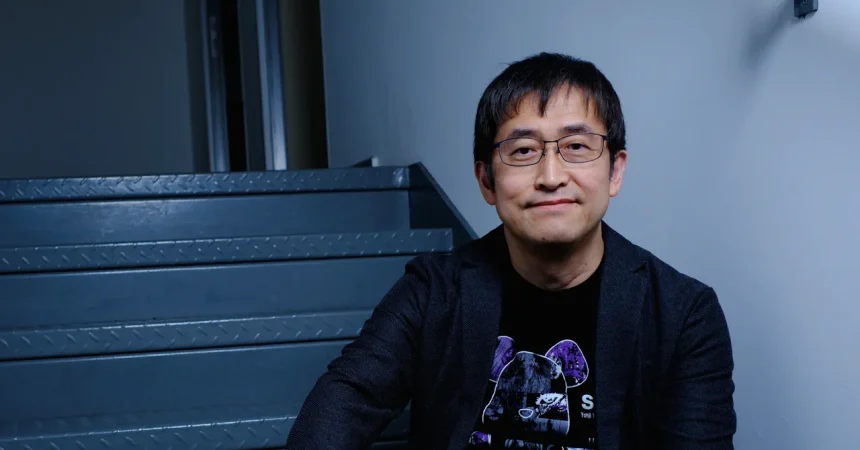
Ito himself appeared at New York Comic Con in a video message, looking every bit the quiet, bespectacled artist you might imagine. He spoke about “The Face Burglar” as one of his earlier tales, a story he came up with after struggling through several unsuccessful submissions to his publishers. “Not a ghost, just a unique condition inspired by chameleon camouflage,” he said, with a kind of gentle simplicity that seems to be his trademark. The story was originally published in 1987 in the pages of Monthly Halloween, the same year that his legendary Tomie first appeared. It was the kind of magazine that nurtured strange and unsettling voices, and its offshoot, Nemuki, whose title translates to something like “Strange Stories of Sleepless Nights,” became the inspiration for the new anthology’s name. There is something fitting about that lineage. Ito did not arrive fully formed as the master of horror we know today. He fumbled through early failures, reached for ideas, and eventually found his voice in the weird, uncomfortable spaces between everyday life and the impossible. His description of “The Face Burglar” as “a unique condition” rather than a ghost story is telling. He has always been less interested in traditional monsters than in the monstrousness that hides in ordinary people. The chameleon idea gives the story a naturalistic, almost biological horror, as if the body itself could betray the soul. In reflecting on the new adaptation, Ito said it was “brought to life by a fresh team of upcoming actors and directors. Rather than jump scares, it builds a slow creeping dream perfect for horror.” That is exactly the tone he has perfected over decades: horror that creeps rather than leaps, that settles into your bones gradually, that feels less like being startled awake and more like sinking into a dream you cannot escape.
Shimotsu, for his part, seems to understand that slow-creep quality deeply. He has helmed episodes of Strange: Junji Ito’s Tales for Sleepless Nights with a deliberate emphasis on stillness, in both the performances and the camera work, evoking the frozen, meticulous quality of Ito’s comic book pages. There is a particular way Ito draws faces, letting terror accumulate in small changes, and Shimotsu tries to translate that into live action by holding shots a beat longer than feels comfortable, letting actors sit in silence, letting the audience notice something wrong before the characters do. It is a technique that demands patience, but it is also what makes the horror land so powerfully. At the panel, Shimotsu told fans that he hopes to push this fidelity even further in a potential season two by shooting at least one episode in black-and-white, which is, after all, the medium that Ito works in. The idea is almost intoxicating. Imagine the sharp contrasts, the deep shadows, the faces emerging from darkness like pencil drawings come to life. It would be a loving tribute to the source material, and a sign that Shimotsu is not just adapting Ito’s stories but trying to capture the very texture of his imagination. His previous work, including Best Wishes to All and Shudder’s New Group, suggests a filmmaker who is comfortable with unease, who is drawn to the strange and the uncanny. But it is clear that Ito’s work holds a special place in his heart. He speaks about it with a kind of reverence, as if he is not just a director adapting another artist’s stories but a fan given the chance to step inside a nightmare and make it his own.
Looking ahead, the future of Shimotsu and Ito’s collaboration seems full of possibility. When a fan asked which Ito work he would most like to adapt next, Shimotsu’s answer drew immediate applause: Uzumaki, the groundbreaking horror manga about a town obsessed with spirals. It is a story that has been adapted before, most recently in a four-part anime series for Adult Swim, but that production had a famously troubled history, with quality dropping sharply after the first episode and the final installment airing without a director credit. A live-action Uzumaki would be an enormous undertaking, requiring practical effects and a visual style that could capture the hypnotic, vertiginous horror of spirals invading every aspect of daily life. But in Shimotsu’s hands, it could also be incredible. He has already shown a knack for turning the impossible into something tactile and believable, for taking Ito’s grotesque images and grounding them in real human emotion. “I would love to keep creating very bizarre, unique aesthetics like Mr. Ito’s work. That’s my goal,” he told the crowd. And then he added something that made the future feel suddenly very close: “I’m developing a Hollywood project, so see you soon.” It is an exciting prospect for anyone who loves horror, not just because Shimotsu has proven himself a thoughtful and inventive filmmaker, but because the collaboration between him and Ito feels like a meeting of kindred spirits. Both of them understand that the scariest stories are not the ones filled with blood and gore, but the ones that make us question who we are behind the faces we show the world. As “Face Thief” lingers in the mind, with its stolen smiles and borrowed eyes, you may find yourself thinking about all the masks you have worn, all the faces you have tried on in the hope of being loved, all the monstrous little compromises you have made just to fit in. And you may wonder, just as Shimotsu did, whether the real monster is out there, or whether it has been looking back at you from the mirror all along.