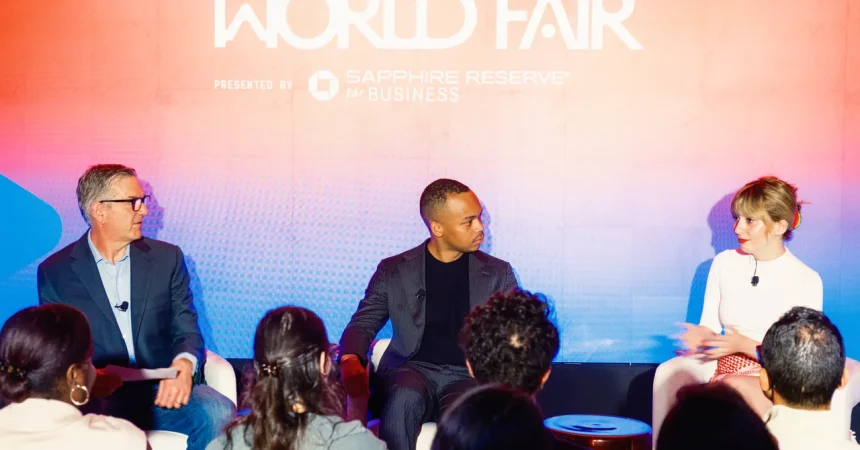
Politics has always involved performance, but the White House has become something closer to a meme account with a presidential seal. At a recent WIRED forum, two people with very different views sat down to wrestle with what that means. Pearson, a conservative commentator who spends much of his life online, opened with a line that could serve as the administration’s unofficial slogan: “It’s a very chronically online administration … With how short people’s attention spans are, you have to make [things] interesting.” He wasn’t complaining, exactly. He was describing the logic of a government that has figured out nobody reads a 2,000-word press release anymore, but millions will watch a carefully edited 30-second video. So the White House behaves like a successful creator: it engages with memes, picks fights, borrows slang, and treats every public event as a chance to produce content. The result can feel more alive, more connected, than the gray official prose of earlier eras. But it also means that the line between informing the public and feeding the machine gets blurry. Pearson thought some decisions had clearly crossed that line. He cited the administration’s move to distribute portions of the Epstein files to fifteen right-wing creators, calling it “a misstep.” What was presumably meant to bypass the traditional press and reward friendly channels looked instead like a targeted distribution deal. The files weren’t treated as a matter of public interest; they were treated as a drop, a way to dominate certain platforms for a news cycle. It was a moment that revealed the deeper tension: when you govern for the algorithm, you risk turning the presidency into just another feed.
Abughazaleh, a former Media Matters reporter who now spends her time exposing online extremism, rejects the idea that this is harmless fun. She thinks the administration’s internet fluency is not a sign of youthful cool; it’s a weapon. She pointed to the Department of Education’s use of the “Malfoid” meme, a bizarre gender-bent Harry Potter–inspired fascist figurehead, and said the government was promoting it for a too-online audience of “incels.” For anyone who isn’t deeply embedded in that corner of the web, “Malfoid” makes no sense. That’s exactly why it matters. It is a private wink to people who get their politics from grievance-filled internet subcultures, a signal that the government speaks their language and shares their enemies. Then there was the administration’s enthusiasm for what Abughazaleh called “AI slop and brutality,” especially in ads about ICE actions. Instead of soberly telling people what was happening at the border, the government seemed to be generating images and clips designed to make enforcement look like an action movie. She called it “turning cruelty into content,” a phrase that lands hard. The issue isn’t just that the ads are violent—violence is sometimes part of the truth. It’s that they are made to be shared, to trigger horror and outrage and clicks. Abughazaleh’s conclusion is simple and chilling: “They’re trying to ruin your attention span.” If a government can make politics feel like a continuous stream of shocking content, you stop asking hard questions. You stop looking for context. You just keep scrolling.
Abughazaleh and Pearson could hardly be further apart on the political map, and the WIRED forum had more than a few tense moments. One of the sharpest exchanges came over language. Abughazaleh referred to ICE facilities as “concentration camps,” a term that carries enormous historical weight and is guaranteed to enrage anyone on the other side. Pearson pushed back, saying the comparison was inflammatory and unhelpful. But Abughazaleh wasn’t making an abstract argument. She was arrested last year for protesting outside an ICE facility, and the charges against her were eventually dropped after allegations of prosecutorial misconduct before a grand jury. For her, the word was not rhetoric; it was conviction. She sees enforcement as something closer to detention and punishment, and she believes that calling it anything else sanitizes it. Pearson saw the phrase as the kind of exaggeration that makes dialogue impossible. They also clashed over Elon Musk. Pearson described X as a “bastion of free speech,” a phrase that made Abughazaleh, and likely many people in the room, visibly uncomfortable. She sees the platform not as a town square but as a machine for amplification, where the algorithm rewards outrage and hate speech can fester behind the curtain of “free expression.” Neither was willing to give an inch. The conversation was testy, and at times it felt like watching two people from different countries try to agree on the weather. But beneath the heat, something unexpected kept breaking through: a shared sense that the information environment itself is broken, and that the people in the room were just as trapped in it as everyone else.
Where the two found common ground was not in policy but in plumbing. They both blamed the algorithms. Pearson put it plainly: “Algorithms show us what you want to see.” He mentioned that his friends on the left sometimes send him articles on political topics he has never seen before, even though those articles may have been circulating for days in other feeds. That is a strange experience for any politically engaged person. You realize that the stories that feel central to your side are invisible to the other side, and the stories that outrage your opponents are often things you never heard about. Pearson asked the question that hung over the whole forum: “The deeper question is, is that good for society or for democracy?” Abughazaleh answered without hesitation. “We have no shared reality,” she said. It sounds like a slogan, but it’s actually a description of daily life in modern America. People do not just disagree about how to interpret events; they disagree about what happened, who said it, and whether it matters. The fact that both speakers could agree on this diagnosis, while drawing opposite political conclusions from it, says something important. The problem is not simply that conservatives and liberals watch different news networks. It’s that everyone’s phone is now a personalized machine for confirmation, a device that shows you the world as you already expect it to be. When a government leans into that same machinery, it doesn’t have to convince anyone of anything. It just has to feed people the images and phrases that make them feel validated and afraid.
When you put all of this together, a troubling picture emerges. The White House’s “chronically online” style is a response to a real problem: attention spans are short, competition for eyeballs is brutal, and if you want anyone to care about policy, you have to speak in the language of the feed. But the cost of that strategy may be the very idea of a public. A government that uses a niche meme like “Malfoid” is not informing anyone about education; it is sending a tribal signal to a subculture. A government that uses AI-generated images of ICE actions is not explaining enforcement; it is producing spectacle. Abughazaleh’s phrase, “turning cruelty into content,” is harsh, but it captures something vital. When policy becomes content, the goal shifts from making good decisions to making good posts. And the public becomes an audience rather than a citizenry. Pearson’s criticism of the Epstein files distribution fits the same pattern. That move was not an attempt at transparency; it was a targeted release meant to reward specific influencers and generate favorable coverage on certain platforms. It treated the press like one more algorithm, a system to be gamed rather than served. The White House may see this as modern communication, but it’s also a kind of fragmentation machine. Every meme, every targeted leak, every piece of AI slop is a small decision about who belongs to the national conversation and who gets left outside. And because those decisions are hidden inside the algorithm, they are almost impossible to challenge.
The strangest thing about the forum was that the two speakers, who disagreed on almost everything, ended up in almost the same place. Pearson and Abughazaleh both seemed to understand that the digital world has gotten too good at showing us what we already believe. They both recognized that “no shared reality” is not a philosophical hypothetical; it is the condition under which most Americans now consume politics. For Pearson, the worry was largely civic: what happens to democracy when citizens stop seeing the same facts? For Abughazaleh, the worry was more deliberate: she believes the administration is exploiting that fragmentation, using the tools of the internet to make cruelty feel fun and authoritarianism feel like a game. “They’re trying to ruin your attention span,” she said. If she is right, the damage is not just to the policy debate; it cuts deeper. It changes what people are able to focus on, how long they can follow an argument, whether they can tolerate complexity or contradiction. And that is the deepest problem of all. You can argue about “concentration camps” and “free speech” all day, but if nobody can concentrate long enough to hear the other side, the argument is just performance. The forum didn’t offer a solution. Maybe there isn’t a clean one. But there is something clarifying about watching two people with nothing in common agree that we are all trapped in different feeds. It is the first step toward recognizing that getting our attention back is not just a personal habit; it is a civic necessity. If the future is going to be made in the comments section, we need to learn how to read before we like, and think before we share. Otherwise, the algorithm will keep winning, and we will keep scrolling right past each other.