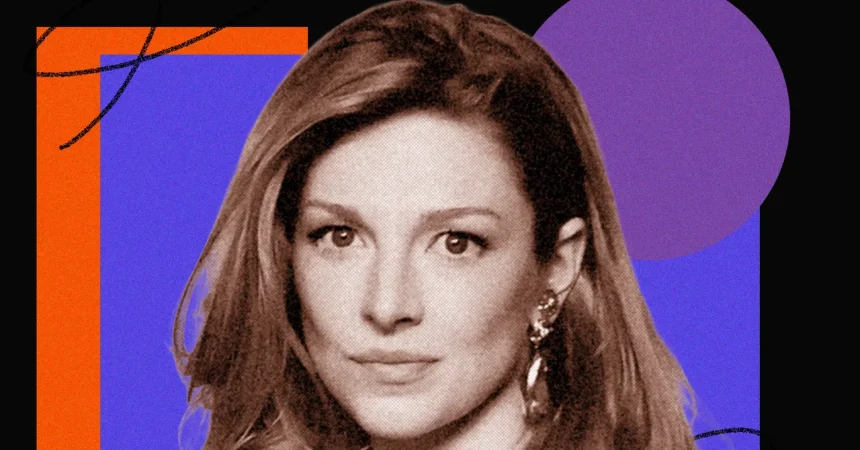
Few films have ever felt less like a movie and more like a memory—a mood that you carry around with you long after the screen goes dark. Ridley Scott’s Blade Runner is one of those rare cinematic ghosts. Released in 1982, it didn’t just tell a detective story about chasing rogue androids; it invented a visual language that would define science fiction for the next four decades. That never-ending rain, the neon bleeding through the smog, the lonely silhouettes in trench coats—all of it became shorthand for a certain kind of futuristic despair. Its shadow is so long that even Denis Villeneuve’s magnificent 2017 sequel, Blade Runner 2049, while beloved by many, never quite managed to step out of it. For legions of fans, the original remains untouchable. That kind of cultural weight can be crushing for anyone trying to continue the story. Silka Luisa, the showrunner of the upcoming Prime Video limited series Blade Runner 2099, felt that pressure intimately. As she admitted onstage at the WIRED World Fair, the only reason she could do this at all was because she loved the original so deeply. “If I didn’t love Blade Runner,” she said, “this would’ve been way too hard.” It’s the kind of honest confession that suggests she understands exactly what she’s working with—and what she’s up against.
Luisa’s series doesn’t try to repeat the past. Instead, it imagines a world turned upside down. Set eighty years after the original film and fifty years after Blade Runner 2049, Blade Runner 2099 finds the replicants—the synthetic humanoids built to serve—now in charge. The tables have turned so completely that humans are the ones doing the grunt work, struggling to survive in a society that has been rebuilt around a new hierarchy. This isn’t the rebellion you’ve seen in sci-fi before; it’s the aftermath of one, a post-revolution world with all its messy contradictions. The story follows Olwen, a replicant Blade Runner played by the incomparable Michelle Yeoh, who is hunting down rogue agents in this new order. Along the way, she crosses paths with Cora, played by Hunter Schafer, a human who has been pretending to be a replicant just to stay alive. It’s a fascinating inversion of the original premise: humans are now the hidden ones, the outsiders, the ones wearing the masks. And for those who want to know more, Luisa isn’t giving anything away. The show doesn’t premiere until November 25, and as she gently reminded the audience, spoilers are spoilers. But the setup alone offers enough to chew on: loyalty, identity, survival, and what it means to be the species that used to rule the world.
One of the most striking things Luisa said was about how the present has caught up to the films. When Scott’s Blade Runner debuted in 1982, the idea of megacorporations destroying the environment and bending the world to their will still felt like fantasy. Now, it just feels like the evening news. Climate collapse, corporate greed, inequality—these are no longer speculative fictions but lived realities. So rather than revisiting the same fears we already live with daily, Luisa wanted Blade Runner 2099 to go somewhere different. She wanted to explore what happens after the revolution, after the old powers crumble, when the people who were once treated as tools are finally free to decide what kind of world they want to build. And incredibly, her take is not entirely bleak. She described the series as being about “silver linings” in a world run by replicants. Picking up on the environmental threads woven through Villeneuve’s sequel, which showed Earth reduced to a scorched and toxic husk by human activity, Luisa’s series imagines the replicants as patient gardeners of a wounded planet. Using the skills they learned while working as slaves for humanity, they are now trying to rehabilitate the Earth, to bring it back from the brink. It’s a hopeful flicker in the middle of a dystopia—an idea that the ones we built to serve might be the ones to save us all.
If that sounds like a lot of weight to carry, the actors are carrying it with their bodies as much as their voices. For Hunter Schafer, the role of Cora was a completely new kind of challenge. She’d never been asked to do action sequences before, and suddenly she was running, diving, and throwing herself across the screen from the very first episode. It was, in her own words, “really physically demanding.” But she also had the best possible safety net and scene partner in Michelle Yeoh, a woman who has been doing gravity-defying, bone-breaking, genre-defining action for decades. Schafer described Yeoh as “the fucking master,” and you can almost feel the glee in that phrase—the sense of being a kid handed the keys to a Ferrari and told to drive. For Yeoh, this kind of role is second nature, but that doesn’t make it easy. The passing of the torch between an action legend and a newcomer who’s just discovering her own physicality is one of the most interesting behind-the-scenes dynamics of this project. Schafer’s journey from nervous first-timer to action performer is exactly the kind of human story that makes a sci-fi spectacle feel alive. It also serves as a reminder that the show, for all its philosophical questions about identity and power, is still rooted in the flesh-and-blood work of people moving through space, blocking hits, and earning every bruise.
Luisa’s ultimate hope, however, is that audiences will take away something more than just spectacle. She wants them to notice the light in the dark, the tenderness in a world that looks cold. She insisted that Blade Runner 2099 carries a little more hope than the brooding original—not because she’s trying to soften the franchise, but because she believes there’s something worth saying about possibility, repair, and second chances. She also took a moment to untangle an important distinction. In 2026, we are obsessed with artificial intelligence—chatbots, language models, strange new digital minds that feel both fascinating and frightening. But replicants, she argued, are not the same thing as AI. They are more akin to us. They have memories, bodies, emotions, and the kind of messy, embodied consciousness that grows out of having skin in the game—literally. “AI,” she said, “I just don’t have that same sympathy for.” It’s a provocative line, especially in this moment in tech history, and it invites a conversation about what we’re willing to grant moral status to. Are replicants just another kind of refugee? Are they the next step in our species’ story? Luisa seems to think they’re us, or at least a version of us, and that’s precisely why their fate matters so much.
In the end, Blade Runner 2099 is walking a tightrope. It has to honor a beloved masterpiece without being swallowed by it. It has to offer something new without feeling disrespectful. It has to be a spectacle and a meditation at the same time. Luisa appears to know all this, and she has chosen to lean into the uncertainty rather than run from it. She’s not trying to recreate the shadow of the original—she’s trying to see what happens when that shadow finally starts to lift. With Michelle Yeoh leading the charge and Hunter Schafer finding her footing, with replicants as gardeners and humans as refugees, with a world that is damaged but not damned, this series has the potential to be something rare: a sequel that feels less like nostalgia and more like a next chapter. Whether it will satisfy the purists is another question entirely. Some fans will always prefer the rain-soaked streets of 1982, and no series will take that away from them. But perhaps the best we can ask of any continuation is that it gives us a new reason to care, a new set of questions to carry home, and a new reminder that even in the darkest stories, there is room for hope. Luisa is betting that Blade Runner 2099 can be that—a story that looks back with love, moves forward with courage, and maybe, just maybe, finds a silver lining in the wreckage.