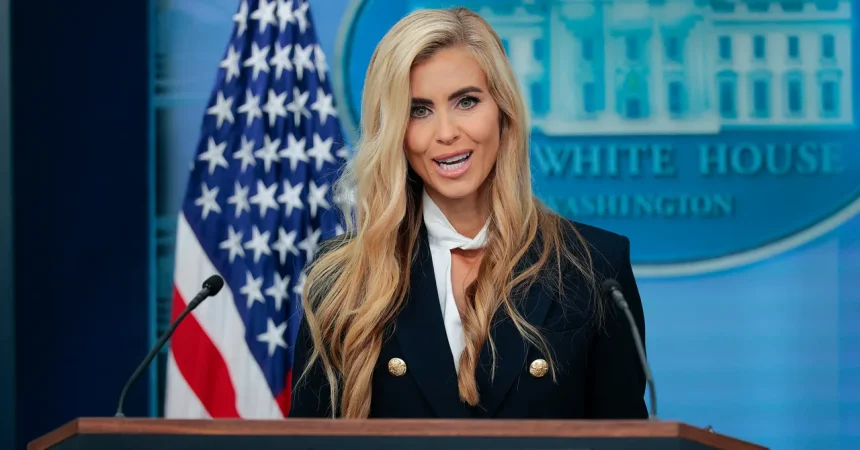
**Zacharia’s path into the world of Beachbody was, by her own account, an accidental one. She had just returned from China in 2013, looking for a way to re-establish her life and earn some income, when a friend introduced her to the company’s famous Shakeology—a dark, powdery mix of superfoods, adaptogens, and digestive enzymes that the brand promised would “nourish” the body at a cellular level. The pitch was seductive: you could be your own boss, work from home, and help people transform their health while making a decent commission. Zacharia signed on as an affiliate marketer, sharing her personal code and posting on social media, not so much as a career but as a side gig that could also give her a sense of community. She genuinely believed in the product, at least for a while. But that belief crumbled when she became pregnant. Reading the label more carefully, she worried about the vitamin A content—a nutrient that, in high doses, can be risky for fetal development. It wasn’t a public scandal or a business dispute that turned her off; it was the quiet, personal calculus of a mother-to-be. She stopped using Shakeology and, soon after, stopped promoting it. Her departure was not dramatic, but it left her with a lasting wariness about the industry, a wariness she carried into her later work in politics and policy.
**When asked about Zacharia’s connection to the company, Beachbody—now rebranded as BODi—did not deny it. In a statement to WIRED, the company confirmed that Zacharia was indeed one of 300,000 “independent Team Beachbody distributors” in 2013, a figure that underscores the vast, decentralized army of salespeople who once formed the company’s backbone. But the spokesperson was careful to draw a line between then and now. They argued that it would be a “misrepresentation” to conflate Zacharia’s time with the old multilevel marketing model with BODi’s current business operations. This is a common tactic for companies that have tried to pivot away from their controversial pasts. BODi now positions itself as a modern fitness and nutrition platform, focusing on streaming workouts and subscription-based content, rather than the recruitment-heavy MLM structure that once defined it. Yet the past has a way of lingering. For decades, Beachbody leaned on a model that encouraged distributors to recruit new distributors, creating a pyramid-like network where income was often tied more to building a downline than to actual product sales. That model generated enormous growth but also attracted a stream of legal trouble, as regulators and former distributors began to scrutinize the gap between what was promised and what was delivered. Zacharia’s story—a small, personal exit—is just one thread in a much larger tapestry of consumer complaints, lawsuits, and regulatory actions that have followed the company for years.
**The legal history of Beachbody reads like a cautionary tale for anyone tempted to believe that a shiny fitness brand is immune to scrutiny. Over the years, the company has faced a series of lawsuits and accusations that, taken together, paint a picture of a business that sometimes cut corners in its quest for market dominance. There was the anti-aging treatment that was falsely advertised as revolutionary—a case that was voluntarily dismissed, but not before the damage to public trust was done. There were claims of making false or misleading income promises to contractors, which the company never fully rebutted in court but also never admitted to. There was even a bizarre copyright battle with a company called orderlegalsteroids.com, which had allegedly stolen an image of Israeli bodybuilder Sagi Kalev from Beachbody’s “BODY BEAST” program. Beachbody won a default judgment in that case, a small victory in an otherwise murky legal record. But the most significant episode came in 2017, when the city attorney of Santa Monica, California, filed a consumer protection lawsuit against the company. The allegations were stark: Beachbody had made health-related claims about products—including Shakeology—that were, in the prosecutor’s words, “false, misleading, and not backed by scientific evidence.” Worse, the filings accused the company of automatically charging customers’ credit cards for product renewals without their consent. Without admitting any wrongdoing, Beachbody settled for $3.6 million, paying $1 million to nonprofits focused on health and nutrition. For a company that had built its reputation on selling wellness, the settlement was a stark admission that its marketing had gone too far.
**The legal troubles did not end there. In 2023, Beachbody was hit with a class-action lawsuit that cut to the heart of its business model. The lead plaintiff was a schoolteacher who had joined Beachbody hoping to make a supplementary income—a common promise in the MLM world, where testimonials often feature ordinary people quitting their jobs and achieving financial freedom. But her reality was quite different. She alleged that she ended up paying $20,000 of her own money to cover expenses related to her coaching role—products, marketing materials, training, travel—all while earning roughly $50 per month for about 50 hours of work. The story was heartbreaking and, for anyone familiar with MLM critiques, painfully familiar. It was the archetypal story of a bottom-tier distributor who loses money while a few at the top get rich. The lawsuit accused the company of running a scam, and the public relations damage was immediate. To its credit, Beachbody did not wait for a verdict. In 2024, the company announced it was dropping its multilevel marketing program entirely, switching to a “single-level affiliate” model that paid commissions only on direct sales, not on recruitment. It was a dramatic pivot, a tacit acknowledgment that the old model was untenable. Then, in 2025, the company reached a settlement in the class-action suit, resulting in the dismissal of all claims, and the lawsuit was formally dismissed. Beachbody did not admit any wrongdoing, but the damage was done. The name Beachbody, once synonymous with home fitness and P90X, had become entangled with allegations of exploitation and false promises.
**In its statement to WIRED, BODi defended its legacy, emphasizing that “Team Beachbody was a peer-to-peer sales and support network” and that the company “helped tens of millions of people pursue their health goals through in home fitness programs like P90X, Insanity, and 21 Day Fix, and nutrition products such as Shakeology.” There is truth in that. For many people, Beachbody genuinely did provide a supportive community and effective workout programs. But the company’s history also reveals a darker side—a willingness to exaggerate, to churn through distributors, and to ignore regulatory warnings. And Zacharia’s involvement, fleeting as it was, places her in a broader ecosystem of political figures who have dabbled in supplement-related ventures. The intersection of wellness and wealth has long been a favorite playground for those in the political orbit, especially in the Trump world. FBI director Kash Patel, for example, previously promoted supplements that claimed to help people “detox” from the Covid-19 vaccine—an unfounded and potentially dangerous claim that rode a wave of vaccine skepticism. Nicole Saphier, Trump’s nominee for surgeon general, reported nearly $300,000 in business income from her own company that owns a supplement line, raising questions about potential conflicts of interest. And Donald Trump himself once ran a multilevel marketing company, The Trump Network, which sold vitamins, home urine tests that promised to test for vitamin deficiencies, and children’s snacks. The Trump Network was not a huge success, and it eventually shut down, but it was emblematic of a recurring pattern: a blend of profitable aspiration and scientific ambiguity that seems to attract those who later find themselves in positions of power.
*Zacharia’s time at Beachbody is a small footnote in her resume, but it is a telling one, especially in an era when the lines between business, wellness, and political influence have become increasingly blurred. Her story is not one of greed or malfeasance; it is a story of a mother who made a personal choice based on the health of her unborn child, a choice that led her to quietly step away from a product she once promoted. Yet the context around her story is one of systemic issues—a company that faced repeated legal challenges, a network of distributors who often lost money rather than earned it, and an industry that has repeatedly been called out for overpromising and underselling. The fact that Zacharia now appears in a government role alongside other figures with connections to supplement sales suggests that the wellness industry has become a fertile ground for political appointments, perhaps because it combines the rhetoric of self-reliance with the lure of passive income. But it also raises concerns about the judgment of those who were once willing to promote products with dubious scientific backing, even if their personal reasons for leaving were sound. BODi may have moved on from the MLM model, and Zacharia may have moved on from Shakeology, but the echoes of that world remain. In the end, her story is a reminder that the path to power often runs through unexpected places—kitchens, living rooms, social media feeds—and that the decisions we make about what to put in our bodies, and who to trust, are never as simple as they first appear. Additional reporting by Matt Giles.*