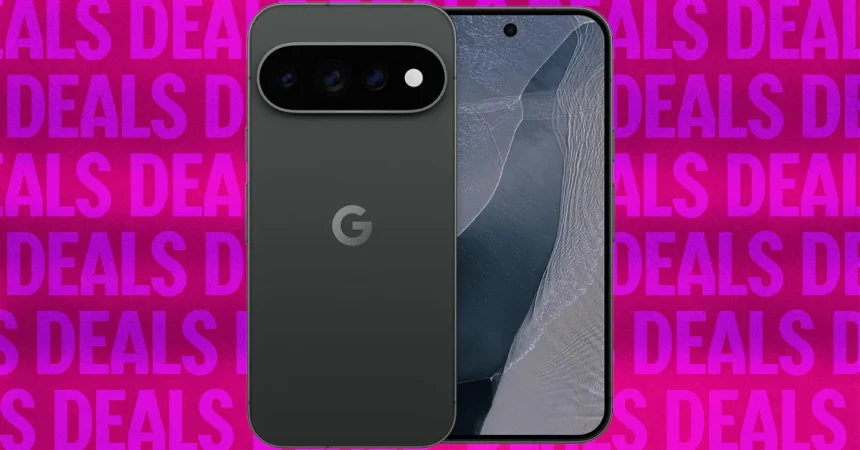
Remember when a brand-new smartphone felt like a long-term investment? You bought it at full price, snapped on a case, and took quiet comfort in the idea that it would still be worth a meaningful chunk of change months later. For years, that was just how the industry worked. Flagships launched at premium prices, and you waited for the first real discount, which usually took an eternity to arrive. That feeling has pretty much disappeared. The smartphone market has changed, and not just because phones have become less exciting. Sales are slowing, budgets are strained, and manufacturers are under intense pressure to move devices quickly. The result is that discounts are arriving earlier and cutting deeper than ever before. Google’s Pixel 11 family is a perfect example of this new reality. It landed only in August, and already all four models have received their first major price cuts—well before Black Friday even shows up. That alone is a surprise. The regular Pixel 11 is $200 off, the Pixel 11 Pro is $300 off, the Pixel 11 Pro XL is $350 off, and the folding Pixel 11 Pro Fold is $250 off. These are not token reductions. They also effectively erase the $100 price increase that phone makers added across the board this year, a bump blamed mostly on the memory shortage fueled by the AI boom. So if you have been waiting for the right moment to upgrade, this could be it. You are getting some of the best hardware Google has ever made at a price that feels much closer to last year’s standard, and that is genuinely rare these days.
The deepest discounts are attached to the two most powerful devices in the lineup: the Pixel 11 Pro and the Pixel 11 Pro XL. At their original prices, these were arguably the worst value in Google’s range, not because they are bad phones—quite the opposite. They are among the best Android phones you can buy right now, with classy designs, bright and colorful displays, and camera systems that feel genuinely versatile. The problem was simply the cost. But with $300 or $350 knocked off, the value equation changes considerably. What really separates the Pro models from the rest of the family is the camera. Low-light performance is faster and more reliable, so you can capture a dimly lit dinner or a night out without the blur and grain that plague lesser phones. The telephoto lenses are also powerful, giving you the ability to zoom in on something far away—a concert stage, a mountain range, a street performer—and still get a clear, detailed shot. The displays are brighter too, which makes a meaningful difference when you are outside on a sunny day trying to read a message or frame a photo. There is also the customizable HiLight LED on the back, a small light strip that can display notifications and add a splash of personality. It is a fun idea, but it still feels a little underbaked. Even with that small quibble, the Pro models are polished, premium devices. If you want the absolute best Pixel Google makes, and you no longer have to pay the full launch premium, the Pro or Pro XL are the obvious choices. The savings make them not just aspirational but sensible.
Beyond the hardware, it is the software that makes these phones special. Google’s AI features are not just marketing buzzwords; they are useful tools that actually improve your day-to-day experience. The assistant is more proactive and conversational, capable of handling follow-up questions and completing tasks without feeling like a robotic search box. It can draft messages, summarize calls, and offer suggestions that feel timely rather than invasive. Photography is where the AI shines most directly. Magic Capture, for example, lets the phone automatically take photos and videos at the same moment. It sounds simple, but once you use it, you realize how many times you have missed a moment because you had to choose between photo mode and video mode. The phone simply captures both, so you can preserve the memory without fumbling around. Google has also been careful to make these features accessible. They do not require endless configuration or a manual; they just work. Then there is Qi2 charging. Pixels are currently the only major Android phones with full Qi2 support, which means built-in magnets, just like Apple’s MagSafe ecosystem. You can snap on a wireless charger or a car mount and trust that it will stay in place. No more searching for the right spot or watching your phone slide off a charging pad overnight. It is a small convenience, but it is exactly the kind of thoughtfulness that makes a phone feel premium. Combine that with a bright, smooth display and a camera system that can keep up with the best, and the Pro models feel like they are worth every penny—especially now that they are discounted. The only part that feels incomplete is the HiLight LED, but it is more charming than essential.
If you are not ready to spend Pro money, the regular Pixel 11 is the sweet spot in Google’s lineup. It shares the same Tensor G6 chipset as the Pro models, which means the performance is just as smooth. It also has the same smart AI features, the same core software experience, and the same 25W Qi2 wireless charging. For most people, the differences between the regular Pixel 11 and the Pro models will not matter much in everyday use. The camera is still very good, even if it does not offer the telephoto reach of the Pro. The screen is still lovely, even if it is not quite as bright. And the design is arguably more fun. The regular Pixel 11 comes in colors like Hibiscus, a bright pink that I personally fell for, along with Pistachio, Frost, and Obsidian. It is refreshing to see a flagship phone with this much personality. It makes the phone feel like an extension of your style rather than another black rectangle. The size is a huge plus too. It fits comfortably in one hand, and you can actually reach the top of the screen with your thumb. That is becoming increasingly rare as phones grow larger. With $200 off, it becomes an even easier recommendation. There will probably be a cheaper A-series Pixel later, and if you are on a very tight budget, it might be worth waiting for that. But if you want a great phone today, without paying Pro prices, this is the one. It is comfortable, capable, and genuinely enjoyable to use. It is the model I would point most people to, especially if they are new to Pixel and just want to see what Google has been up to.
Then there is the Pixel 11 Pro Fold, the most interesting and ambitious member of the family. Google has clearly refined its foldable design, and this updated model feels more polished than its predecessor. It is impressively durable, with an IP68 rating for water and dust resistance. That is a big deal for a device that has a crease in the middle and moving parts. You do not have to treat it like it is made of glass and good intentions. The Fold features two gorgeous OLED displays: an 8-inch main screen that opens up like a miniature tablet, and a 6.5-inch cover screen that handles all the normal phone tasks. Reading on the main display is a pleasure, and watching videos or getting a bit of work done on it feels genuinely spacious. The cover screen, meanwhile, is a proper phone screen, not a cramped afterthought. It is clear Google spent time getting the dimensions right. The Fold does miss out on the upgraded cameras found in the other Pro models, and that is a real compromise at this price. You won’t get the same low-light magic or telephoto reach. But you still get all the smart AI features, the same smooth software, and the overall polish of a premium Google device. When it launched, I felt it was too expensive and a bit too niche to recommend widely. It was not my favorite folding phone, even though I appreciated what it was trying to do. With $250 off, though, it becomes a much more compelling option. It is still not for everyone, and it is still a folding phone, which means a slightly heavier build and a crease you will learn to ignore. But if you have been curious about foldables and want to try one without paying full price, this sale makes the Pro Fold genuinely tempting.
So what should you make of all this? The simplest takeaway is that the old rule of waiting months for a deal is dead. These are major first-time discounts on a lineup that launched just a few months ago, arriving well before Black Friday. That tells us a lot about how competitive the smartphone market has become, and how much pressure manufacturers are under to keep sales moving. It also tells us that patience can pay off. If you have been holding onto a phone for two or three years, and the battery is fading or the storage is always full, this might be the moment to upgrade. The Pixel 11 family is genuinely good. The Pro models are among the best Android experiences you can get right now, and the regular Pixel 11 is one of the most likeable all-rounders Google has made. The Fold is more niche, but at its sale price it deserves a closer look. And because these discounts effectively cancel out the $100 price hike that phone makers added this year, you are not just saving money—you are undoing the industry’s attempt to charge more for the same category of product. That is a satisfying feeling. The key is to think about what you actually need. Do you want the best camera? That is the Pro. Do you want a comfortable, friendly phone with a bit of color? The regular Pixel 11. Do you want something that folds and feels like the future? The Fold. There is likely a discounted Pixel that fits your life right now. For the first time in a long while, the best phones are becoming more accessible, not less. That is a welcome change of pace in a market that has felt increasingly expensive. If you have been on the fence, this is your sign. The timing is right, the discounts are real, and the phones are worth it.