The quest for the perfect kitchen skillet is something of an eternal obsession for home cooks, a pursuit marked by shifting trends and the occasional false promise. We’ve seen the culinary world obsess over the heavy-duty reliability of cast iron, the professional allure of copper, and the industrial workhorse nature of carbon steel. For a long time, the industry was captivated by the siren song of Teflon—I distinctly remember watching 1980s mall demonstrations where omelettes slid off those surfaces like magic. However, the shine eventually wore off when concerns over toxic fumes rendered nonstick a pariah in health-conscious kitchens. Ceramics briefly stepped in to fill the vacuum, but reality soon set in; that “magic” nonstick coating is notoriously fragile, often degrading long before the pan itself is ready for retirement.
Amidst these turbulent cycles of kitchen trends, stainless-steel pans have quietly remained the steady, unsung heroes of the stove. They don’t boast the effortless release of proprietary coatings, nor do they carry the rustic, temperamental weight of seasoned cast iron, but they possess a rare combination of durability and versatility. With just a knob of butter or a bit of patience, they handle searing like champions, and because they are far less fussy than other materials, they are truly built to last a lifetime. They represent the middle ground between professional-grade precision and household practicality, standing as reliable partners for anyone looking to graduate from the cycle of “disposable” cookware that finds its way to the landfill every few years.
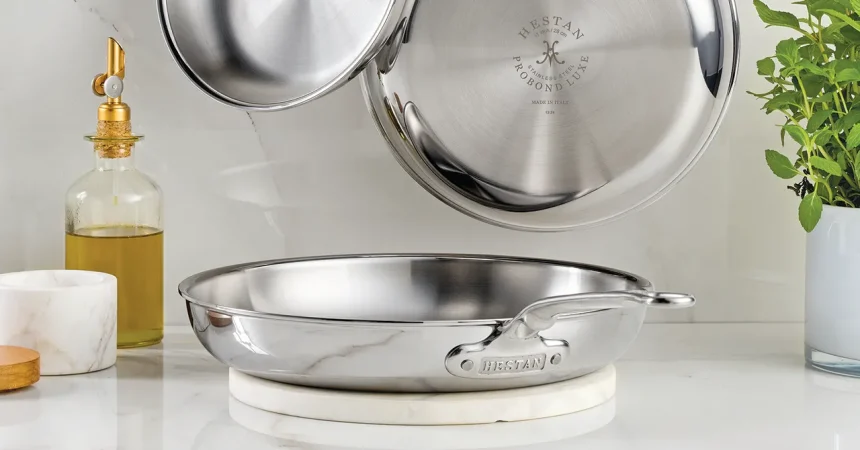
To separate the legends from the newcomers, I decided to put several high-end stainless contenders to the test against the industry titan: the All-Clad 10-inch D3 Fry Pan. All-Clad has long held the gold standard for its uniform heat distribution and solid layered construction, serving as the benchmark by which everyone else is measured. It’s an investment, certainly—sitting at a price point that makes you pause—but it is widely accepted as a “buy-it-for-life” piece of hardware. I brought in additional contenders from Hestan, Viking, and Heritage Steel, preparing for a rigorous, hands-on comparison. What I expected to be a straightforward evaluation quickly turned into a lesson in manufacturing quality control, proving that even the most established brands can experience growing pains in their pursuit of the perfect fry pan.
My experience with the All-Clad D3 was eye-opening and deeply humanizing for an industry legend. While I own and adore an older, larger All-Clad piece with a perfectly flat cooking surface, the 10-inch D3 I received for testing was frustratingly domed. When you’re trying to sear a scallop or fry an egg, you want that surface to be perfectly level; instead, this pan forced oil to collect around the edges, leaving the center high and dry. Beyond that, the rivets holding the handle were improperly secured. While customer support corrected the rivet issue, the doming remained—a reminder that even top-tier brands operate within “tolerances” that don’t always match the high expectations of the home chef. It made me realize that quality control isn’t just a corporate buzzword; it’s the difference between a tool and an obstacle.
The disappointment continued when I tested the Viking Pure Glide Pro. On paper, it was a revolution: a textured titanium layer over an aluminum core that promised genuine, durable nonstick performance. I had seen it at industry shows and was genuinely excited about its potential, but the physical reality of the pan was a letdown. It suffered from significant temperature management issues and arrived with a noticeable warp that made even heating impossible. It felt like a prototype that had been rushed to market before the manufacturing process was fully matured. While the concept is brilliant—and potentially the future of nonstick—it reinforced the idea that being first to market doesn’t always mean being best at the stove.
Ultimately, these tests served as a humbling reminder that “name brand” and “high price” aren’t always synonymous with perfection. While stainless steel remains my favorite medium for its longevity and searing power, the search for the “best” pan often comes down to the individual specimen you have in your hand, not just the logo stamped onto the bottom. Whether you are a weekend brunch enthusiast or a daily dinner preparer, it’s worth being critical of your tools. Don’t just trust the hype—test the flatness of the surface, check the integrity of the rivets, and look for a pan that works with you rather than against you. A great skillet shouldn’t just look good in a catalog; it should make the simple act of cooking feel a little bit more effortless every single day.