For 28 days, Keshav, a 38-year-old single trader from Indonesia, had an unusual new entry on his daily to-do list: masturbate for research. As part of a unique experiment by AI companion company Joi AI, Keshav was one of ten “masturbation consultants” tasked with tracking their moods, energy levels, and cravings before and after self-pleasure. The goal was to explore whether erotic self-stimulation could become “an AI-guided wellness ritual.” Throughout July, the participants were instructed to masturbate daily except Sundays, splitting their time between Joi AI’s sultry digital companions and their own preferred methods. The participants were each promised $2,000 for their efforts in this quirky qualitative research project, which the company promotes as part of its mission to “solve male loneliness.”
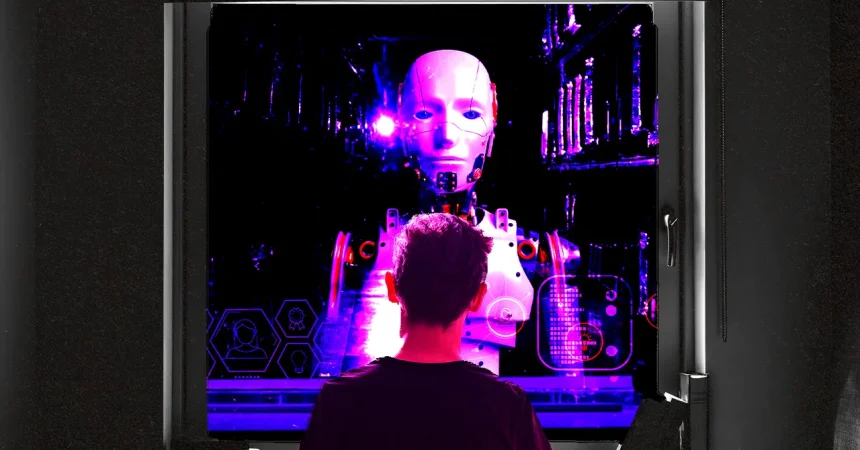
Keshav, who asked to remain anonymous for professional reasons, described his experience of using the AI companions during the study. He explained that the five-minute video calls with the digitized characters felt almost like chatting with a real person. The AI companions, which can be customized to suit various kinks and fetishes, would engage in explicit roleplay, from performing sexual acts to more intimate conversations. Keshav, who has a mile-high-club kink, often chose to render his scenes in airplane bathrooms. He found that the companions varied in personality—some were pushy and extroverted, while others were more reserved and required a bit of courtship before the relationship turned sexual, even soliciting virtual gifts like handbags and lipstick through the platform’s internal currency. After ejaculating, Keshav noticed that his energy levels dropped slightly, but his focus actually improved. He was one of six participants who successfully completed the study.
The experiment was designed to gather preliminary data on how masturbation affects various aspects of well-being, including sleep, stress, and craving intensity. Joi AI surveyed 2,500 adults before launching the study, discovering that 75% masturbate to reduce stress and anxiety, and 43% do it before a big event like a date or exam. The company wanted to compare how AI-guided masturbation stacked up against traditional methods. The preliminary analysis of 134 session reports suggested that participants’ stress levels dropped by 25% and focus increased by 17%. Interestingly, the study found no significant differences between AI-guided and traditional masturbation, leading the company to conclude that “there is no one best way to masturbate.” The study also suggested that masturbation reduced cravings for vices like nicotine, alcohol, and junk food by 44%, although this claim is not rooted in scientific evidence.
The company’s research wasn’t without its obvious biases. As the maker of AI companion products, Joi AI has a clear interest in promoting the benefits of its technology. The study’s findings, while interesting on paper, are largely anecdotal and lack scientific rigor. Still, the company’s head of brand and communications, Julie Levin, defended the research, emphasizing that the goal was to track how masturbation affects self-discipline and cravings. For users like Keshav, the experience was genuinely enjoyable, offering a unique blend of pleasure and self-discovery. However, the study’s limitations are hard to ignore, and the company’s claims about masturbation being a universal tool for managing addictions seem far-fetched. At its core, the experiment highlights the growing intersection of technology, intimacy, and wellness, raising questions about the future of human-AI interaction and the lengths we’ll go to find connection in a digital world.