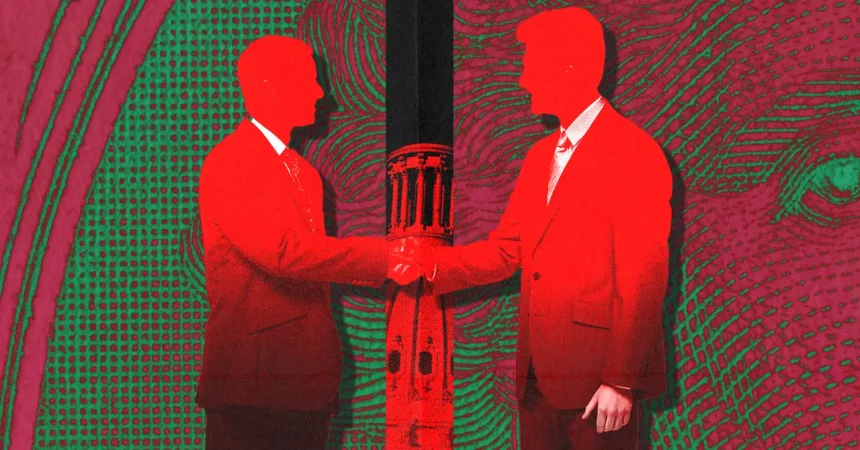
Picture a family walking into a car dealership after saving for months. They pick out a used SUV, agree on a price, and then sit down in the finance office. The finance manager smiles, talks about interest rates and monthly payments, and maybe adds a warranty or a theft-deterrent device. To the family, it feels like a normal transaction. But for years, federal regulators believed that in dealerships across the country, these moments were not always fair. The numbers, they said, told a troubling story: Black and Latino borrowers were being charged more than white borrowers for the same kinds of loans, not because of their credit histories but because of who they were. The Federal Trade Commission brought enforcement actions, won settlements, and secured court orders that were supposed to prevent this kind of discrimination from happening again. Now, in a stunning reversal, the FTC has struck side deals with two auto dealers and a former general manager from another dealership, promising not to enforce—or even help enforce—those very court-ordered obligations. The agency has essentially decided that the discrimination it once documented is no longer worth litigating, and it has done so in a way that leaves the courts and state officials out of the conversation. In one case, the federal court in Chicago that oversaw the original settlement says it never even got a chance to review the new agreement. In another, the Arizona attorney general, whose office worked alongside the FTC to bring charges against a Phoenix-area dealership, called the move “outrageous.” This is not a quiet administrative cleanup. It is a deliberate retreat from civil rights enforcement at a time when the law is already struggling to keep up with new forms of bias.
The underlying cases show why this reversal matters. In one matter, the FTC alleged that Passport, a car dealership chain, systematically charged Black borrowers higher discretionary markups and more for add-on products than white borrowers. Discretionary markup is a practice that allows a dealer to raise the interest rate above the rate the lender actually approved, with the dealer pocketing the difference. It is one of the most common places where discrimination can hide, because it looks like negotiation but often results in unequal outcomes. According to the FTC, a financial institution had sent Passport multiple letters explicitly flagging disparities in the markup rates the chain charged Black borrowers. That means the dealership had been put on notice—again and again—that its pricing practices were producing racial gaps. Passport’s attorneys declined to comment on the new agreement. In another case, the FTC and the Arizona Attorney General’s Office accused Coulter Motor Company and Gregory DePaola, a former general manager at the Phoenix-area dealership, of charging Latino customers more in interest and for add-on products. The behavior allegedly violated the federal Equal Credit Opportunity Act, which protects borrowers from credit discrimination. The original settlement in that case, reached in 2024, was supposed to make things right. It required the dealership to establish fair lending programs, submit to monitoring, and take steps to prevent discrimination from happening again. But now DePaola has signed one of the new agreements with the FTC, and Coulter and an attorney who represented both of them in the earlier settlement did not respond to requests for comment. These are not dry legal details. For the borrowers involved, they meant real money paid out every month—money that could have gone to groceries, rent, or school supplies. They also meant something harder to quantify: the feeling of being treated unfairly because of the color of their skin, even when no one at the dealership said a word about race.
The FTC’s stated rationale for walking away is perhaps even more troubling than the decision itself. In its press release, the agency said that its prior accusations against the defendants were “based on statistical analyses designed to show disparate-impact liability” and that it would no longer enforce those types of claims. Disparate-impact discrimination is a legal concept that captures policies or practices that are neutral on their face but cause disproportionate harm to a protected group, even if the harm was not intentional. It stands in contrast to disparate-treatment discrimination, which is when a policy is specifically designed to discriminate. The difference matters. Under the old approach, you didn’t need to find a smoking-gun email or a manager whispering instructions to prove that a dealership was discriminating. You could look at the patterns, the data, the outcomes, and say: something is wrong here. The FTC now says that because the dealerships did not explicitly instruct their salespeople to treat Black and Latino borrowers differently, they should no longer be held accountable for the disparities. That logic would make much of modern civil rights enforcement impossible, because discrimination in lending is rarely overt. It flourishes in discretion, in informal practices, in tiny decisions made by finance managers who believe they are being fair. Aaron Rieke, a former FTC attorney adviser and now chief legal engineer at the legal startup Privlex, explained the difficulty with disparate-impact cases. “It’s actually a really hard theory where you have to identify a specific policy, prove that it caused a disparity, and then the hardest thing of all is you have to prove that that policy doesn’t serve a legitimate purpose,” he said. But hard is not the same as impossible. The FTC was once willing to do that work. Now, it seems, it would rather walk away.
The reactions from the officials and institutions that were left out of these decisions reveal the real-world consequences of the FTC’s move. The Northern District of Illinois, which presided over one of the cases, said it was never given the opportunity to evaluate one of the new agreements. That is a serious procedural concern. Court-approved consent decrees are not just suggestions; they are legally binding orders. When an agency agrees to modify them, especially in a way that weakens consumer protections, the court that issued the original order should have a say. In Arizona, Attorney General Kris Mayes did not hold back. Her office was a coplaintiff in the case against Coulter Motor Company and DePaola, meaning she and the FTC were supposed to be partners in enforcing the law. “The FTC and the Attorney General’s Office partnered on this case to ensure Arizonans can purchase cars without being misled or charged more because of their ethnicity,” Mayes said. “I find it appalling that the FTC would backtrack on the settlement and treat its state partners this way, not to mention essentially greenlight discrimination against Arizonans.” Her language is strong, but the situation merits it. When the federal government makes a deal behind the backs of the state officials who helped build the case, it undermines the entire partnership model of consumer protection. It also sends a clear signal to other auto dealers: the rules have changed, and the consequences for discriminatory pricing may be minimal. For the people of Arizona, and for borrowers everywhere, that is not an abstract policy shift. It is a loss of protection they were promised.
This reversal did not happen in a vacuum. It is part of a broader push by the Trump administration to dismantle what it calls “disparate-impact liability.” Last year, the administration directed the FTC and other agencies to review all past orders and take “appropriate action” in an executive order titled “Restoring Equality of Opportunity and Meritocracy.” The administration has said that disparate-impact liability “undermines our national values.” In other words, the decision to abandon these cases is not just the FTC making a tactical choice; it is an ideological position. The administration wants to redefine discrimination as requiring proof of intentional malice, and it is using the machinery of government to make that view stick. That is deeply concerning to civil rights experts like Logan Koepke, a senior project director at Upturn, a nonprofit that studies how technology affects civil rights. Koepke argues that disparate-impact analysis is more important than ever, precisely because so many important decisions are now made by AI and automated systems. Algorithms can act in complex ways that their creators do not fully understand. They can produce biased outcomes without anyone explicitly programming them to discriminate. If the law only recognizes intentional discrimination, then a machine that systematically denies loans to Black applicants, or charges them more, could do so with impunity. The dealership cases are a perfect example. The data showed unequal outcomes, and the evidence suggested that discretion was creating the problem. By abandoning those cases, the FTC is not just letting a few bad actors off the hook. It is weakening the legal framework that protects people from the next generation of unfair systems, even before those systems have gotten a chance to harm them.
The mechanics of what the FTC did make this even harder to unwind. The new agreements were voted on by the commission in early August, but they had gone into effect more than six months earlier, in November. That is highly unusual. Normally, an agency decides on a course of action and then implements it. Here, it seems the FTC and the defendants reached their understanding quietly, put it into practice, and only later submitted it for a vote. By signing and voting out the agreements, the FTC has essentially deleted two sections from each of the original court orders. Those sections were the ones that required the defendants to maintain fair lending programs and refrain from unlawful credit discrimination. Once those sections are gone, future administrations—whatever their views on civil rights—may find it very difficult to put them back. The FTC can always choose not to enforce a law, but it cannot simply erase a binding court order on its own. The fact that it tried, and was allowed to get away with it, sets a dangerous precedent. Agencies are supposed to enforce the law, not rewrite it in private. Judges are supposed to oversee the settlements that carry their signatures, not be informed after the fact. State attorneys general are supposed to be partners, not afterthoughts. And the public is supposed to be able to trust that when the government wins a civil rights case, it means something. Now, all of that is in question. The cars were sold, the loans were signed, and the borrowers paid the price. The question is whether anyone in Washington will ever be held accountable for letting the people who made that happen walk away.
The story is not over, but its early chapters have already done damage. For borrowers who have been overcharged, the new agreements may feel like a betrayal. For state enforcers, they are an insult. For the courts, they are an overreach. And for the future, they are a warning: the fight against discrimination in lending is not just about winning cases, but about holding onto the victories that have already been won. The FTC used to see disparities in pricing as a red flag worth investigating. Now, the agency has decided that those disparities are not enough unless someone can prove intent. That shift will make it harder to hold businesses accountable, not just in auto sales but in any industry where discretion and algorithms can hide bias. The legal theories are complex, but the human reality is simple. Discrimination is not always written in neon lights. It lives in the quiet decisions made in finance offices, in the formulas that price credit, in the patterns that emerge from millions of transactions. The FTC may have said it no longer wants to see those patterns, but they are still there. And the people who suffer because of them are still waiting for fair treatment under the law. Their monthly payments are a constant reminder that the promise of equality was broken. The least they deserve is an explanation from the agency that was supposed to protect them. Instead, they got a road map for how to dismantle civil rights enforcement, one settlement at a time.