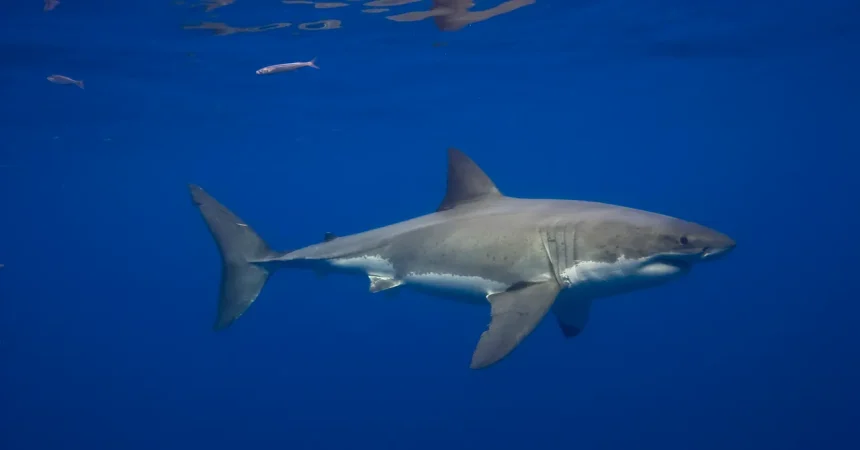
The recent, heart-pounding encounter with a great white shark in the Strait of Sicily serves as a poignant reminder that nature still holds secrets capable of stopping us in our tracks. When a group of dedicated volunteers from Ghost Diving and Healthy Seas—organizations typically focused on removing abandoned fishing gear and restoring marine habitats—unexpectedly crossed paths with a legendary predator, they experienced something truly profound. For diver Derk Remmers, who captured the moment on camera, the sensation was a mix of pure adrenaline and professional awe. He later admitted to the BBC that his hands shook as he struggled to switch on his recording device, a reaction that perfectly captures the raw, human response to coming face-to-face with one of the ocean’s most iconic, yet elusive, wanderers.
This footage is historic, marking a rare instance where a great white shark (Carcharodon carcharias) has been documented in its natural Mediterranean habitat. We often think of these massive predators as dwellers of open oceans or distant coastal waters, but the Mediterranean has been home to them for millions of years. Seeing this adult male cruising through the Strait of Sicily reminds us of a time when these creatures were more commonplace, rather than the ghosts they have become today. It is a striking sight: a powerful animal, capable of growing over 20 feet long and weighing upwards of two tons, moving with an effortless grace that belies its fearsome reputation.
Biologically, the great white shark is a masterpiece of evolution, acting as the ultimate apex predator within the marine food chain. With an olfactory sense so sharp it can detect a drop of blood in vast volumes of water and a swimming efficiency that allows it to patrol its territory with surgical precision, the shark serves as a vital regulator of ocean health. By maintaining the balance of prey populations—ranging from smaller fish and rays to the occasional marine mammal—the shark ensures that the marine ecosystem remains robust. When we lose these predators, we don’t just lose a magnificent animal; we lose the “guardians” that prevent ecological collapse, making their presence a silent marker of a healthy, functioning sea.
Despite their menacing portrayal in film and pop culture, the reality of the great white shark is far more tragic than it is aggressive. Today, the Mediterranean population is considered critically endangered, a victim of the pressures humans exert on our oceans. Accidental entanglement in commercial fishing nets, the illegal wildlife trade, the destruction of delicate habitats, and the overfishing of the shark’s natural food sources have pushed the species to the brink. It is a sobering irony: the animal we fear most is actually the one fighting for its life against our own destructive habits, with attacks on humans remaining statistically insignificant compared to the harm we inflict upon them.
For the scientific community, this sighting is nothing short of a breakthrough. As researcher Carlo Cattano from the Stazione Zoologica Anton Dohrn explains, most of what we currently know about Mediterranean great whites has been gleaned—somewhat grimly—from studying cadavers caught in fishing gear. To observe a living, breathing specimen gives researchers a rare glimpse into the animal’s behavior, distribution, and daily struggles. This encounter is not just an exciting headline; it is a critical piece of data that helps scientists identify “hotspots.” By proving that these sharks are still navigating these waters, we gain a stronger argument for establishing protected marine areas where these magnificent creatures can feed and roam without the threat of a fatal human intervention.
Ultimately, this encounter is a message of hope wrapped in a cautionary tale. It suggests that if we provide the Mediterranean with the care and protection it desperately needs, we might just be able to sustain the species that define its wilder, more mysterious character. While the sight of a shark in the wild stirs a primal fear in many, we should instead view it with a profound sense of gratitude. It is a rare, living testament to the resilience of nature and a call to action. By continuing the cleanup efforts of groups like Ghost Diving and supporting rigorous scientific research, we do more than just protect a shark—we safeguard the future of the entire Mediterranean, ensuring that it remains a sea teeming with life rather than a graveyard of lost legends.