Think about how much time we spend with tiny devices strapped to our bodies, and what we really want from them. Most of us are not asking for a relentless stream of notifications, more charts, or another app to learn. We want a little help. We want a watch that knows when to show the boarding pass, a tag that finds our keys when we are already late, and a voice assistant that actually works in the elevator. That’s the feeling behind Google’s latest hardware push. The company has spent years talking about artificial intelligence and cloud computing, but this year’s lineup feels grounded in ordinary human moments. The two devices at the center of it all are the Pixel Watch 5 and the Pixel Tag. Together, they sketch out a vision of wearable technology that is faster, friendlier, and more useful when it matters. There is plenty of technical jargon buried in the announcements, from co-processors to dual-band GPS, but underneath the spec sheet lies a much simpler promise: your devices should be ready when you need them, calm when you don’t, and surprisingly helpful in an emergency. That is not a small thing. The best technology is the kind that disappears into your life, and Google is clearly trying to make its smartwatch and tracker feel less like gadgets and more like trusted companions. There are still questions to be asked about privacy, medical accuracy, and cost, but the overall direction is one worth getting excited about, especially for people who live increasingly busy and messy lives.
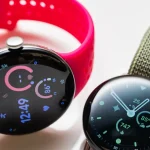
The Pixel Watch 5 is, above all, a study in speed. Google says the watch is powered by Qualcomm’s Snapdragon W5 Gen 2 Accelerated chip, paired with a Cortex-M55 co-processor, and the result is a claimed 20 percent improvement in processing performance. Those numbers may sound dry, but in daily life they mean the watch actually keeps up with you. Apps open when you tap them, notifications slide in without hesitation, and you do not spend those tiny, frustrating moments staring at a blank screen while the watch catches its breath. The co-processor also matters because it can handle background tasks without waking up the main processor, which helps conserve battery and makes the whole watch feel less sluggish. The Pixel Watch 5 also gets a dual-band GPS system that Google claims is twice as accurate at route mapping in difficult environments, particularly dense cities where tall buildings make it hard for a watch to figure out where you really are. Google is confident enough in this feature to say that the Pixel Watch 5’s GPS outperforms both the Apple Watch Ultra 3 and the Garmin Fenix 8 Pro, two of the most respected names in outdoor and fitness tracking. That is a bold claim, and it will need to be proven in the real world, but it shows how seriously Google is taking the basics of wearable accuracy. The display has also been upgraded to reach a peak brightness of 3,000 nits, matching the Apple Watch Ultra 3. For anyone who has ever tried to read a map on a sunny day, this is more than just a number. It is the difference between a watch that feels unusable outdoors and one that finally works in bright sunlight. All of these improvements add up to a wearable that feels less like a miniature computer you have to fight with and more like a natural extension of your body.
Speed, though, is only half of the story. The other half is making sure that speed is used to deliver the right information at the right time. Google’s At a Glance feature has been around for a while, but on the Pixel Watch 5 it becomes much more contextually aware. If you are at the airport, the watch might automatically surface your gate information, saving you from opening your phone and digging through emails. If you are on your bus ride home, it can tell you how many stops are left, which sounds simple but actually makes a commute feel less stressful because you no longer have to stare out the window or constantly check a map. This is the kind of ambient intelligence that technology has promised us for years, and it feels especially natural on a watch because the device is always there, just a glance away. Another major shift is that Gemini, Google’s AI assistant, can now work even when the watch is not connected to the internet. You can set timers, create alarms, and manage workouts using your voice, even if you are deep in a forest, in a subway tunnel, or on an airplane with cellular and Wi-Fi switched off. This matters more than it might initially seem. It is genuinely frustrating to ask your watch to set a timer and learn that it can’t because the connection is bad. More importantly, offline Gemini hints at a future where AI assistants are not entirely dependent on cloud servers, which could mean faster responses, better privacy, and more reliable performance in moments when you really need it. It also makes the watch feel more like a personal tool and less like a remote control for a data center somewhere far away. These thoughtful software touches are what separate a device that helps you from a device that merely emits notifications and asks for attention.
On the health and safety front, Google is introducing two features that are both promising and sensitive. The first is Sleep Breathing Quality. This feature monitors minute-by-minute variations in your blood oxygen levels while you sleep, rather than simply giving you one nightly average. The idea is to help you understand how your sleep quality is connected to your energy, recovery, and heart health. If you are waking up exhausted even after a full night in bed, subtle disruptions in breathing could be part of the reason. This feature does not diagnose sleep apnea or any other medical condition, but it gives you a new lens on your own body and may encourage you to talk to a healthcare professional if the numbers look concerning. The second feature, Breathing Emergency Detection, is more dramatic. It can sense a persistent drop in oxygen levels while you are unresponsive, which could happen during a drug toxicity accident, pneumonia, choking, or other emergencies, and it can place an emergency call on your behalf. Imagine living alone and having a sudden medical event that leaves you unable to reach your phone. A watch that can notice that something is deeply wrong and call for help is, potentially, a lifesaver. It is the kind of feature that could turn a wearable from a convenience into a genuine safety net. There is, however, an important caveat: Google notes that this feature has not been cleared by the FDA, so it should not be treated as a medical device or a guarantee. It is launching first in select European countries, and it remains to be seen how accurately it will work in the chaos of real life. Still, the direction is encouraging. It shows that companies are beginning to explore how wearables can take proactive action in emergencies, rather than simply passively recording data and waiting for someone to look at it.
Of course, this kind of technology does not come for free. The Pixel Watch 5 starts at $399 for the 41-millimeter model, while the larger 45-millimeter version costs $429. If you want cellular connectivity, you will need to pay even more, which is standard for premium smartwatches. There is also a Stephen Curry Edition priced at $579, launching on September 3, and it comes with an exclusive sweat-wicking performance loop band designed for athletes. That is a meaningful price difference, and it reflects the fact that Google is positioning the Pixel Watch 5 as a premium product alongside the Apple Watch and the best Garmin devices. For people who already own a recent smartwatch, the upgrade may not be essential, but for someone coming from an older device or switching ecosystems, the combination of speed, bright display, offline Gemini, and new safety features makes the price easier to justify. The two size options also help, because a 41-millimeter watch is friendlier for people with smaller wrists, while a 45-millimeter case offers a larger screen and bigger battery for those who want it. The Curry edition, with its sports-oriented band, adds a little personality to what might otherwise feel like just another black slab on your wrist. It is also worth remembering that a smartwatch is only useful if it can comfortably make it through your day. Google’s focus on efficiency through the co-processor and power management suggests that the Pixel Watch 5 is designed to last, but real-world battery life will depend heavily on how you use it, and that is a review question that cannot be answered until people start living with the watch.
The other major announcement is the Pixel Tag, Google’s long-awaited answer to Apple’s AirTag. It costs $29, which is the exact same price as Apple’s tracker, and it does exactly what you would expect: it helps you find lost things. The Pixel Tag is made from a combination of plastic and metal, has an IP67 rating, and weighs just 0.4 ounces, so it can live on a keychain, inside a wallet, or tucked into the lining of a backpack without feeling bulky. It is powered by a user-replaceable CR2032 coin cell battery that lasts more than a year, which is a wonderful sign of sustainability because the device does not become landfill when the battery dies. The tag pairs with Android devices running Android 9 or newer, and once paired, it joins Google’s Find Hub network, the company’s growing crowd-sourced location system. If you lose your backpack on a train, the tag will send out a Bluetooth signal that can be picked up by nearby Android phones, and the tag’s location will be relayed back to you through the network. You can ring the tag from your phone, of course, but Google has also made it possible to locate it through WearOS smartwatches using the Find Hub app, or even by asking Gemini through your Pixel Buds. That last feature is particularly charming: imagine being at the door, ready to leave, and simply saying, “Hey Google, where are my keys?” instead of turning the house upside down. The Pixel Tag is not available right away, though. It will arrive on November 11, which gives Google time to ensure the Find Hub network is robust and ready for the uptick in devices using it. It also gives Android users a moment to appreciate that they finally have a proper competitor to the AirTag, one that integrates deeply with the Android ecosystem rather than feeling like an afterthought. When you put the Pixel Watch 5 and Pixel Tag together, the message is clear: Google is no longer just making software or tiny computers. It is making companions that help us stay safe, stay on time, and find the things we lose. That is technology at its most human, and it feels like a genuinely exciting direction to move in.