The Ripple Effect of Dyson
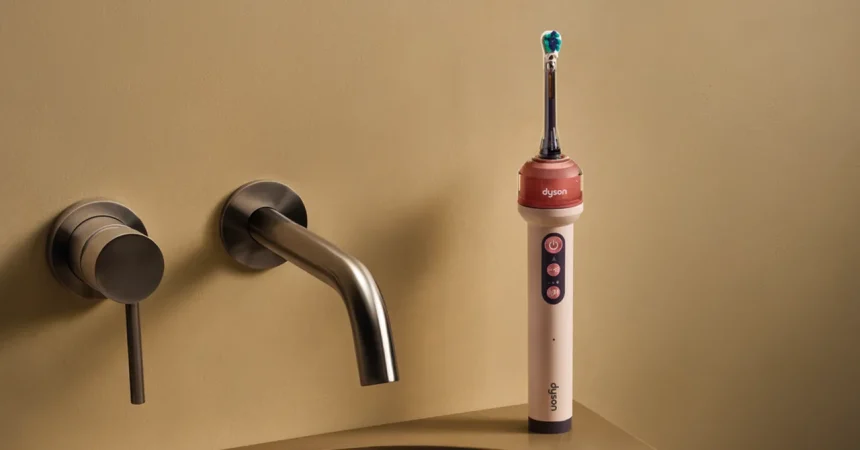
Whenever Dyson wades into a new product category, the industry braces itself. It’s a phenomenon we’ve seen play out time and time again, from the cyclone-powered stick vacuums that made bagless cleaning a global obsession to the futuristic air-multiplying hair dryers that turned a mundane morning ritual into a luxury spa experience. When Dyson speaks, the tech world listens, and competitors scramble to update their roadmaps. So, when the company recently announced the CameraJet—a two-in-one electric toothbrush and water flosser—the ripple effect was almost immediate. It’s a bold, slightly intimidating name for something you put in your mouth, and it certainly isn’t the first time Dyson has tried a mashup of disparate technologies; we remember the short-lived Dyson Zone, the air-purifying headphones that looked like a post-apocalyptic feeding tube. But the CameraJet, as a marriage of two practical oral care functions, makes infinitely more sense than trying to breathe fresh air through your jaw. The real genius, however, lies in the bizarre and fascinating way it tackles the age-old enemy of dental hygiene: the stubborn plaque hiding between your teeth. Instead of relying on you to angle a separate flosser correctly, it quite literally uses a tiny camera to see what you’re doing, turning your toothbrush into a precision-guided missile for your gums.
The Eye Inside Your Mouth
Let’s dissect that camera, because that’s the heart of this technological marvel. The CameraJet isn’t just an electric toothbrush with a fancy spout; it’s a fully embedded optical system. As you glide the brush head across your teeth, a built-in endoscope camera—essentially a micro-sensor no bigger than a grain of rice—peers down at your enamel. It’s capturing a staggering 28 images per second, constantly scanning the terrain for the tell-tale dark crevices between teeth, the interdental gaps. But seeing a gap isn’t enough; the device has to understand what it’s seeing. This is where Dyson’s proprietary “Gap Optical Targeting” system comes into play. The camera feeds those images into a machine learning algorithm that has been trained on a massive database of 470,000 dental images—a dataset Dyson painstakingly collected over six rigorous years of development. This isn’t just a random AI; it’s a specialist that has effectively studied thousands of different mouths, learning the subtle variations of gingival contours, tooth spacing, and gum lines. The magic happens in a blindingly fast 100 milliseconds. The moment the camera identifies a gap that needs flushing, a micro-pump fires a burst of mouth rinse directly into that interdental space. You don’t have to pause, tilt your head, or even look in the mirror. The brush does the thinking, the seeing, and the cleaning, all while you just gently move it along your teeth as you normally would. It’s an almost terrifyingly intelligent piece of engineering, transforming a passive ritual into an active, adaptive cleaning session.
The Physics of a Gentle, Yet Powerful, Jet
Beyond the artificial intelligence, the physical engineering of the fluid jet is where Dyson’s obsessive problem-solving shines brightest. Most standalone water flossers on the market fire a thin, needle-like stream of water at high pressure to blast away debris. While effective for some, this “needle-type” jet can be harsh, causing gum sensitivity and sometimes feeling like a tiny pressure washer aimed at your soft tissue. Dyson, true to its form, threw that concept out. Instead, they engineered a conical jet—a plume of fluid that expands outward like a miniature tornado. The physics are elegant: by shaping the flow into a cone, the water or mouth rinse particles are spread over a wider surface area. This means it can dislodge plaque and food particles using significantly less pressure than a needle jet, making it considerably gentler on both gums and tooth enamel. To ensure this design actually works as well in a real mouth as it does on a whiteboard, Dyson didn’t just guess. They collaborated with the National University of Singapore’s Faculty of Dentistry to develop a synthetic proxy plaque—a lab-created stand-in for the real bacterial gunk that plagues our teeth. This allowed Dyson’s engineers to run thousands of iterations and tests of the jet’s effectiveness without needing to invoke a full clinical trial after every minor tweak to the nozzle geometry. It’s this level of obsessive testing—creating your own fake plaque just to tweak a water spray—that separates Dyson from the rest of the pack.
The Ritual of Cleaning and Refilling
But what does this all feel like in the flesh, so to speak? The design of the CameraJet is intended to be as seamless as possible. Directly below the brush head sits the liquid reservoir, a discreet 12.5-milliliter tank that holds your alcohol-free mouth rinse. It might sound small, but Dyson has engineered the system to be incredibly efficient. Inside the brush, a diaphragm pump and a pressurized chamber work in concert to ensure that the jet fires with consistent force and velocity, regardless of how you’re holding the brush. This is a crucial detail because many competing flossers lose pressure dramatically if you tilt them even slightly. Dyson claims the CameraJet maintains its performance whether you’re brushing your front incisors or awkwardly reaching for your molars in the back. When the tank runs dry, you simply place the brush back onto its bespoke docking station. This isn’t just a charging pad; it’s a hygienic home base. With a simple press of a button, the dock refills the brush with fresh mouth rinse in a remarkably quick three seconds, while simultaneously recharging the internal battery. The dock itself looks like a minimalist sculpture for your sink, giving the device a sense of permanence and intentionality that a standard plastic toothbrush holder simply cannot match. And for the traveler, a sleek, hard-shell travel case cradles the entire system, ensuring your smart toothbrush arrives at your hotel bathroom ready to perform its duties, rather than rattling around in a toiletry bag.
A Glimpse into Dyson’s Philosophy
This entire endeavor reveals a deeper philosophy at Dyson about the future of personal care. The CameraJet is not just a functional tool; it represents a conscious elevation of a mundane task into an intelligent interaction. Consider the failed Dyson Zone. While ambitious, it crossed a line—it was perhaps too weird, too bulky, and too niche for the general public. With the CameraJet, Dyson seems to have paid attention to that lesson. The hybrid nature here is practical: people know they should floss but dread it. They hate the fumbling with string floss, the bloodied gums from aggressive technique, and the hassle of stand-alone water flossers that are often messy and hard to control. By integrating the flosser into the toothbrush and automating the targeting, Dyson is addressing a massive human behavioral problem—the universal neglect of interdental cleaning. The psychology here is brilliant. It removes the barrier to entry. You don’t need to decide to floss anymore; you just brush, and the flossing happens on autopilot. It’s a silent, confident guardian for your oral health, sitting right there in your hand. This is the same psychology that sells premium hair dryers—the promise that your morning routine can be faster, quieter, and more effective, yielding tangible results that make you feel better about yourself. Dyson is betting that you’ll want that same feeling for your smile.
The Verdict on a New Era of Oral Care
So, is the CameraJet a game-changer or a gimmick set to join the Zone in the graveyard of over-engineered curiosities? The initial impression is overwhelmingly that this is a serious contender. The technology is robust, grounded in six years of development and a partnership with a leading dental school. The solution to the “problem” of flossing—which is genuinely a problem for billions of people—is elegantly solved with camera-based targeting that removes the human error entirely. The competitive market is going to have to take notice; Philips Sonicare and Oral-B have been duking it out over sonic speeds and brush head shapes, but none of them have put a machine-learning camera inside the brush head. That is a colossal leap forward in terms of design ambition. Whether it will become a daily staple or a luxury novelty depends on real-world reliability, battery life, and the unavoidable price tag that comes with any Dyson product—likely several hundred dollars. But even if it’s expensive, the CameraJet forces us to reconsider what a toothbrush can be. It’s no longer a piece of plastic with bristles; it’s a sensor-driven, AI-powered ecosystem designed to take care of your mouth with the same obsessive perfection that Dyson takes to air movement. For those willing to spend the money, the payoff might just be a brighter, healthier smile achieved without a single drop of manual effort. The future of oral care, it seems, is not just electric—it’s suddenly very, very camera-shy.