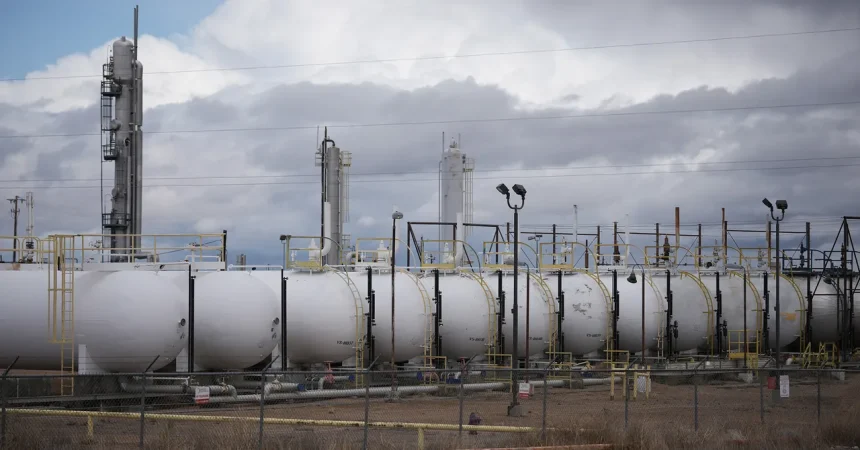
The AI Boom’s Dirty Secret: America’s Rush to Natural Gas Power
The United States is experiencing an unprecedented energy transformation driven by the explosive growth of artificial intelligence, and the consequences are becoming clearer with each passing month. New research from Global Energy Monitor, a research firm that tracks energy projects worldwide, has revealed a startling reality: the amount of gas-fired power being developed specifically for data centers has nearly doubled in less than a year. This single statistic speaks volumes about how deeply the tech industry has become entwined with fossil fuels, and how rapidly AI’s appetite for electricity has grown beyond what anyone anticipated. The numbers tell a story of urgency, compromise, and long-term consequences that extend far beyond the server rooms where AI models are trained and deployed.
When researchers first began tracking this phenomenon in early 2024, they identified a modest 4 gigawatts of gas projects in development dedicated exclusively to powering data centers. By the end of 2025, that figure had exploded to 97 gigawatts, representing a staggering increase in just a few years. Now, in the most recent update released in mid-2026, the pipeline has swelled to more than 189 gigawatts of natural gas capacity either announced, in development, or under construction. To put that number in perspective, a single gigawatt can power roughly a million homes, meaning the current pipeline represents enough electricity to power nearly 200 million American households. This isn’t merely an incremental shift in how data centers are powered; it represents a fundamental restructuring of the relationship between the tech industry and the nation’s energy infrastructure, with fossil fuels playing an increasingly central role.
The phrase “behind-the-meter” plants has become increasingly common in discussions about data center power, referring to private power facilities built specifically to serve individual data centers rather than connecting to the broader electrical grid. This approach has gained tremendous popularity among data center builders for several compelling reasons. First and foremost, it bypasses the notoriously lengthy grid connection times that can delay projects for years, which is crucial in an industry where speed to market is everything. Additionally, building private power can potentially help avoid saddling ratepayers with higher electricity bills, an issue that has become a flashpoint as opposition to data centers mounts across the country. The Trump administration has actively encouraged this trend, introducing a voluntary pledge that tech companies can sign to commit to building their own power infrastructure. Notable signatories include Microsoft, Meta, Google, and OpenAI, along with several Republican governors and some of the nation’s largest utility companies, signaling broad institutional support for this approach to meeting AI’s energy demands.
However, the climate implications of this massive natural gas buildout are deeply troubling, particularly because many of these facilities are being constructed with inefficient turbines that can significantly increase emissions. The environmental impact is far from theoretical; as detailed reporting has shown, some of these gas plants are permitted to emit more greenhouse gases each year than many small and medium-sized countries. This creates a profound paradox: the tech industry, which often presents itself as forward-thinking and environmentally conscious, is simultaneously becoming one of the largest drivers of new fossil fuel infrastructure in the nation. The scale of emissions locked in by these projects represents decades of committed carbon output, making it increasingly difficult to envision a path to meaningful climate action while AI continues its relentless expansion.
The contrast with China’s approach to powering its data center boom provides a particularly illuminating comparison, especially given the Trump administration’s repeated emphasis on the United States being in an AI race with its chief geopolitical rival. Global Energy Monitor also tracks energy projects globally, including in China, which is the world’s largest importer of natural gas. While much of China’s gas usage goes toward producing products like fertilizer and plastic, the country does maintain a fleet of natural gas plants and experienced a surge in gas-fired facilities in the early 2020s that briefly outpaced American construction. However, the data center boom has now reversed this trend, with the United States again surpassing China as having the most gas projects in the pipeline. Yet this apparent advantage in fossil fuel infrastructure may be misleading, as China’s data center buildout is taking a fundamentally different approach to energy sourcing.
According to Kyle Chan, a fellow at the Brookings Institution, China’s data center boom is oriented predominantly around renewable energy, particularly solar and hydropower. Many data centers being constructed in China are deliberately sited in rural areas that have excess renewable energy production, taking advantage of the country’s massive investments in clean energy infrastructure. While there have been some attempts to develop private power for data centers in China, these projects tend to be smaller in scale. Chan emphasizes that the Chinese government’s deliberate choice to build out renewable energy on the grid reflects a strategic decision to ensure energy independence. This represents a fundamentally different philosophy from the American approach, one that prioritizes long-term sustainability and self-reliance over the immediate speed and convenience that natural gas offers.
The American approach of building gas power for data centers may make sense in the near term, particularly given the urgency to power these facilities quickly and the challenges of accessing cheap renewable energy comparable to what’s available in China. Natural gas infrastructure can be deployed relatively rapidly, and the United States has abundant domestic supplies, making it an attractive option for companies in a hurry. However, as Chan points out, this choice comes with significant long-term costs. Beyond the obvious environmental consequences of emissions, there’s the opportunity cost of failing to invest in the clean energy sector. By choosing gas over renewables, the United States may be sacrificing the development of its own clean energy industry, potentially leaving it at a competitive disadvantage in the global transition toward sustainable power.
It’s important to note that not all of the gas projects tracked by Global Energy Monitor will actually be built, according to Jay Martos, a research analyst at the organization who worked on the report. Many of the projects in the group’s database haven’t yet begun construction, and numerous factors could derail them. Financing challenges, local opposition, data center moratoriums, and constraints on turbine supply are just a few of the obstacles these projects face. The industry is still maturing, and market conditions can shift rapidly, potentially affecting the viability of projects that today seem certain. This uncertainty cuts both ways, however, and it’s equally possible that new projects will be announced, further expanding the pipeline beyond current estimates humanized through the lens of those who must navigate this complex landscape.
The implications of this trajectory are profound, as Martos explicitly warns: if all these projects get built, the emissions they produce will be locked in for decades, fundamentally shaping the nation’s climate future and its ability to meet international environmental commitments. In the near term, building gas power for data centers in the United States might make economic sense, especially given the urgency to power these facilities quickly and the country’s lack of access to the same kind of cheap renewable energy available in China. However, Chan offers a cautionary perspective, noting that the long-term price is paid not only in terms of emissions but also in terms of not investing in domestic clean energy capacity. The tension between short-term expediency and long-term sustainability represents perhaps the central challenge of the AI era, as the tech industry’s insatiable hunger for electricity collides with the pressing need to transition away from fossil fuels. The decisions made today about how to power AI will echo for generations, shaping not only the future of technology but the fate of the planet itself.