Here is the humanized and expanded content, structured into 6 paragraphs as requested.
This summer has been a banner season for bacteria, and not in a good way. It’s as if we’ve entered the peak of a foodborne illness remake of a disaster movie. A sprawling, multi-state salmonella outbreak has slithered its way across the map, touching at least thirty states by late August, while the cyclospora parasite—nasty enough to cause prodigious, unmistakable gastrointestinal distress—seems to be finally taking a breather. As the leaves begin to hint at turning, we find ourselves in the middle of a massive recall bonanza that includes everything from eggs and granola to jalapeños, greens powders, nut butters, and even dog food. The usual suspects—raw meat and eggs—are present, but the real headline in food safety is the company that salmonella is keeping these days: fresh produce. It’s a shift that has food safety experts pointing a finger directly at climate change, noting that the same warming, increasingly wet weather that’s been driving us to the brink of a tomato drought is also creating ideal conditions for these pathogens to thrive. “When we see warmer temperatures,” explains Ellen Shumaker, a food safety expert at NC State Extension, “that creates conditions friendly for bacteria like salmonella or parasites like cyclospora to grow.” In other words, the great outdoors has become a petri dish of bacterial delight, and our national supply chain is the transport network.
But before you start a life of pure asceticism and survive on nothing but unwashed air, there’s a very simple, wonderfully low-tech piece of technology that seems to have been lost to the ages for most Americans: it’s called cooking. Specifically, cooking to temperature. The science here is simple: salmonella, like most foodborne pathogens, is a fragile thing when it faces heat. While it can survive and even multiply in the “danger zone” between 40 and 140 degrees Fahrenheit, the moment you cross that threshold and start climbing, you’re bringing the fight to it. The USDA recommends cooking to an internal temperature of 145 degrees Fahrenheit for roasts and fish, and 160-165 F for ground meats and poultry. But the real sweet spot—the temperature at which salmonella dies essentially instantly—is a blistering 165 degrees Fahrenheit. Above that, the bacterial cells literally burst apart in a matter of seconds. It’s a powerful thought: there is no salmonella outbreak so persistent that it can withstand a solid sear or a thorough roast. The only thing standing between you and a delayed bioluminescent glow stick in the dark is the discipline to bring that internal thermometer out of the drawer and into the center of your Sunday roast. It is the single greatest equalizer in the culinary world, leveling the playing field between a dangerous bug and a delicious dinner.
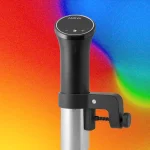
And that’s where I come in. I’m the lead reviewer for cooking technology at WIRED Reviews, which is a fancy way of saying my life is one long, delicious experiment in thermal dynamics. And I can tell you with absolute certainty that the most important item in my entire kitchen—more than the $4,000 sous-vide machine gathering dust in the corner—is my trusty instant-read meat thermometer. It’s the humble kitchen gadget that separates the amateurs from the professionals, and unfortunately, the sick from the well. Yet, a recent food safety survey reveals a shocking statistic: while an overwhelming majority of Americans own a food thermometer, over 70 percent of them don’t regularly use it to check the doneness of their meat. This infuriates me on a personal level, and it would terrify my own mother, a woman who has declared war on undercooked chicken with the ferocity of a general seizing a hill. The whole situation makes me want to reach through the screen and shake people by the shoulders, saying, “It’s not a matter of if you’ll get salmonella, it’s a matter of when—so let’s get you a proper tool for the job!”
The root of the problem, I’m convinced, isn’t a lack of caring—it’s that most people are trying to use inferior equipment. Their thermometers are trash. I’m not saying that to be mean; I’m saying it because I’ve seen the showdown. Walk into any home goods store and you’ll find a “fast-read” thermometer for around $14. It sits there, a plastic-and-stainless-steel relic, offering up a prayer-like hope that you’ll get a reliable reading. And you can, technically. The problem is that “fast” is doing a lot of heavy lifting. You’ll hover over a hot pan, arm shaking, waiting a full seven or eight agonizing seconds for that digital number to stop jumping around. It gives you just enough time to second-guess yourself, to get bored, to think about all the other things you could be doing with those precious seconds. You’re not going to bother with that every single time you cook a chicken breast, and so it ends up at the bottom of a drawer, only seeing the light of day when you’re feeling overly ambitious about a pork chop. It’s the culinary equivalent of using a magnifying glass to start a fire—yes, it works, but it takes a frustratingly long time and you have to be very patient.
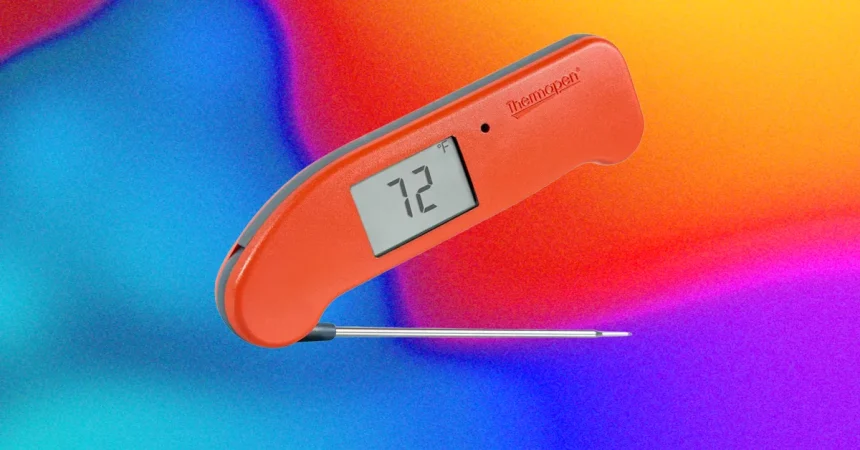
But the best meat thermometer is the one you’ll actually use, and that means it needs to be fast. For over a decade, the WIRED Reviews team has been banging the drum for a specific type of instrument: the instant-read. The gold standard, the one that costs seven or eight times as much as that cheapo on your neighbor’s counter, is the Thermapen One. I know, I know—it sounds absurd to spend that kind of money on something that measures temperature. But hear me out. The Thermapen gives you a stable, accurate digital readout within a mere two seconds. That’s not a typo. You plunge the thin probe into a thick-cut pork chop, and before your brain has even registered that it’s done, it’s already given you the go-ahead to start carving. This difference is pivotal. It’s the difference between a chore and a reflex. When the feedback loop is that fast, you actually do it every single time, without fail. It’s the difference between hoping something is safe and knowing it is. It doesn’t just sit in a drawer; it lives right next to the stove, a permanent fixture in the most valuable real estate in the kitchen, because it earns that spot every single time you use it.
You might be thinking that this is overkill, that you can just, you know, look at it and know. But I’d argue that you cannot. The real work of food safety isn’t just about avoiding a stomach ache; it’s about introducing a “kill step,” a concept that Jerold Mande, an adjunct professor of nutrition at Harvard’s School of Public Health, stresses. That kill step—the act of getting that food’s internal temperature above 165°F for those few life-saving seconds—is something that no amount of sniffing, prodding, or hoping can replicate. A squishy piece of fish might feel firm enough, and a burger can look brown all over. But looks can be deceiving, especially when you’re talking about ground beef that may have come from a mixture of different animals, one of which may have had a bad case of salmonella. So yes, it might feel a little nerdy, a little extra, to use a gadget to tell you what a spatula and a prayer can’t. But in a world full of invisible threats and complicated, expensive food systems, the humble meat thermometer is the great equalizer. It turns you from a food gambler into a food scientist. And in a world that feels increasingly chaotic, there’s a deep, profound comfort in introducing that certainty into your Sunday roast.