It’s been a monumental year for Apple, a whirlwind of firsts that would be remarkable even for a company that’s built its entire brand on novelty. They surprised us with the sleek, ultra-thin MacBook Neo, a laptop that feels less like a computer and more like a work of art. Then, in a move that fanboys and industry analysts had whispered about for years, they finally unveiled a folding iPhone in September, a device that bends without breaking both hardware conventions and the collective mind. And if that wasn’t enough, they’ve installed a brand-new CEO for the first time in fifteen years, a leadership shift that signals a desire to break from the comfortable mold of the past. But just when we thought the surprise well had run dry, they went and announced the Apple HomeView, their very first foray into the world of smart displays. It’s a product that many have been waiting for, some have been pleading for, and others have given up on ever seeing. After a decade of watching Amazon and Google dominate the kitchen counters and living rooms of the world with their screen-equipped speakers, Apple has finally decided to step into the ring. And they’ve done it with their signature flair—a device that feels less like a leap and more like a carefully orchestrated reinvention of the category.
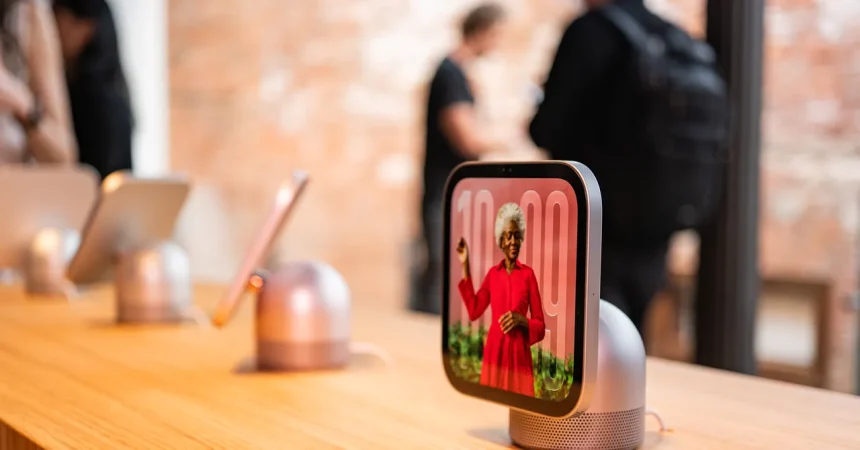
The wait, as they say, is over, but the excitement is tempered by a long history of missteps. For years, Apple’s smart home ecosystem felt like an afterthought, a series of half-hearted attempts to compete with the ubiquity of Alexa and Google Assistant. They stuck with their smaller, more closed-off ecosystem centered on the HomePod, a speaker that was beloved for its audio quality but criticized for its lack of smarts. They even took the bizarre step of removing the iPad as a hub device a few years ago, which forced anyone who wanted to build a smart home to shell out for either an Apple TV or a HomePod just to get started. That’s a costly proposition that alienated casual users and gave the competition a massive head start. But now, Apple is trying to course-correct with the HomeView, and the announcement, made Tuesday at a stylish event in New York City, was packed with promise. The 7-inch square smart display is available for $299 in two distinct configurations: one that sits on a speaker base, and another that mounts directly onto your wall, both at the same price. Preorders went live immediately, with the first units shipping on November 13th. It’s a bold move, and one that might just give the Echo Show and Nest Hub a run for their money—if Apple can pull it off.
The moment I laid eyes on the HomeView, I had a flash of recognition. This isn’t a new device concept; it’s a giant Apple Watch. The 7-inch square screen is a loving enlargement of the smartwatch’s face, complete with a gallery of customizable “faces” that you can swipe through with a flick of your finger. It’s that same delightful, glanceable experience that makes the Apple Watch so beloved, translated to the home. You can set a face to display a simple, elegant clock, or fill it with your favorite photos of friends, family, or even your pet—syncing with shared albums so that your beloved Shih Tzu’s latest snapshots appear as if by magic. You can flip to a weather face that shows a miniature forecast, complete with sunny icons and rain probabilities, or perhaps a face that tracks your family’s shared calendar. And yes, there’s a Snoopy face, complete with the iconic beagle’s animated antics, bringing a bit of childhood whimsy to your hallway. Swipe up, and you’re presented with a home screen that feels more like an iPhone or iPad, with a neat grid of app icons and widgets. But don’t be fooled; the HomeView doesn’t run iOS or iPadOS. Instead, it runs on a new, generically named “HomeView software,” a stripped-down operating system designed specifically for this device. It’s a clever move, allowing for a focused experience that prioritizes simplicity over functionality.
The software is a mix of ambition and practicality. There’s no App Store, which might sound limiting, but Apple has carefully curated a selection of apps that actually make sense for a home display. You get FaceTime for making video calls while you’re cooking, Messages for quick check-ins, and Safari for everything else. A handful of third-party media apps, including Spotify, are available right out of the box. Even better, Apple has opened the door for developers to bring their existing CarPlay apps over to the HomeView. If your iPhone has a CarPlay app installed, it can automatically appear on the HomeView after setup. That’s a clever leveraging of an existing ecosystem, but it means you won’t find video streaming apps like YouTube, Netflix, or Disney+ at launch. That might be a dealbreaker for some, but Apple’s hope is that those companies will eventually see the value in developing for the HomeView using the CarPlay framework. Until then, you’ll have to use the Safari browser to watch your shows, which is a perfectly acceptable, if not slightly clunky, workaround. The lack of a dedicated video app might actually be a blessing in disguise, encouraging you to get up and do something rather than binge another season of show while sitting at the kitchen table.
But the real question is whether the HomeView can finally crack the code of Apple’s smart home struggles. The company’s history here is one of missed opportunities. The HomePod, despite its superb sound quality, was a commercial flop because it couldn’t match the conversational intelligence of Alexa or the sheer ubiquity of Google. The HomePod mini was a step in the right direction, but even it felt like a niche product. The HomeView is Apple’s big, bold bet to change all that. They’re hoping that by combining the power of a smart display with the intimacy of a digital photo frame and the responsiveness of a home hub, they can finally create a product that feels indispensable. And they’re making sure that you need an iPhone to get the most out of it. In fact, to set up the HomeView at all, you need an iPhone 15 Pro or newer, which is a pretty steep requirement. You can technically pair it with an older iPhone, but you’ll miss out on some of the more advanced Siri AI features—like broad world knowledge and smart app actions—unless you have the latest silicon. This is Apple’s way of saying, “We’re serious about the home now, but only if you’re all-in on our ecosystem.” It’s a strategy that could backfire, but it also ensures that the experience is deeply integrated with your other Apple devices. For those already deeply embedded in the Apple universe, it’s a no-brainer. For everyone else, it might be a hard sell.
In the grand scheme of things, the HomeView enters a market that’s already crowded with established players. The Google Nest Hub and Amazon Echo Show have been selling for years, and they offer many of the same features—smart home controls, video calls, weather forecasts, and of course, that ubiquitous “Hey Google” or “Alexa” wake word. So why should you consider the HomeView? For starters, there’s the design. Apple has always excelled at making technology that feels personal and approachable, and the HomeView is no exception. It looks like a little piece of art that you won’t want to hide away. It’s also a lot more private, with all your voice commands processed on-device and end-to-end encryption for your camera and FaceTime calls. Google and Amazon have faced countless privacy concerns, and Apple is going to lean into that hard. And then there’s the integration with your existing Apple products. The way it seamlessly syncs with your iPhone, Apple Watch, and even your MacBook Neo is something that no competitor can match. It’s not just a smart speaker; it’s a command center for your entire digital life. Yes, you’ll have to shell out $299, which is pricey but comparable to the Echo Show, and you’ll be limited by the lack of an App Store, but you’ll be getting a device that feels less like a gadget and more like a member of the family.
So, is the Apple HomeView worth all the hype? I think it is, but with a few caveats. It’s not a revolutionary device that will change the way you live, but it is a beautiful, thoughtful refinement of a concept that’s been around for a while. It’s a product that feels quintessentially Apple—simple, elegant, and deeply integrated into its own ecosystem. If you’ve been on the fence about smart displays because they felt too clunky or too intrusive, the HomeView might just be the one that wins you over. It’s a big year for Apple firsts, and the HomeView is perhaps the most significant one yet. It’s a clear statement that Apple is finally taking the home seriously, and it’s doing so with its trademark blend of style and substance. The HomeView doesn’t just make your home more convenient; it makes it more beautiful. It’s like having a piece of the future on your wall, ready to help, inform, and delight you every time you walk past. Whether you’re a devoted Apple fan or a curious tech enthusiast, this is a launch worth paying attention to. The kitchen counter just got a whole lot more interesting.