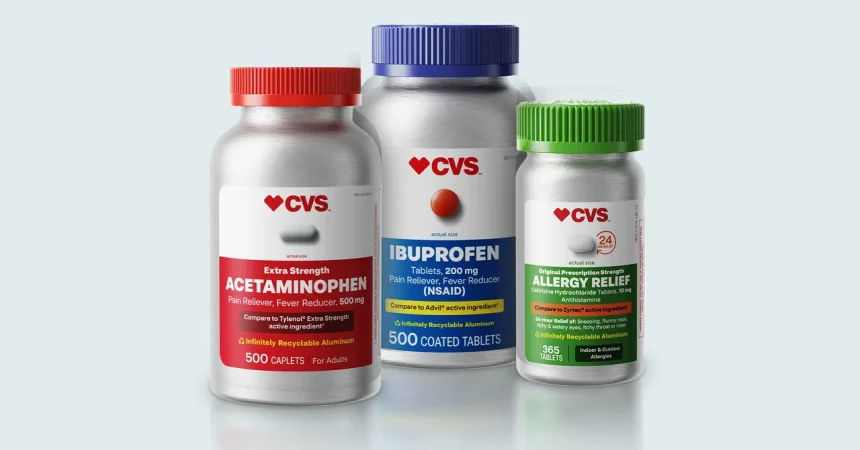
CVS is quietly shaking up the look and feel of your medicine cabinet, moving away from the decades-old reliance on hard plastic pill bottles in favor of a sleek, sustainable alternative: aluminum. For as long as most of us can remember, over-the-counter (OTC) medications have arrived in rigid plastic containers that, while functional, are notoriously difficult to recycle. By making this transition, CVS is tackling a persistent environmental problem, as aluminum boasts a much higher success rate in recycling streams compared to its plastic counterpart. It is a subtle shift that reflects a growing industry trend toward smarter, more circular packaging choices that don’t sacrifice the integrity of the products inside.
The initiative begins with a practical rollout, focusing on the company’s “value-size” offerings for common household staples like allergy relievers and pain medications—think of the generic alternatives to familiar names like Tylenol, Advil, and Claritin. According to Mike Wier, vice president of store brands at the pharmacy giant, this isn’t just an aesthetic gamble; it’s a calculated move to balance sustainability with product performance. Aluminum serves as a robust barrier, ensuring that your medications remain stable and potent on the shelf, even if the transition means the familiar “rattle” of pills in a bottle will sound a bit more metallic than you are used to.
Perhaps most importantly for the budget-conscious consumer, CVS has committed to keeping the costs of these products steady. Despite the change in materials, the price tags on these new aluminum bottles will remain untouched, ensuring that the consumer isn’t footing the bill for a greener bottom line. These bottles are notably lighter than the traditional plastic versions, which could translate to lower shipping emissions over time, though the company has remained tight-lipped on the exact weight savings. The shift is designed to be seamless, giving loyal shoppers a more environmentally friendly option without disrupting their usual shopping experience.
While the material is more recyclable, there is a small catch that requires a bit of human diligence. Even with a greener bottle, shoppers still need to put in the work to follow proper recycling habits, which includes peeling off labels and removing the plastic caps before discarding the base. Because the caps are typically made of a different material, they cannot simply be tossed into the bin with the aluminum structure. This serves as a gentle reminder that even with corporate innovation, sustainable habits at home are the final link in the chain that determines whether a change like this actually makes a difference for the planet.
Beyond the environmental impact, this move feels like a strategic chapter in the CVS brand’s broader evolution. Following the closure of hundreds of stores across the United States last year, the company is clearly looking for ways to re-establish a positive connection with its customers. This packaging refresh is part of a larger plan to make the store experience less disjointed, helping shoppers navigate shelves more easily. It also addresses the lingering shadow of the “locked case” problem; by elevating the aesthetic of their own-brand products, CVS is working to counteract the perception of a retail space that often feels like a fortress, making the act of buying medicine feel more like a standard, pleasant shopping trip.
Looking ahead, CVS is taking a “wait and see” approach before committing to a full-scale overhaul. The current rollout is a pilot program of sorts, allowing the company to gauge customer reception before deciding whether to roll out aluminum packaging to its wider catalog or even, perhaps, prescription medications. Should it prove successful, it represents a meaningful shift in how massive retailers manage their environmental footprint while navigating competitive retail pressures. It’s an experiment in modernizing the pharmacy aisle, one bottle at a time, and it offers a rare moment where a corporate decision might actually leave our medicine cabinets a little less cluttered and our planet a little cleaner.