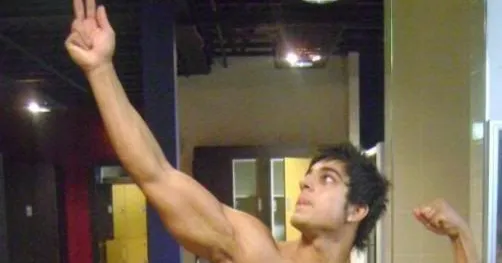
It is a peculiar and unsettling journey to trace the digital footprints of a figure like Aziz “Zyzz” Shavershian, a young man who emerged from the nascent chaos of the early social media era to become a shimmering, controversial beacon for millions. Depending on where you stand, he was either the original “looksmaxxer,” a pioneer of a philosophy that would later dominate internet subcultures, or a foundational, troubling forefather of the manosphere. His story, now the subject of the documentary Poster Boy, directed by Selina Miles, is far more than a simple tale of a bodybuilder; it is a cautionary fable woven from the threads of identity, vulnerability, ambition, and the unforgiving machinery of online fame.
Miles describes his narrative as one that left a profound and lasting impression on Australian millennials, a generation that watched his meteoric rise and sudden, tragic fall with a mixture of awe and disbelief. The director’s framing is crucial: this is not merely a biography but an investigation into a cultural phenomenon. Why did this particular young man, with his sculpted physique and confrontational catchphrases, strike such a powerful chord? His transformation from a self-described “pretty boy” from Sydney’s affluent eastern suburbs into a global internet phenomenon tapped into something deep-seated in the psyche of young men navigating a rapidly changing world. His story, populated with reams of archival footage and intimate interviews with his older brother, Said, himself a professional bodybuilder, and his close friends, becomes a lens through which we can examine the anxieties and aspirations that fueled the genesis of modern online masculinity.
His rise coincided with a pivotal shift in human communication. In 2005, when Zyzz was just 16, YouTube launched, and the following year, Facebook became available to him. In these embryonic digital spaces, few could have imagined the potential for global notoriety or financial success. Zyzz’s earliest videos were amateurish, just a kid fooling around in his bedroom. But as he and his friends began venturing out to music festivals and nightlife venues, flexing their biceps and showcasing their developing abs, they discovered a potent formula. They were not just seeking attention; they were creating a spectacle, a performance of hyper-optimized masculinity designed to provoke a reaction. His initial ethos, intriguingly, promoted a form of inclusive self-improvement, encouraging other men to strive for their own “aesthetic” goals through a comradely, “brah” culture of mutual support. The original dream was one of collective uplift, a shared journey toward becoming the best versions of themselves.
However, this proto-community had a dark underbelly, fueled by a symbiotic relationship with his detractors. Zyzz was remarkably prescient in understanding that controversy was the most potent currency of the new digital economy. His catchphrases—”U mad?” and “Come at me brah”—were not just juvenile taunts; they were strategic engagement tools designed to bait his critics and consolidate his followers. He instinctively understood the mechanics of the algorithm before they were formalized, even going so far as to maintain fake social media accounts himself to stoke the flames of conflict. Miles recounts an incident cut from the final film where he created a Facebook page pledging to attack himself once it reached a certain number of likes, only to rebrand it as a marketing tool for his protein supplement company once it achieved its goal. This cynical, masterful manipulation of audience sentiment was a blueprint for countless influencers to come.
Yet, the persona he cultivated became increasingly toxic and exclusionary. His rhetoric curdled into homophobia and misogyny, embodying a profound contempt for those, in his eyes, who had failed to optimize their physical form. His infamous 2010 Facebook post, “id rather be dead than ‘normal,'” epitomized this extreme worldview. The documentary reveals the sheer scale of his influence, noting that at his peak, he commanded more followers on the platform than the Australian prime minister. But behind this towering digital edifice of bravado and aesthetic perfection lay a fragile and psychologically unprepared young man. The very tools he used to build his empire were the ones tearing him down. The relentless pursuit of his Renaissance-worthy physique was fueled by steroids, while the stress, paranoia, and constant threat of public confrontation—where he was frequently menaced by young men looking to prove themselves—drove him to self-medicate with Xanax.
His final years were a tragic unraveling. The god of aesthetics, who inspired a generation to chase an unattainable physical ideal, died of a heart attack in a Bangkok hotel room in 2011 at the age of 22, a direct consequence of an undiagnosed heart condition compounded by his lifestyle and drug use. His death, as with all aspects of his life, was amplified by the digital world he had mastered. The very platform he used to build his legend became the stage for his posthumous one, where his legend only grew larger. In the years after his death, the internet collectively constructed a new Zyzz, a mythic figure embodying raw confidence and defiant self-belief. His face and physique were superimposed onto motivational memes, his quotes repurposed for a new generation grappling with similar anxieties.
The documentary’s true power lies in its refusal to simply condemn or lionize. It presents Zyzz as a complex, contradictory figure; a misogynist who had close female friends, a bully who promoted self-improvement, a superstar consumed by his own creation. This complexity is what makes his story so relevant today. His DNA is woven into the fabric of the modern manosphere, from “looksmaxxing” tutorials and “escalator” philosophies to the proliferation of influencers preaching hyper-masculinity. But as Miles suggests, we must stay curious as to why his impact has been so profound and enduring. The answer lies not in the abs or the catchphrases, but in understanding the profound alienation and search for identity in a digital age, where a young man can create a self, build an empire on it, and be destroyed by the very world he constructs. His is a story that forces a confrontation with the seductive dangers of online adulation, the desperation for self-definition, and the tragic human cost of a relentless, unforgiving quest for perfection.