The recent signing of a Memorandum of Understanding between President Trump and Iran marks a significant, if tentative, turning point in the prolonged conflict that has gripped the Middle East for the past 110 days. By establishing a 60-day ceasefire and initiating longer-term negotiations regarding Iran’s nuclear program, the agreement has allowed for the immediate, albeit cautious, reopening of the Strait of Hormuz. This narrow waterway, a critical artery for global energy, serves as the transit point for roughly 20 million barrels of oil every day. To the relief of the global community, maritime intelligence firm Windward reported that ten stranded vessels finally began their exodus from the area shortly after the deal was inked, signaling the first signs of a return to normalcy for international shipping lanes that had long been paralyzed by the threat of war.
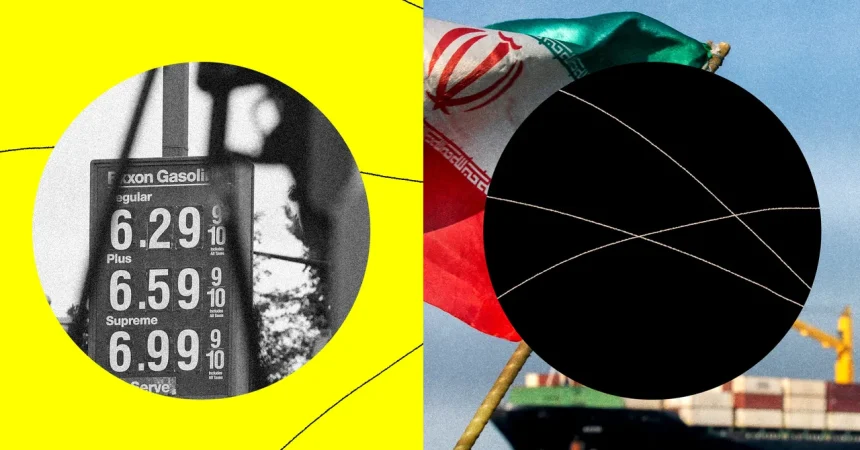
However, despite the optimism accompanying the reopening of the Strait, experts are urging the public to temper their expectations regarding immediate economic relief. While the geopolitical news is undoubtedly positive, it does not erase the deep scars left on the global supply chain after nearly four months of intense disruption. Gas prices, which have spiked by over 35 percent since late February, are unlikely to drop to pre-war levels anytime soon. The machinery of oil production, distribution, and global commerce does not simply flip back on like a light switch; the systemic damage caused by the conflict has created a complex imbalance in supply and demand that will take months—or even years—to fully untangle, leaving consumers to face the reality of elevated costs for fuel, food, and fertilizer for the foreseeable future.
The atmosphere in the shipping industry remains one of profound apprehension rather than celebration. Even as vessels begin to move, the Strait of Hormuz is still considered a high-risk environment, seeded with an indeterminate number of underwater mines that could prove catastrophic to unsuspecting commercial tankers. Jakob Larsen of the international shipping organization BIMCO has emphasized that the most secure central channels remain treacherous and essentially un-navigable. For now, vessels are forced to rely on narrower, alternative paths that hug the coastlines of Iran or Oman, creating a bottleneck that severely limits the efficiency and safety of maritime trade. Without ironclad security guarantees and clear, transparent rules of engagement, the shipping insurance market remains skittish, further complicating the logistical restoration of global routes.
This sense of fragility is compounded by the erratic nature of the diplomatic rhetoric coming from Washington. Even as the ink on the memorandum dries, President Trump has continued to issue inflammatory threats, warning of potential bombings should Iran fail to meet the stipulations regarding its nuclear program. Such volatile statements undermine the stability of the fragile peace, sending a clear signal to both markets and maritime operators that the situation could deteriorate at any moment. When the leader of one of the signatory nations explicitly suggests that “it’s amazing what bombs can do,” it becomes impossible for the global community to view the Strait as a truly secure passage. The peace agreement exists, but it lacks the stabilizing atmosphere of mutual trust necessary to reassure those who keep the world’s goods moving.
Looking ahead, the physical task of clearing the waterway is an immense, multi-layered undertaking that remains shrouded in uncertainty. Maritime experts like Michelle Wiese Bockmann point out that the length of time required for thorough de-mining efforts is currently a total mystery; it could take six weeks or six agonizing months to verify that the path is clear. The operation involves a complex array of assets, ranging from international minesweeping fleets and sophisticated underwater drones to sonar-equipped vessels and military divers, all tasked with mapping the seafloor for potentially lethal anomalies. While the President has claimed that these efforts are already in motion, the logistical complexity is daunting, and until the last mine is confirmed to be neutralized, the Strait will continue to operate under a cloud of existential dread.
Ultimately, consumers must brace themselves for a long, slow recovery that will be defined by the lingering consequences of the recent war. As Jason Miller, a supply chain professor, aptly notes, none of the current economic pain would be happening if it weren’t for the conflict, but the situation is too fragile to expect a rapid correction. For the average person, this means that budgeting for “wartime prices” needs to be treated as the new, albeit temporary, norm. The reopening of the Strait is a momentous achievement in diplomacy, but it is merely the first step in a gargantuan task of rebuilding trust and infrastructure. Until the mines are cleared, the rhetoric softens, and the global logistics network stabilizes, the world remains in a state of suspended animation, waiting to see if this peace will hold or if the dark waters of Hormuz will once again shut down.