Paragraph 1: The Yardstick of a Tech Prophet
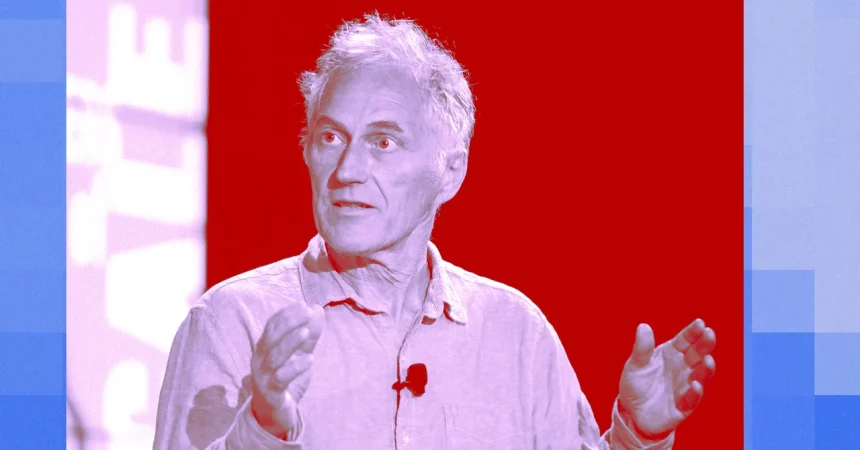
Tim O’Reilly has never been a typical tech figure. He is part publisher, part venture capitalist, part conference impresario, and part philosopher—a man who has spent nearly four decades mapping the tectonic shifts of the digital world before they happen. His enduring personal metric, the one he applies to companies, individuals, and entire societies, is a disarmingly simple question: Do you create more value than you capture? This isn’t an abstract ideal; it is a ruthless economic and moral ladder that separates the visionaries from the parasites, the sustainable ecosystems from the boom-and-bust bubbles. Today, O’Reilly is turning that yardstick toward the most transformative and dangerous technology of our time: artificial intelligence. As he spends his days inside the labyrinth of neural networks, chatbots, and agentic frameworks, he sees a familiar shadow creeping forward—the ghost of Microsoft in the 1990s, a monopolistic giant trying to lock users into its proprietary world through software bundling and API dominance. He fears that today’s hyperscalers—Google, OpenAI, Anthropic, and Meta—are trying to build a similar cage, but this time the bars are made of algorithms, and the prisoner is human creativity itself. To fight back, he is championing a radical, expansive vision of open-source AI that goes far beyond merely releasing model weights. He wants to unlock the entire technological stack, from the training data to the inference engines to the user interfaces, giving everyday designers and users the agency to build, modify, and own the intelligence they deploy. O’Reilly sees AI as a new creative medium—something akin to the printing press or electricity—and he uses it incessantly, even maintaining a blog dedicated to his intimate, often surprising chats with the very machines he hopes to liberate. Yet, even between two progressive-minded tech veterans, there are fault lines. During our recent conversation, it became clear that he and I fundamentally disagree on the true creative potential of AI. I suspect the reader knows which side he fell on.
Paragraph 2: Beyond Weights—The Architecture of Participation
The conventional understanding of open-source AI is almost universally reductive, assuming that simply making the neural-net weights publicly accessible is the ultimate badge of openness. O’Reilly dismisses this with a wave of his hand. “When most people talk about open-source AI, they’re really just talking about open-weight models,” he says, his tone carrying the exasperation of a veteran correcting a rank beginner. For him, weights are merely the gigabytes of numbers that encode the model’s learned patterns—a static recipe without the kitchen, the ingredients, or the chef’s freedom. To illustrate his point, he reaches back to the darkest days of the early internet, the mid-1990s, when the software industry was obsessed with licensing terms and legal frameworks like the GNU General Public License. O’Reilly famously bucked that trend, insisting that the true revolution lay elsewhere. “No, no,” he told his peers then, “it’s about the architecture of the system. Does it enable participation?” That insight—that an open system’s power comes from its structural ability to let strangers build upon it—is now his north star for AI. Today’s massive labs, like OpenAI’s Claude or Google’s Gemini, have constructed monoliths designed for consumption, not creation. They wrap the raw modeling in proprietary harnesses that dictate how the AI can be prompted, what it can access, and how it can iterate. They create an architecture of control, tracking user behavior, restricting system prompts, and ensuring that the intelligence remains safely tethered to their cloud infrastructure. The problem, O’Reilly argues, is that these big labs are reading the future wrong. They have told themselves a comfortable narrative that having the biggest, best model is the key to ultimate success. But a model is just a brain; the real value lies in the nervous system—the harness, the plugins, the memory, and the application layer. O’Reilly wants a clean separation between the model, the harness, and the application, so that a startup can take a modest open model and inject their own “special sauce” without asking permission from a monopolist.
Paragraph 3: The Frontier Fallacy and the Diffusion of Genius
Critics immediately counter that it is entirely against the business interests of these tech giants to hand over this control. To which O’Reilly offers a knowing smile: “Oh, it’s totally against their interests. But that doesn’t mean that they’re making the right strategic decision.” For a long time, the frontier models were categorically superior. They could code, write, and reason better than any open alternative. But we are now entering a phase of diminishing marginal returns where the differences are becoming subjective. O’Reilly points out that people frequently debate whether the newest, most expensive frontier models are actually worse writers than their smaller, cheaper predecessors. Anthropic and OpenAI might publicly disagree, but the perception among the user base is shifting. The breakthroughs in so-called frontier AI are actually pushing the models further away from what ordinary people need. Superhuman intelligence is useless if it can’t be adapted to the mundane, messy, and highly specific tasks of daily life—managing a bakery’s inventory, tutoring a child with dyslexia, or composing a local municipal budget. O’Reilly paints a stark geopolitical picture: the United States could win the race for frontier AI—that mythical, godlike intelligence—and yet lose the economic and cultural war to China, simply because Beijing has diffused lower-level models astonishingly widely throughout its society. In China, open models are being used by millions of small businesses and hobbyists, generating a grassroots explosion of AI-native services and products. The goal isn’t to have one brilliant oracle in a locked room; the goal is to give every person the ability to innovate freely, to paint outside the lines. He likens the future of frontier models to mainframes or supercomputers—incredibly expensive, massively powerful machines used for esoteric problems like protein folding or global climate modeling, but not the true engine of widespread technological transformation. The real diffusion of power will happen when open-source AI becomes ubiquitous, distributed across every corner of society like the personal computer was in the 1980s.
Paragraph 4: The Safety Paradox and the Real Vulnerabilities
Perhaps the most visceral opposition to open-source AI comes from the safety camp, who fear that releasing powerful models into the wild hands of bad actors will lead to a permanent cyber-or-biological apocalypse. They demand strict gatekeeping, treating these models like nuclear materials that must be safeguarded for the public good. O’Reilly reverses this logic with startling efficiency. “All of the cybersecurity incidents we’ve seen are from the frontier models,” he flatly states. The closed, centralized databases of the top AI labs are massive, juicy targets for attackers; they represent a single point of failure for society. When a vulnerability is found in a closed, opaque frontier model, the public is at the mercy of the company’s security team—if they even bother to disclose it. In contrast, open-source software enjoys the famous “Linus’s Law”: given enough eyeballs, all bugs are shallow. There is no comparable mechanism for frontiera AI because they are locked away. Moreover, the risks associated with bioweapons or sophisticated cyberattacks are not solved by restricting open-weight models; they are solved by slowing down the development of frontier models themselves. The ignorance and blind spots of a new, artificially intelligent model are the real hazards, not the diffusion of a slightly older, well-tested one. By allowing the open-source ecosystem to audit, attack, and harden the code, we build a global immune system. Restricting open learning is a fool’s errand, akin to banning books because they could inspire a criminal. O’Reilly’s philosophy rests on governance through transparency, not governance through secrecy. We need the AI equivalent of public health agencies—not to quarantine the virus, but to ensure that the population has access to vaccines, diagnostic tools, and clean water, so that the inevitable exposure to new technologies does not become catastrophic.
Paragraph 5: The Battle for Memory and Agentic Freedom
The rubber meets the road in the practical mechanics of how we will actually use these systems in the coming decade. As AI shifts from being a simple chatbot to an “agentic” system that performs tasks on our behalf—booking flights, managing inboxes, negotiating with other AIs—control over the context of that interaction becomes paramount. This is where O’Reilly’s counters to Mark Zuckerberg’s grand thesis come into play. Zuckerberg’s Meta is betting billions on the idea that they will own the AI that knows you best—your memories, your preferences, your emotional history—and will lock you into their ecosystem by giving you an impossibly personalized experience that no other company can match. O’Reilly sees this as the ultimate digital plantation. To counter it, he is working through his nonprofit, the AI Disclosures Project, on a radically different concept: the “open-memory consortium.” This is a framework where your personal memory, your context, your relationship with AI, is a portable asset that you own. It is your passport, not your shackles. In this vision, open-source AI gives you the genuine ability to switch models and switch providers without losing your accumulated context. You might use a small model from a local startup for sensitive financial advice, but a powerful open-weight model for creative writing, and you can seamlessly move your memory—your relational data, your preferences, your long-term goals—between them, like carrying a file from one word processor to another. This is the agentic future done right: an open-source harness that acts as a universal translator and memory bank, ensuring that the power of AI remains in the hands of the individual user rather than the corporation. Without it, we are simply building a new form of feudalism where we are the serfs and our digital memories are the property of the lord.
Paragraph 6: The Disagreement on Creation and the Final Vision
Throughout our conversation, the greatest friction arose over a seemingly philosophical question: Can AI genuinely create original content, or does it merely remix the existing corpus of human expression? O’Reilly, ever the promoter of creative chaos, is the optimist here. He sees AI as a radical extension of human imagination—an elixir that allows individuals to paint, write, and compose in ways they never could have imagined. He argues that the naysayers—who claim that LLMs are just “stochastic parrots”—are applying a static, industrial definition of art and utility. When a user crafts a prompt that forces the model to weld together disparate concepts into a new, unexpected synthesis, that is creativity. The human curator is the artist; the AI is the ultimate medium. I maintained my position that until AI has genuine experiences—a body, a physical existence, suffering, joy—it cannot possess the intrinsic spark of originality. But O’Reilly doesn’t see this as a limitation. Instead, he views human experience and AI computation as a partnership—a cognitive augmentation that allows ordinary people to think at the level of geniuses. Ultimately, his lifelong fight is not merely about technology; it is about the shape of society itself. He wants to ensure that the value created by AI is diffused across the entire population, not captured by a few trillion-dollar companies in Palo Alto and Seattle. He wants a world where the architecture of participation triumphs over the architecture of control, where the open-source dream of the early internet—a decentralized, magnificent, collaborative chaos—is reborn with intelligence baked in. For O’Reilly, the path forward is clear: we must build AI that serves as an elixir for the masses, not a leash for the masses. He will keep his finger on the pulse of the frontier models, but his heart will always belong to the scattered, noisy, and gloriously unpredictable ecosystem of the open source.