The Hangover of the Digital Boom
The American West is often romanticized as a land of wide-open skies and untouched horizons, but in the twenty-first century, its true currency isn’t gold or oil—it’s raw, unbridled electricity. Across the dusty, sprawling expanse of Texas, a silent industrial revolution is unfolding, driven not by pickaxes or cattle drives, but by acres of server racks humming in the desert heat. Amazon has just taken a stunning and sobering leap in this new gold rush by quietly acquiring a massive, off-grid power plant being built specifically to service one of its colossal data centers. On paper, this project is a monolith of energy consumption, permitted to cough out a staggering thirty-three million tons of greenhouse gases every single year. To visualize that staggering number, imagine the annual output of sixty million round-trip transatlantic flights, or the total carbon footprint of a mid-sized industrialized nation like Denmark. This single facility, hidden in brush and mesquite, could easily become one of the largest single sources of climate pollution in the entire United States. But the sheer size of the infrastructure isn’t the only alarming part; the true horror lies in the technological choices made within its metal walls. Rather than using the most advanced, combined-cycle gas turbines that squeeze every drop of usable energy from their fuel, Amazon’s Texas outpost relies on older, simpler, and brutally inefficient “simple-cycle” turbines. These are essentially massive jet engines strapped to a generator, roaring to life and dumping a torrent of wasted heat directly into the atmosphere. If this plant runs at even half of its permitted capacity, it would pump more carbon dioxide into our shared sky than roughly seventy-eight average-sized natural gas plants combined. The acquisition feels less like a calculated energy strategy and more like a desperate act of a titan trying to feed a ravenous beast in an era of extreme climate anxiety.
Why Simple Is Complicated by Carbon
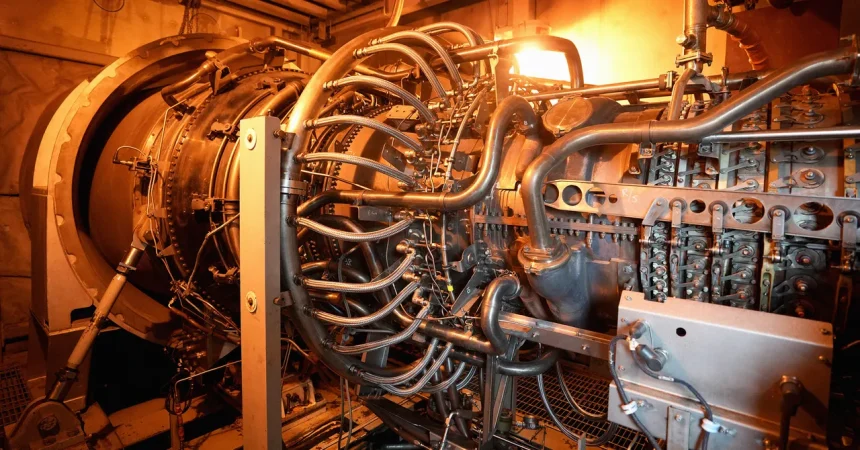
Let’s unpack the engineering behind this environmental paradox, because the details are far more damning than the flashy headline numbers. Imagine boiling water for pasta on the stove. A combined-cycle power plant acts like a highly efficient pressure cooker—it captures all that steam and uses the pressure to turn a secondary turbine, wringing every last bit of heat into mechanical motion. A simple-cycle plant, by comparison, is like leaving the pot uncovered on a high flame. You get your hot water, yes, but a colossal amount of heat just dissipates into the kitchen air, wasting precious fuel. In the energy world, this means simple-cycle units are severely penalized for their profound inefficiency. They might convert a paltry thirty to forty percent of the fuel’s chemical energy into electricity, whereas a modern combined-cycle facility can achieve sixty percent or more. That wasted energy isn’t just abstract heat radiating into the stratosphere; it represents un-burnt fuel transformed into carbon dioxide, methane, and other nasty pollutants. Why, in 2024, would the world’s second-largest company choose to shackle itself to such an obsolete and polluting technology? The answer boils down to raw speed and sheer desperation. Constructing a combined-cycle plant requires an additional steam turbine, a complex heat recovery steam generator, and a labyrinth of high-pressure piping—a process that can take years to engineer, order, and install due to massive supply chain backlogs. In the white-hot, cutthroat race to dominate artificial intelligence, where every month of delay can mean billions in lost market share or a missed competitive edge, companies are choosing the quick, dirty, and dirty-output option. A simple-cycle turbine can be delivered off the shelf, bolted down, and fired up in a fraction of the time of its efficient cousin. It’s the equivalent of deciding to buy an old gas-guzzling pickup truck and paying the massive fuel penalty because the electric car you wanted has a two-year waiting list. Efficiency, they seem to be saying, is a luxury they simply cannot afford.
The Silicon Valley Efficiency Paradox
Amazon is not alone in this dangerous game of energy roulette. A deeply troubling pattern is emerging across the American heartland, where tech giants are literally buying up fossil fuel infrastructure like children in a candy store with their parents’ credit cards. In Ohio, the oil and gas firm Williams is constructing three massive power plants exclusively for Meta, all of which rely solely on these inefficient simple-cycle turbines to feed their data centers. Down in Abilene, Texas, another developer named Crusoe is building a sprawling site for Microsoft’s Stargate campus, a facility that will hum with thirty-nine of these roaring jet engines, each one a monument to waste. Google’s ambitious Goodnight data center project, being developed at yet another Texas site by Crusoe, is following the exact same blueprint with twenty of these turbines. And Elon Musk’s xAI has already brought dozens of them online to power its Colossus data centers in Memphis, Tennessee. Every single permit application for these projects reads like a confession of environmental negligence, with emission caps set in the millions of tons. When questioned, the companies smoothly reply that they are complying with local regulations and outfitting their plants with basic emissions control technology. But the real story here is that Silicon Valley’s insatiable demand for speed has corrupted our national energy policy. We are watching the tech sector—which markets itself as the cleanest, most forward-thinking, most innovative industry on the planet—become the biggest cheerleader for the dirtiest, most outdated energy sources we have. The hypocrisy is staggering. You cannot claim to be saving the planet with clever algorithms and solar-powered campuses while your server farms burn fuel with the finesse of a rusty lawnmower. This isn’t progress; it’s a devastating retreat into the smoke stacks of the past.
The Fractured Grid and the Human Toll
Why are these digital titans choosing to build off-grid and off-the-books? Because the traditional American electric grid, a miracle of twentieth-century engineering, is slowing down and buckling under its own weight. In many regions across the country, hundreds of gigawatts of renewable energy projects are stuck in years-long interconnection queues, waiting sometimes a decade just to get a permission slip to plug in. The grid is a fragile, antiquated system, and adding a gigawatt-scale data center to it requires massive transmission line upgrades that take years of court battles, environmental reviews, and engineering studies. By going ‘simple-cycle’ and building their own private power plants, these tech giants can bypass all of that bureaucratic pain, effectively creating their own private, polluting utilities free from the oversight of state public utility commissions. But here lies the human tragedy: the air they pollute belongs to everyone. The desert wind carries those carbon emissions to the entire planet, contributing to the floods, fires, and droughts that are already ravaging our communities. The waste heat they spew is not just a technical footnote in a permit; it is a literal atmospheric burden. While Amazon and Meta tout their Net-Zero pledges—promising to purchase solar panels or buy vague carbon offsets—the reality is that these plants are locking in decades of toxic fossil fuel dependency. It is a stark reminder that the digital world is built on heavy, physical infrastructure, and that infrastructure has brutal, visceral consequences for the people living near these zones. They will breathe the dirty particulate matter and suffer the long-term climate shifts. The gleaming promise of the metaverse does absolutely nothing for a farmer in West Texas whose well runs dry because the local water table is being diverted to cool server chips, or for a family in Memphis dealing with brownouts and poor air quality.
The Dangerous Dance of AI Spikes
The final, and perhaps most bizarre, reason for this systemic shift to simple-cycle turbines is the erratic, almost schizophrenic behavior of artificial intelligence training itself. AI models don’t consume electricity steadily like a well-oiled factory; they operate in violent, unpredictable surges. When a server cluster begins crunching a massive neural network, the power demand can ramp up from zero to megawatts in a matter of milliseconds—a breathtaking burst of energy. Simple-cycle turbines are mechanically built for this kind of whiplash. They can spool up and shut down much faster than their heavy, cumbersome combined-cycle cousins, which take hours to reach full operating temperature and struggle with rapid load changes. This makes them the ‘perfect’ partner for the chaotic energy appetite of AI. But this frantic on-and-off operation is taking a brutal toll on the machinery itself. There have been widespread reports from data center operators that these multi-million-dollar turbines are literally cracking and breaking under the extreme thermal stress of rapid cycling. The mechanical fatigue is identical to using a high-performance sports car solely for rush-hour stop-and-go traffic; the engine screams, the metal expands and contracts violently, and eventually, the pistons give out. So, we have a feedback loop of destruction: AI demands highly volatile power, simple-cycle turbines provide that power but break under the pressure, forcing more turbines to be built to replace them, which emits more carbon. We are literally sacrificing entire power plants—burning through billions of dollars of hardware—to teach a computer how to write poetry or summarize a meeting. It’s a profoundly unsettling trade-off, a technological cannibalism where we consume our future infrastructure to feed the algorithmic ghosts of the present.
The Bridge That Burns Behind Us
Amazon points out, a bit defensively, that the Texas site will eventually include solar panels and battery storage, and insists that its commitment to reaching net-zero carbon emissions by 2040 remains an “ironclad” promise. Energy analysts like Britt Burt note that this is a symptom of a stretched, chaotic supply chain—a temporary blip on the road to a greener future. But when you look at the sheer, colossal scale of the projects being broken ground on today, it feels less like a temporary bridge to a cleaner world and more like a scorched-earth retreat. We are making a Faustian bargain with our own climate future, trading the last remaining carbon budget we have for the ephemeral thrill of a smarter chatbot. The fossil fuel industry is laughing all the way to the bank, licking their lips as the tech giants bash down their doors with fistfuls of cash. What happens when these turbines inevitably break down, as they are prone to doing? The companies will simply order more parts, source more natural gas, and install more of these dirty turbines, increasing the emissions output even further. The true win-win scenario for the climate would be to pair renewable energy with massive grid-scale battery storage that can handle those AI spikes cleanly, but that requires patience, technological maturity, and capital—three things chronically lacking in the fast-paced tech bro mindset. We are left with a sobering and uncomfortable truth: the race to achieve artificial general intelligence is actively decimating our natural intelligence regarding climate stewardship. As we marvel at what AI can do—the paintings it creates, the code it writes—we are deliberately ignoring the toxic footprint it leaves behind in the dirt and air. The turbines in Texas aren’t just spinning; they are spinning a web of environmental debt that our children and grandchildren will have to repay. And as the internet grows more intelligent, the planet grows more fragile, leaving us to wonder if the ultimate output of all this computational power will simply be a hotter, more unstable world.