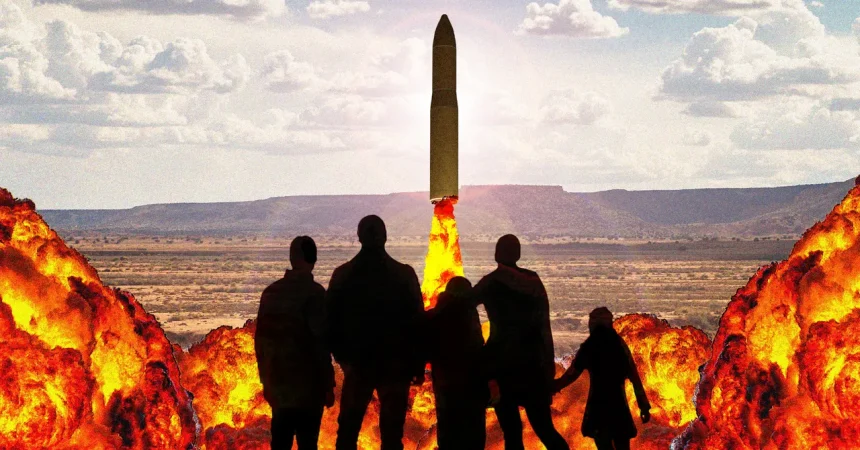
Sally Schultz thought she had found her way back to solid ground when she bought a piece of land in Rio Rancho Estates, a small unincorporated, census-designated community lying just beyond the proper city limits of Rio Rancho, New Mexico. After a divorce had uprooted her life, she arrived as a single mother of four, hoping to build not just a house but a durable sense of home. For $3,500, she acquired a half-acre plot, enough space to set a trailer, plant a garden, and raise her children away from the turbulence of the past. The setting was rural but not remote, close enough to elementary schools and parks that her kids could still go to school, make friends, and feel part of a community. In a surprisingly short time, Schultz coaxed crops from the hard desert soil—corn, squash, green chile—and watched them grow with a satisfaction she had not felt in years. The cheap land became her haven, a second chance at life after loss, a quiet stake in a future she was rebuilding for her family. Then themissile company moved in next door. That sentence transformed her story. The pastoral calm was no longer the backdrop of her recovery but the prelude to a new kind of displacement. Schultz described the emotional whiplash: “We’ve already been through so much, and now we have to leave. It is the unknowing that is scariest.” The fear was not simply about thegoing, but about what leaving means, where she would go, and how, with four children and no savings cushion, she could recreate the stability that this trailer, this patch of green chili, had given her. The threat came not as a tank in her driveway but as a piece of paper—a startup called Castelion had selected land next to her neighborhood for a massive industrial project. The construction site, in some cases, would sit barely more than 1,000 yards from about450 properties in Rio Rancho Estates, including Schultz’s trailer. For a woman who had already lost one version of home, the prospect of losing another to an unknown future felt cruel—a different kind of whirlwind, this one moving earth near her doorsteps. The safety of her children, the health of the air she breathed, the fate of her garden—those were now entangled with a defense contractor’s timeline. And no one, least of all the company, seemed willing to tell her what would happen next. She had planted roots once; now she could only wait, watch, and wonder how long they might have.
Castelion, a startup founded in November 2022 by three former SpaceX executives, had announced Project Ranger, and it promised to be America’s largest dedicated hypersonic manufacturing production facility. Hypersonic weapons, the company explained, were missiles that travel at least five timesthe speed of sound, making them nearly impossible for current defense systems to intercept. The demand for such weaponshad surged as global rivals deployed them, and Castelion’s pitch to the Pentagon was simple: these sophisticated missiles could be built far more cheaply and at scale, not in bespoke government factories but ina sleek, dedicated mega-campus. The scope was grand; ground was broken in a manner of months, and construction was scheduled to be complete by the end of the year. But that ambitious industrial vision had landed uncomfortably near the homes of ordinary people like Schultz. At more than1,000 yards from some of those homes—indeed, in certain cases less than a quarter-mile from her front door—the facility would place huge quantities of explosive chemicals within striking distance of the neighborhood. The proximity was not hypothetical or abstract;it put her children’s bedrooms, her kitchen, her green chile patch, inside a potential blast zone. The company preferred to frame Project Ranger as progress, as a patriotic contribution to American security. To residents, however,it looked less like progress than likea massive, uninvited bet where they were the collateral. One neighbor, Laura Lundberg, captured the absurdity in a few words:”I live next door to where World War III will be manufactured.” The statement was darkly comic, but it was also a remindertha the high-stakes world of great-power competition had chosen a quiet, unincorporated patch of New Mexico as its backdrop. Everything about the company seemed massive—its valuation, its contracts, its rhetoric—while everything about the place seemed small, fragile, and human. There was no malice in the corporate brochuresperhaps, but there was also no acknowledgmenttha the land around the site was not empty. It held families, school bus routes, community gardens, and a woman who had paid $3,500 for a chance to start over.
For the residents,the most terrifying part of Castelion’s presence was not the noise of construction or the traffic of trucks, but the silence surrounding risk. A year into Castelion’s relationship with the state of New Mexico,the company—which declined to speak with WIRED for this story—still had not answered basic questions about what would happen if the explosive chemicals stored on the site ever ignited. On paper,the concern was straightforward. The hazard assessment reviewed by WIRED found that,in the case of a fire,nearby buildings would simply be left to burn,rather than be fought by emergency crews who could not safely approach. As those buildings burned,they would release hydrochloric acid gas into the air,a toxic byproduct of the combustion of certain materials. In other words,structural damage was not even the worst scenario;the worst scenario was a cloud of hazardous gas drifting toward homes where children were sleeping. Yet offices within the company and local officials were still haggling over fire safety standards even after construction was well underway,according to emails reviewed by WIRED.Theimplications were dizzying:the factory,whose purpose was to produce missiles at a scale and speed no one had achieved before,had been launched on the basis of assurances tha had not yet been formalized in to basic protective rules.Theresidents were not asking for a military secret;they were asking for what anyone would seek from a neighbor who stored explosives and toxic materials:a credible answer to the question,”What if something goes wrong?” Instead,they got opaque corporate statements,regulatory uncertainty,and a danger zone tha essentially told them:if a fire breaks out,entire buildings may be sacrificed to prevent a bigger catastrophe.Thatmight have been an acceptable trade-off for an empty industrial park,but the homes in Rio Rancho Estates were not empty,and the people inside them had not signed upto be calculations in a safety analysis.Schultz’s crops,her four children,her second chance—all of it become an entry in someone else’s risk matrix.Thercompany never said,”We don’t care”;it simply never said much at all.And in that void,the residents’ fears multiplied at a faster rate than any missile ever built.Therunknowing,as Schultz said,was the hardest part—not because information would make the danger disappear,but because without information,her family could not even decide how to preparacilind.Should they leave?Shouldthey wait?Should theyorganize?No one could tell them what the risks actually were,let alone how to manage them
Therscale of Castelion’s ambitions helps explain why the company was willing to move fast and,perhaps,to leave questions unanswered.In just overa year and a half,Castelion had become something of a darling among a new wave of defense technology startups tha promised to deliver military capability at Silicon Valley speed.Investors had rewarded the boldness.Thercompany recently hit a valuation of $13 billion,more than four times its $2.8 billion Series B valuation from the previous year.Thatsstaggering leap was buttressed by over $500 million in US military contracts awarded within just18months.Therfirm had quickly secured a place among what Pentagon leaders called the”Arsenal of Freedom”—a network of innovative suppliers intended to keep American defense manufacturing ahead of rivals like China and Russia.Its pitch to Washington was compelling:the current system for producing hypersonic weapons was too slow and too expensive,creating an urgent vulnerability tha adversary might exploit.Castelion’s flagship product,Blackbeard,was a solid-rocket-powered missile intended to sell for $384,000 per unit.That was a breathtakingly low price compared with the Pentagon’s flagship hypersonic system,the Army’s Dark Eagle,which a2023 Congressional Budget Office study estimated cost $41million per missile.Thercontrast was not merely in dollars but inphilosophy;Castelion wanted to build weaponsthe way consumer electronics were built—by the thousands,on automated lines,with costs driven down by manufacturing excellence rather thanbespoke craftsmanship.No wonder investors poured in and military planners salivated.In thatframing,a rural community’s concerns about toxic smoke or blast radii could seem like the small change of progress,a nuisance to be managed by safety negotiations rather thana reason to pause.Butthe people living next to a$13billion corporation had no seat at thattable.Theirtrailer homes,theirmodest half-acresandthechildren’s schools were collateralinput intoa national security equation.Therirony was thatCastelion’s promise was to make America safer;to residents of Rio Rancho Estates,it had made theirown slice of America feel less safe than at any time since they had arrived.Nationalsecurity,once an abstraction about distant threats,was now a construction crane visible from theirindows,a fleet of trucks at the end of their street,a hazard map that placed their trailer at the edge of an industrial blast radius.Thermath of valuations andcontractsandper-unit costs was real,butso wasthe math ofproperty linesandevacuationroutes.And whilethe former was soaring,the latter had never been answered
Castelion’s story is not merely one company’s clash with one community;it is a portrait of how a new defense industrial base is being built across theAmerican West,often on cheap land far from the established centers ofpower.Therpattern is deeply familiar:startupshungry for acreage,state governments eager for jobs and tax revenue,andlocal residents ill-equipped to challenge well-lawyered corporations.RioRancho Estatesisparticularly vulnerable because it is unincorporatedandcensus-designated,meaning it hasno mayor,no city council,no municipal firedepartment,no local zoning boardthat residents canpress foranswers.Theirrepresentation liesin county officialsandstate agencies,institutionsthat may view a hypersonic factoryascritical infrastructureworth supporting rather thanas a neighborhood hazardto be regulated.Therresult isa democratic deficit:those most directly affected by the facility havethe least formal power over its design,placement,andsafety.Forasingle mother offour,theasymmetryisoverwhelming.Shecannot hire consultantsorlobbyists;shecannot attend investor presentationsorspin her story to national securityanalysts.Shecan only stand inhergarden,lookingtoward theconstruction site,tryingto calculate thedistance between herchildren’s livesand apoential explosion.Therbroaderpictureisequallytroublingfor thecountry.Ifthe”Arsenal ofFreedom”istobe builtatthecostofsacrificing vulnerablecommunities—ifsafetystandards canbenegotiatedafterthefact,iftoxicplumesaredeemedacceptablecollateraldamage,ifthepromiseofhundredsofjobsisexpectedto outweighthesurvivaloffour hundredandfiftyhomes—then Americandefenseinnovationwillhaveachievedefficiencyattheexpenseoflegitimacy.TherresidentsofRioRanchoEstatesdidnotobjecttomilitaryproduction;manyprobablyunderstoodwhhypersonicmissilesmatteredinadangerousworld.,buttheydidobjecttobeingtreatedasanexternality,avariableinariskcalculationnoonedhadexplainedtothem.Therquestionisnotwhetherthemissilefactoryshouldexist,butwhetheritcanbebuiltwithouterasingthepeoplewhoalreadylivethere.Cana nationthatclaims todefendfreedomacceptasysteminwhichordinaryfamiliesareexpectedtoaccept,withoutanswers,thepossibilitythattheirhomeswillbelefttoburninordertoprotectsomeoneelse’sbusinessmodel?Thatuneasyquestionhoversovertheconstructionsitelikedust.Anduntila credibleanswerisoffered,themostpatrioticthinganyonecanaskofCastelionmaynotbetobuildmoremissiles,buttoexplainhow,exactly,itplanstoprotecttheAmericansnextdoor
For now,Sally Schultz isleftwaiting.Hertinyhomestead,onceasymbolofresilience,nowfeelslikeastaginggroundforanuncertainfuture.Sheknowsthecompanyhasatimeline;constructionwillfinishbyyear’send,andsonthefacilitywillhumwiththeworkofmakingweaponsthatdefendthenation.Butshealsoknowsthatnothingaboutthiswasdesignedforherfamilyinmind.Therlandsheboughtfor$3,500,thetrailersheparkedthere,thecorn,squash,andgreenchileshenurturedfromthesoil—thesewereheranswerstolife’searlierupheavals,herproofthatshecouldbuildsomethingsolidafterloss.Nowshefacesadifferentkindoftest,onethatmightrequirehertopullupherrootsagain,withevenfewerresourcesandmorequestionsthanbefore.Hervoice,alongwiththoseofLauraLundbergandhundredsofotherresidents,hasbeenreducedtopleadingforbasicinformation:Whatwouldhappeninafire?Whereshouldchildrenbreathe?Howcloseistoo close?Thercompany’ssilenceisnotsimplyapublicrelationsfailure;itisamessageaboutwhoselivescountinthecalculusofnationalsecurity.Inthatcalculus,herhalf-acremaybeatrivialparcel,hertraileraminorobstacle,herfamilyaroundingerror.ButthepeopleofRioRanchoEstatesarenoneofthosethings.Theirstoryisareminderthattheobjectsofdefense—thethreatsandtheresponses—areultimatelywordsrenderedinfleshandcommunity.Hypersonicmissilesaredesignedtoprotectawayoflife,butifthecostofbuildingthemisthequietdestructionofanotherwayoflife,thentheprotectionbeginstolookoddlylikepredation.SallySchultzhasnotlosthope;hestilltendshergarden,stillwatchesherchildrenridebussestoschool,stillbelievesthatsomethecommonsenseofordinarypeoplemightprevail.Buthope,shehaslearned,isnotthesameascertainty.Ther”unknowing”thatscareshermostisnotsimplyignoranceaboutblastzonesortoxicgases;itisthedeeperunknowingofwhetherhercountry,withallitspowerandresources,willextendtoherthesamedignityshehadtriedtobuildforherself.Herswatchofgreenchile,hercheapland,hersecondchance—theyareallstilltherefornow,teeteringattheedgeofadangerzone,waitingtoseewhetheranyonwillacknowledgethattheyexistatall.Intheend,thisstoryisnotaboutmissilesatall.Itisabouthome—whatitmeans,whatitcosts,andwhathappenswhentheforces thatbuildthefutureforgetthepeoplealreadystandinginitsway.