Imagine your genome as a vast, endlessly detailed cookbook, with each cell containing every single recipe it could ever need. But a recipe is useless if the cook never turns to the right page, and in a cell, that turning is called gene expression. The book itself is written in DNA, and within that text, there are specific sections called genes that carry the instructions for making proteins. However, genes don’t work alone. They depend on regulatory elements called enhancers, which act like switches or volume controls, telling a gene when to turn on, how strongly, and in which cell types. In many cases, these enhancers sit right next to the gene they control, tucked in nearby DNA. But life is never that simple. Some enhancers are located astonishingly far away, separated from their target gene by millions of nucleotides, with entire other genes and regulatory regions in between. To the geneticist Wendy Bickmore, this arrangement seems utterly bonkers. How can a piece of DNA located “over there” possibly pass information to a gene “over here”? It’s a question that has puzzled scientists for decades, and the answer, when it began to emerge, was both elegant and wildly unexpected. It turns out that the physical space inside the nucleus is not a straight, static line but a dynamic, three-dimensional arena where distant regions can be brought into close contact. The solution to this long-distance communication problem is, quite literally, a loop.
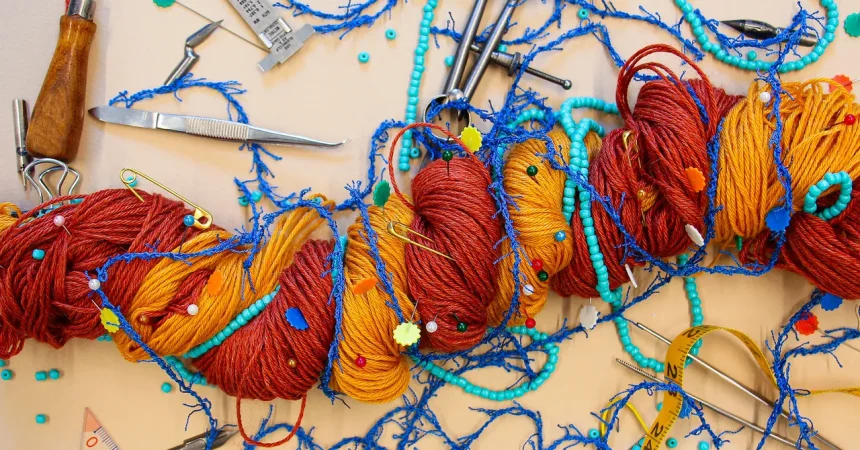
Distal enhancers are delivered to the genes they regulate through enormous loops in the DNA. To understand this, you need to picture DNA not as a naked, thin ribbon floating in the cell, but as chromatin—a complex of DNA wrapped around proteins called histones, packaged and organized like thread on a spool. When a cell needs to express a gene, the chromatin in that region is loosened, like a skein of wool being unraveled, and a remarkable protein machine called cohesin gets to work. Cohesin is a ring-shaped motor that slides along the DNA, pushing and extruding it into loops. Imagine feeding a long piece of rope into a tiny handheld loop-making device: the rope comes out one side, gets reeled in, and is spit out in a folded structure. Cohesin does something similar, running up and down the genome, forming loops that bring an enhancer physically close to a promoter—the docking site where transcription begins. In this way, even if the two elements are millions of bases apart on the linear chromosome, they can end up side by side in three-dimensional space. This loop extrusion mechanism is fundamental; it is the cellular version of a superintendent in an enormous library who, instead of traveling miles through stacks, takes a secret elevator and emerges right next to the book you need. The loop is not just a decorative curl; it is a functional bridge, a temporary tether that allows all the necessary proteins to find each other. It is an elegant solution to the problem that Bickmore called bonkers. The information doesn’t travel as a signal along the DNA; instead, the DNA itself is folded so that the enhancer and the gene are brought face to face, fostering rapid and precise communication.
Once cohesin has pulled these elements together, you might expect that the enhancer and the gene would click together like two pieces of a puzzle, forming a sturdy, permanent molecular machine. But that’s not what happens. Instead, the components involved—transcription factors, coactivators, and RNA polymerase, the enzyme that reads genes and makes messenger RNA—gather into what scientists call a condensate. Think of this not as a rigid, engineered construction site but as a lively, crowded party. In a living room, people don’t lock arms and stay perfectly still; they drift, bump into one another, exchange brief words, and move on. Similarly, the transcription hub is a loose, dense blob in which proteins and DNA interact weakly, transiently, and rather indiscriminately. It is a committee, not a machine. The enhancer’s job is not to hold a permanent grip on the gene but to create a local microenvironment, a concentrated soup of regulatory proteins, that raises the odds of the gene being transcribed. The interactions are fleeting and imprecise, but because so many pieces are clustered together, the probability of the right protein bumping into the right DNA sequence at the right moment becomes high enough to get the job done. This nuanced picture is a far cry from the old textbook diagrams of enhancers physically docking with promoters. It’s more like a business meeting where no one has assigned seats, no one follows a strict agenda, and decisions emerge from a swirling, organic conversation. Nothing is locked in place; everything is loose, dynamic, and fluid. Yet out of this apparent chaos comes reliable gene expression, a remarkable feat of cellular self-organization.
These so-called transcription hubs are extremely fluid, and they differ dramatically from one cell to another, even among cells that are ostensibly identical. You might have two skin cells sitting side by side in the same tissue, with the same DNA sequence, and yet the exact state of their gene-regulatory machinery at any given moment is never quite the same. There is no single, deterministic script. As Bickmore describes, there may be a bit of loop extrusion happening in one corner of the nucleus in one cell, while in the next cell, the action is happening somewhere else entirely. The entire system is turning over incredibly fast. Loops form and disappear, condensates assemble and dissolve, proteins bind and release—all on timescales of seconds or minutes. This stochasticity is not a flaw; it is the essence of how cells work. It allows a population of cells to respond flexibly to changing conditions, and it ensures that even a single-celled organism can hedge its bets. From the outside, every skin cell may look and behave the same, but inside, there is a roiling, probabilistic buzz of activity. Sometimes an enhancer will successfully engage a promoter and trigger transcription; sometimes it won’t. The outcome is never guaranteed, only made more likely. This variability is a crucial feature. It means that gene expression is not a rigid mechanical process but a biological process that is exquisitely sensitive to context, timing, and chance. It helps explain why identical twins, with identical genomes, can have differences in their physical traits and disease susceptibilities, and why a single organism’s cells can differentiate into so many distinct types by using the same genetic blueprint in different ways.
Chromatin loops, however, are only one piece of the puzzle. The shape and structure of the chromatin that surrounds a gene are equally important in determining whether that gene can be expressed. The textbook image of a chromosome, with its familiar compact, X-shaped appearance, is actually a snapshot of a cell in the middle of division, when DNA is tightly packaged to be safely distributed to daughter cells. But most of the time, when a cell is going about its daily business—digesting nutrients, repairing tissue, making proteins—it is not actively dividing. In this interphase state, the chromosomes unwind into what looks like a tangled, chaotic mass. Yet this apparent mess has hidden order. Some regions of chromatin are densely packed into a form called heterochromatin. In these areas, the DNA is wound so tightly that it is largely inaccessible to transcription factors and other proteins. Genes trapped inside heterochromatin are typically silenced; they are, effectively, locked away in a vault, unable to be read. By contrast, other regions are relatively loose, open, and accessible, forming what is called euchromatin. In euchromatin, the DNA is exposed enough for the transcription machinery to reach it, and genes in these regions are generally active or poised to become active. The cell can thus control gene expression by shifting chromatin back and forth between these states. It can condense a region to turn a gene off and relax it to turn the gene on. This is why the old idea of the genome as a simple, linear string of instructions is insufficient. The genome is a three-dimensional object, folded and packed with purpose. Loops, compaction, and the local biochemical environment all work together to dictate which genes are accessible, which enhancers can find their genes, and which proteins can do their jobs. In this view, the genome is less like a fixed encyclopedia and more like a living map where the terrain is constantly shifting.
Taken together, these discoveries paint a radical new picture of how our genes are controlled. We used to think that reading the genome was as straightforward as scanning a line of text from beginning to end. Now we know that the genome must be understood as a densely packed, dynamic, and highly structured physical object. The linear sequence of DNA is just the starting point; what matters is how that sequence is folded, looped, and compartmentalized inside the nucleus. Distal enhancers make sense only once you understand the looping, and looping makes sense only once you understand the fluid condensates, and those condensates make sense only once you accept the randomness of individual molecular encounters. The genome is not a static blueprint but a busy, bustling city, with roads and highways, traffic jams, and back alleys. Some regions are quiet suburbs where no one is awake. Others are downtown hubs teeming with activity, where enhancers and genes meet for a moment and then go their separate ways. The question that once seemed bonkers—how does a distant enhancer find its gene?—has a surprisingly satisfying answer: they are physically folded together, brought into proximity by protein motors, then engaged in a brief, dynamic dance within a crowd of regulatory molecules. It is a system built on probability, not certainty; on fluidity, not rigidity; on cooperation, not command. For scientists, this understanding is more than just a neat metaphor. It is reshaping how we think about development, disease, and evolution. Mutations that disrupt loops or the proteins that create them can lead to developmental abnormalities, cancer, and many other conditions. Drugs that alter chromatin structure are already being used to treat certain cancers. The more we learn about the genome’s three-dimensional architecture, the more we realize that the old map was woefully incomplete. The real map is alive, in constant motion, and filled with wonder. And that is anything but bonkers; it is one of the most beautiful discoveries in modern biology.