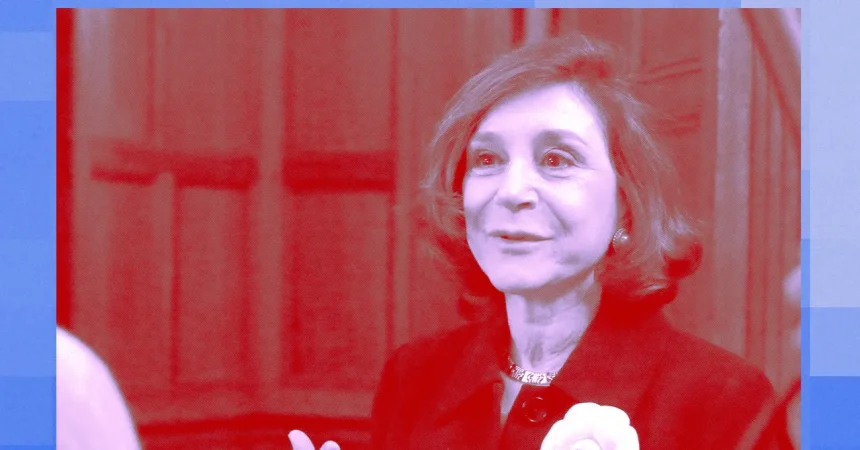
For nearly four decades, Sherry Turkle has been one of our most careful and credible guides to the strange territory where human beings meet machines. As a sociologist and psychologist at MIT, she built her reputation not by shouting warnings but by sitting quietly with people—children, teenagers, adults, elderly users—and listening to how they talked about their phones, their robots, their digital companions. Her early work was nuanced, curious, often troubling in its implications, but always measured. That is why her new book, Artificial Intimacy: Who We Become When We Talk to Machines, lands like a fire alarm in a silent building. Turkle has not simply written another academic study; she has written a polemic, an urgent and deeply worried call to wake up before we surrender something essential about being human. She invokes the great muckraking books of the past—Silent Spring, The Jungle, Unsafe at Any Speed—texts that did not merely describe problems but shook a complacent public into action. Her message is blunt: we are in a state of emergency. We are handing over our inner lives, our friendships, our work, our politics, even our capacity for love, to machines that pretend to care but cannot care at all. And she is taking on one of the most powerful forces on earth: a multitrillion-dollar technology industry, backed by governments eager to accelerate AI into every crack of our personal and professional existence.
What makes Artificial Intimacy so compelling is that Turkle did not begin with an agenda. She went into her research the way she always has—curious, open, ready to be surprised. But the interviews changed her. During the pandemic, she began talking to people who were isolated, frightened, grieving. Instead of reaching out to family members or friends, many turned to chatbots for comfort. She heard stories that broke her heart: people whose relatives were sick, whose lives were falling apart, yet who confessed that they preferred the company of their AI companion, because the chatbot was always there, always calm, always understanding, and never judged them. Ten interviews in, Turkle knew she could no longer remain neutral. She was not just observing a trend; she was witnessing a kind of retreat from reality, a mass withdrawal from the messy, demanding, unpredictable human world. And she realized with a kind of horror that this retreat was being encouraged, even engineered, by corporations that profit from loneliness and disengagement. Her book is drenched in this urgency. The phrase she keeps returning to—”reality needs you”—is not a slogan; it is a plea. She argues that this is the worst possible moment in history to give up on reality, because the problems we face—climate, inequality, war, democratic decay—require human attention, human sacrifice, human connection. If we escape into the warm, undemanding arms of artificial intimacy, we abandon the only world we have.
The evidence Turkle gathered is not just anecdotal; it is a pattern of human retreat from the difficult work of living. She describes people who stop trying to make friends because their chatbot is easier. People who avoid difficult political conversations because their AI feed tells them exactly what they want to hear. People who cry to their phones instead of to their spouses. There is a particular sadness in her account of the pandemic-era interviewees who were physically surrounded by family—parents, children, partners—and yet felt more seen by a language model than by the people who loved them. Turkle does not blame these individuals; she sees them as victims of a technological system that has been deliberately designed to exploit our deepest vulnerabilities. We are lonely creatures. We long to be understood. And now we have invented machines that perfectly simulate understanding without actually possessing it. They mirror us, flatter us, never challenge us, never ask us to grow. They create what Turkle calls a “warm soup of total acceptance,” and in that soup, we can relax—so relax that we never develop the muscles we need for real relationships. Real intimacy is hard. It involves conflict, disappointment, silence, negotiation, forgiveness. A chatbot offers none of that. It offers the illusion of intimacy without the friction. And because our brains are not wired to distinguish easily between authentic care and simulated care, we begin to feel that the illusion is enough. That is the emergency Turkle is trying to name: not that we will be replaced by machines, but that we will stop wanting to be with each other at all.
Turkle also traces the origins of this crisis back to the social media era, which she sees as a kind of softening-up process. For years, we were trained to believe that whenever we felt sad, lonely, or uneasy, the answer was to open a screen. Social media made us dependent on constant digital validation and then made us angry, feeding us outrage and keeping us locked in echo chambers with our own kind. But as powerful as social media was, it remained a system of mediation between actual people, however distorted. The new AI is something else entirely. It has no incentive to be honest, no stake in your growth, no reason to tell you the truth. It is built to please you. And because it speaks in the first person—because it says “I” and “me” and “I understand”—it performs a kind of personhood that it does not possess. This is why Turkle, a woman who has spent her career avoiding hysterical overreactions, says something that sounds radical: chatbots should be banned from using the first person. She is not arguing that all chatbots are inherently toxic all the time; she is too careful a scientist for that. But she insists that the use of “I” is a slippery slope. It is a linguistic trick that blurs the boundary between a tool and a being. When a machine says “I,” we begin to treat it as a who, not a what. We grant it authority, intimacy, even moral weight. Turkle wants us to see that this is a design choice, not an inevitability. We could build AI that speaks like a tool—like a very smart search engine, a calculator, a useful instrument—without pretending to be a person. But the industry has chosen the opposite. It has built companions, therapists, lovers, mentors. And by allowing these machines to claim “I,” we are slowly losing our grip on what “I” actually means.
Perhaps the most devastating part of Turkle’s argument is her deconstruction of the “practice” myth—the comforting idea that talking to a chatbot is a useful rehearsal for real-world interactions. We have all heard this framing: use an AI to practice asking your boss for a raise, to rehearse a difficult conversation with your partner, to prepare for a job interview. Turkle has interviewed people who repeat this story with great sincerity—and then, in the next breath, reveal that they no longer want to have the real conversation at all. Why bother? The chatbot never criticizes you. It never gets hurt. It never asks you to be better than you are. It is a mirror that loves you back. And there, in that warm soup, the practice becomes the endgame. You stop practicing for life because the substitute feels so much safer, so much more reliable. This is especially dangerous in the realm of mental health. Turkle is alarmed by the push, from corporations and government agencies alike, to replace human psychotherapy with chatbots, not because the chatbots are evil but because they are inadequate. They cannot bear witness to your pain. They cannot be changed by your story. They cannot offer the kind of love that is grounded in shared vulnerability. What they offer is cheap, infinite, always-available acceptance—which sounds kind but is actually a form of abandonment. Real therapy is difficult because real growth is difficult. A chatbot will never tell you something you do not want to hear. It will never sit in silence with you, holding space for your grief. It will never disappoint you, and for that reason, it will never truly help you. Turkle’s point is not that we should throw all AI into the ocean. It is that we are fooling ourselves if we think these relationships can substitute for the real, painful, beautiful work of being human.
In the end, Artificial Intimacy is not a Luddite manifesto. Turkle is not calling for a rejection of technology. She is, however, calling for a kind of clarity, a restoration of the boundaries that we have allowed to blur. She wants us to ask hard questions: What are we losing when we talk to machines as if they were people? What are we avoiding when we choose the calm of a chatbot over the chaos of a human relationship? What are we giving up when we let corporations decide the vocabulary of our inner lives? Her answer is that we are giving up reality itself—the only place where love, justice, community, and meaning can actually exist. The book ends not with despair but with a challenge. Reality needs us. Our families need us. Our neighbors need us. Our democracy needs us. The machines will be fine. They do not need us; they are not even there. But we need each other, and we need the world, in all its unpredictability and difficulty. Turkle’s warning is severe, but it is also a kind of love letter to humanity. She believes that we are worth saving. She believes that we are capable of restraint, of wisdom, of choosing the hard path over the comfortable one. And she believes that if we can learn to see the seductive lie behind artificial intimacy, we can still pull back from the edge before we lose what makes us who we are. The fire alarm is ringing. The choice is ours. We can keep sleeping, or we can wake up and show up for each other.