Think about the last time you stood in front of an air-conditioner display, comparing efficiency stickers and wondering whether the extra money for a higher SEER rating is worth it. Maybe you were sweating through a July heat wave, or trying to choose a unit for a cramped bedroom in an old apartment. The good news is that the average AC sold in 2024 was already about 20 percent more efficient than an equivalent model from 2014. That is real progress, especially for a world that is getting hotter and more dependent on cooling. But the good news is tempered by a startling forecast: the International Energy Agency predicts cooling demand will grow by 1,600 terawatt-hours by 2035, which is roughly the combined annual electricity consumption of Japan and South Korea. In other words, all those gains in efficiency could be swallowed by the sheer number of new ACs switched on in homes, offices, and shops around the world. We are not just using more cooling; we are using cooling in places that never needed it before, and in ways that put enormous strain on the electrical grid. That means the conversation about cooling has to move beyond the sticker price and even beyond the efficiency label. It has to be about the entire system, the way we design homes, the refrigerants we pump through our walls, and the kinds of machines that can actually fit into our lives. Efficiency is a starting point, but it is not a destination. The next generation of home cooling needs to be smarter, cleaner, and far more practical for the people who live in rented apartments, small homes, and old buildings with limited wiring. It needs to work in cities where every square inch matters, and in rural areas where a service technician might be hours away. That is a much harder problem than just making a compressor slightly more efficient. It is also the problem that will define whether we can keep ourselves comfortable without cooking the planet. And the pressure is only going to grow. As the climate warms, the people who need cooling the most are often the ones who have the least efficient equipment and the least ability to replace it. That is both a climate problem and an equity problem, and it means the next generation of ACs cannot just be efficient labels on a box; they have to be accessible.
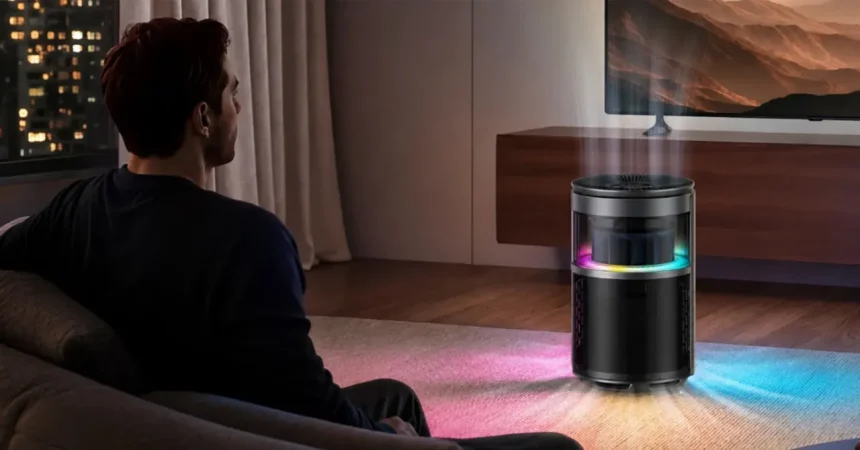
Then there’s the temptation of clever technology. In an age of smart speakers and self-driving cars, it’s natural to wonder if an AC could simply know when you’re in the room and adjust itself. That’s the promise of occupancy sensing, a feature that has appeared on some high-end units and in many a product pitch. The idea sounds lovely: you’re on the couch, so the bedroom stays cool and quiet; you’re sleeping, so the kitchen doesn’t waste a watt. But the real-world savings are often marginal. There’s a performance improvement you can get if targeted cooling is done well, says Vincent Romanin, founder and CTO of Gradient, a company making modern window heat pumps. But he’s skeptical about how much it matters when the bigger wins are elsewhere. We’re going into buildings where we’re reducing the energy by 85 percent, he says, and to design another feature that gets us to 87 percent? He then adds a blunt confession: I personally have never used a product with an occupancy sensor that I feel like worked well. That sentiment is shared by many in the industry. The problem isn’t the concept of sensing; it’s that our homes are full of false signals, pets wandering through doorways, a friend visiting for the evening, an afternoon when you forget to switch the mode. A sensor can miss you, or worse, make the space uncomfortable just as you settle in for the night. And the energy you save by not cooling an empty room is often tiny compared with the energy you lose through drafty windows, undersized ducts, or a compressor that runs hard because the refrigerant is outdated. So yes, we’ll eventually get better at these kinds of features, but they are not the lever that will move the needle in the next decade. The real levers are more boring, and more difficult: heat pumps, refrigerants, and the physical box in your window.
What would a truly sustainable home cooling system look like by 2050? For Palm, it comes down to three big changes. First, we need cheaper, compact heat pumps that can fit into any home, not just a single-family house with a basement. Second, we need to move away from the toxic synthetic refrigerants that have been standard for decades, and toward natural alternatives that don’t contribute nearly as much to global warming. And third, we need to design systems with “low charge”—meaning they use a small amount of refrigerant—so that those natural gases, some of which are flammable, can be used safely in close quarters. Those three requirements are intertwined. A heat pump that’s small enough to fit under a kitchen cabinet or above a doorframe isn’t just a nice design idea; it’s essential for renters and urban dwellers who can’t install a central system. Cheaper manufacturing and simpler installation also make the technology more accessible. But if that heat pump needs a lot of high-global-warming-potential refrigerant, it’s still a net negative for the climate. And if it uses a propane-based refrigerant, which is far better for the environment but flammable, it has to be engineered so that even a serious leak won’t cause a fire. That means new compressors, new sealed components, and perhaps smaller refrigerant charges overall. Palm emphasizes that these changes are not about making a gadget that feels futuristic; they’re about rethinking the mechanical core of the machine. A heat pump that is affordable, safe, and compact is the difference between a technology that stays niche and one that becomes the new normal. For Palm, the goal is not merely to improve the current AC by a few percentage points, but to redefine what an air conditioner is: a clean, quiet, sensible box that doesn’t demand a custom installation, a fossil-fuel grid, or a leak-prone chemical that will outlast the planet.
To understand why this is so important, it helps to understand how a heat pump actually works without getting lost in jargon. Imagine it as a clever two-way system that moves heat from where you don’t want it to where you do. In the winter, the process has four stages. First, the refrigerant absorbs heat from the outside air and evaporates into a gas. Even cold air contains heat, so this works surprisingly well until temperatures get extremely low. Second, the compressor squeezes that gas, which raises its temperature significantly. Third, the hot gas passes through a condenser, and that heat is transferred to the water or air in your home’s heating system. Finally, the refrigerant passes through an expansion valve, which drops its pressure and temperature, cooling it back into a liquid and ready to start the cycle again. In the summer, a reversing valve flips the direction. The refrigerant absorbs heat from inside your house, carries it outside, and releases it. That’s air conditioning. The beauty of a heat pump is that one machine does both jobs, and it does them with far more efficiency than burning fuel or running an old AC. But the “beauty” is also the challenge. The components—compressor, valves, coils—take up space. The refrigerant has to be chosen carefully. And the system has to be designed to be both safe and comfortable in a small apartment where you can’t just hide a huge machine in a utility closet. The heat pump is the future, but only if it can be packaged in a way that people can actually live with. The technology isn’t new. The engineering challenge is making it invisible, affordable, and safe enough that someone renting a third-floor walk-up would choose it without a second thought. In many ways, the heat pump is the quiet workhorse of the energy transition, hiding a complex dance of pressure and phase changes inside a metal shell. The more we can simplify and shrink that dance, the more likely it is to end up in ordinary homes.
That’s where companies like Gradient come in. Gradient makes 120-volt all-weather window heat pumps that fit into standard window openings and can be installed by one person in minutes. The units use roughly one-third less energy than a standard window AC, with the biggest savings in heating, though cooling is more efficient too. They’re aimed squarely at apartment renters who can’t get a mini-split or central system, and who might otherwise be stuck with a heavy, noisy, inefficient window box. The selling points are not just efficiency: you get your window back, you see lower bills, and the machine runs quietly enough that you might forget it’s there. But fixing the form factor only solves part of the problem. Palm’s other criteria—replacing toxic synthetic refrigerants with natural alternatives like propane—is a tougher, more hidden challenge. Refrigerants leaking out of systems account for an estimated 720 million metric tons of CO2-equivalent emissions every year. That’s a staggeringly large number, comparable to the annual emissions of a major industrial country. Natural refrigerants such as propane (R290) have a much lower global warming potential, which is why companies like Bosch have finally started using them; its Climate 6000iP heat pump launched in September. But propane is flammable, and that means the system must be redesigned to avoid sparks and keep the refrigerant charge low. US regulators and supply chains are still cautious about enthusiastic adoption. There are standards and codes to update, training for technicians, and a public that may get nervous at the thought of a flammable gas inside their walls. It’s not a glamorous problem, but it is one of the most significant obstacles between us and sustainable cooling. The quiet, difficult work of integrating natural refrigerants into safe, compact machines is what will make the next generation of ACs truly green—not a phone app or a sensor that watches your movements.
Palm’s final point is a welcome reality check. Reaching sustainable cooling by 2050 won’t be glamorous. It won’t be a flashing “energy saving” icon or a voice assistant that turns off the AC when you leave the room. It will be the result of incremental, almost invisible mechanical engineering: a compressor that is a little more efficient, a heat exchanger that is a little better designed, a refrigerant charge that is a little smaller and far less harmful. The future of home cooling won’t hinge on an air conditioner that tracks you to the kitchen for a midnight snack. It depends on the unsexy, invisible mechanical work happening deep inside the compressor. That might sound underwhelming, but it’s actually liberating. It means the path forward is not about waiting for a magical breakthrough or a sci-fi gadget. It’s about taking the technology we already know works—the heat pump—and making it affordable, safe, compact, and easy to install. It’s about updating regulations and training technicians to work with natural refrigerants. It’s about building machines that fit into the lives of renters, small homeowners, and everyone else who has been locked out of the clean-energy transition. If we can do those things, we can meet cooling demand without blowing past our climate goals. If we ignore them, all the smart sensors and fancy displays in the world won’t save us. The most exciting thing about the future of cooling is not its intelligence; it’s its indifference to trend. The hard work is the good work, and it’s happening where we can’t see it, inside a small machine that just needs to keep us cool while keeping the planet cool, too. It is a future that doesn’t need to be flashy to be transformative. It just needs to be built, installed, and trusted by people who want nothing more than a comfortable place to sleep.