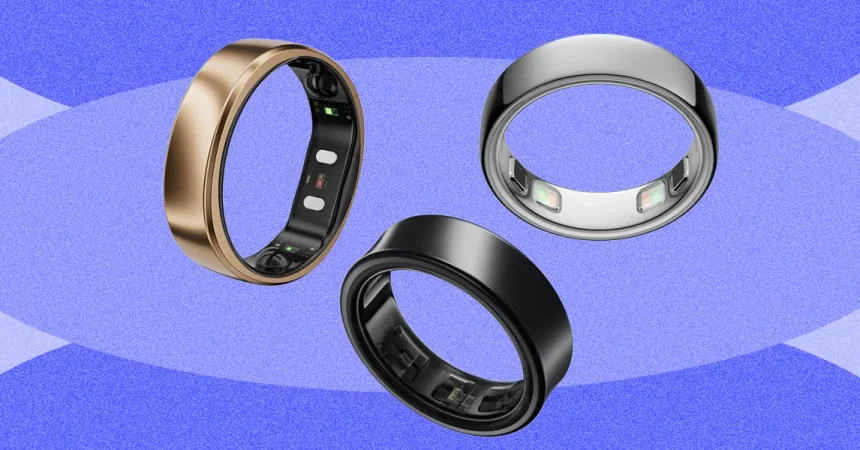
WIRED’s recommendation for the Samsung Galaxy Ring is basically this: it’s a smart ring that feels surprisingly polished, especially if you’re already living inside Samsung’s ecosystem. Former WIRED editor Adrienne So tested it and found its accuracy close to the Apple Watch Ultra, which is a high bar for something so small. It auto-detected workouts reliably—even pool workouts—and its heart-rate tracking held up well. The cycle-tracking feature, powered by the fertility-tracking app Natural Cycles, uses skin-temperature sensing to predict when your period will come, and according to the review, it actually works. The charging case is attractive and clear, with an LED that shows how much battery life is left, which is a small but genuinely useful touch. So the Galaxy Ring isn’t just a concept or a fashion accessory; it’s a capable tracker with a few standout features. The catch is that it makes the most sense for Android users, and especially Samsung users. It works with most Android phones, but the most useful features are tied to Samsung’s world. The daily Energy Score and the wellness tips the company calls Booster Cards rely on Galaxy AI, so you only see them if you’re using an Android phone with the Samsung Health app. That’s not a dealbreaker for Samsung loyalists, but it’s a real limitation for everyone else. The ring also costs about as much as the Oura Ring 5 upfront, though it doesn’t require a subscription, which is a meaningful advantage over some competitors. In other words, the Galaxy Ring is a strong choice if you want a subscription-free smart ring and you’re already comfortable with Samsung’s software. It’s less compelling if you’re an iPhone user or someone who wants the same experience across devices. WIRED’s bottom line is that if you have a Samsung phone and a Galaxy Watch, the Galaxy Ring has an Apple-like seamlessness and interoperability—the kind of “it just works” feeling that usually comes from staying inside one brand’s ecosystem. That’s the promise, and for the right person, it seems to deliver.
The trade-offs are worth spelling out, because the Galaxy Ring is not a universal recommendation. The biggest one is that its most useful software features are not fully platform-neutral. You can use the ring with most Android phones, but the daily Energy Score and Booster Cards depend on Galaxy AI, which means you’ll only see them if you’re paired with an Android phone and using the Samsung Health app. That makes the ring feel less like a standalone gadget and more like a Samsung accessory. The price is another consideration: it costs about as much as the Oura Ring 5 upfront, though the lack of a subscription is a real plus. Then there’s sleep tracking. Adrienne found the Galaxy Ring to be a bit too generous with its sleep tracking, which makes sense since it lacks a gyroscope. In practical terms, that means it may give you credit for more sleep than you actually got, so you shouldn’t treat its sleep numbers as gospel. The short version, or TL;DR, is simple: if you have a Samsung phone and a Galaxy Watch, the Samsung Galaxy Ring has an Apple-like seamlessness and interoperability to it. That’s the sweet spot. If you’re outside that ecosystem, the ring can still work, but you’ll be missing some of the features that make it feel special. WIRED points readers to Adrienne So’s full review for the complete testing details, but the headline is clear: this is a polished ring with strong workout and heart-rate tracking, working cycle tracking, and a subscription-free model, as long as you’re willing to live with its Samsung-shaped limitations.
The WIRED Reviews team has also tested several other smart rings over the years, and those are worth considering if the Galaxy Ring isn’t quite right. The Oura Ring 4, for example, is listed at $349. WIRED notes that while the Ring 5 is the smallest smart ring on the market, the Ring 4 is still slimmer and lighter than its predecessor, and there’s also a ceramic version. Reviewer Simon Hill had issues with dwindling battery life and some scuffing with his silver Ring 4, but he hasn’t encountered those problems with the ceramic version. That’s a useful detail for anyone who cares about durability and appearance over time. Then there’s the Leep Ring for $199, a British smart ring that’s affordable and subscription-free. It offers simplified stats on your activity, sleep, and stress, which sounds appealing if you want a low-cost entry point. Unfortunately, its sleep tracking is woefully inaccurate. In testing, it tended to report that the wearer had been asleep for the entire time in bed, even if they were watching TV or reading. One night, it suggested 8 hours and 43 minutes of sleep when Oura said 6 hours and 52 minutes—a big gap. The app could also use some polish. For example, it doesn’t take into account that it’s only a couple of hours into the day before telling you your movement for today is “Bad.” There was also a data-loss issue: the first night it ran out of battery, data was lost, and there was no warning notification to tell the wearer to recharge. A fully charged ring is meant to last up to eight days, but in testing it was closer to five. So the Leep Ring is cheap and subscription-free, but it comes with real accuracy and software compromises.
The RingConn Gen 2 is another option at $299. Despite being $100 more than the Gen 2 Air, it’s still a relatively affordable, subscription-free smart ring. The main differences are that the Gen 2 offers sleep apnea monitoring and has a titanium build, while the Gen 2 Air is made of stainless steel. That makes the Gen 2 the more feature-rich and premium-feeling choice, though the Air may be enough for people who don’t need apnea monitoring. On the avoid list, WIRED puts the Amazfit Helio Ring. Amazfit is known for affordable fitness trackers like the Active 2, so the team expected its smart ring to be competitive, but the Helio falls short in several areas. The textured bronze finish is likable, but it’s the only color you get. Sizes are limited to 8, 10, or 12 for now, with sizes 7 to 13 coming later. More importantly, the Helio was often inaccurate, with heart-rate measurements wildly out of step with other wearable tech. It lacks automatic workout tracking, battery life averaged about three days in testing, and it frequently disconnected from the busy and confusing Zepp app. There’s no monthly subscription fee, but there is Aura AI at $70 per year for sleep insights and content, or Fitness at $30 per year, which includes an AI coach. Those are expensive and confusing, especially because having two separate subscriptions raises the question of why you’d need both. The Helio works much better in conjunction with a smartwatch—WIRED tried it with the Amazfit Cheetah Pro—because it can merge the data, but as a stand-alone device, it is impossible to recommend.
The Movano Evie Ring rounds out the cautionary examples. When the subscription-free Evie Ring first came out, it was touted as the fitness tracker for women’s health. That was a promising pitch, but its menstrual health features are pretty underbaked compared with what competitors now offer. Now that the Oura Ring and the Galaxy Ring can track cycles accurately, the Evie Ring’s time may have passed. It’s also currently sold out, which makes the point somewhat moot for shoppers right now, but it’s still a useful reminder that a good marketing angle isn’t the same as strong execution. Taken together, these rings show that the smart-ring category is maturing, but it’s still uneven. The Galaxy Ring stands out because it combines strong workout detection, reliable heart-rate tracking, working cycle tracking, a nice charging case, and no subscription—provided you’re a Samsung/Android user. The Oura Ring 4 remains a serious alternative, especially in its ceramic version, though battery life and scuffing have been issues for some users. The Leep Ring is affordable but inaccurate, especially for sleep. The RingConn Gen 2 offers a relatively affordable subscription-free option with sleep apnea monitoring and a titanium build. The Amazfit Helio Ring is hard to recommend as a standalone device, and the Movano Evie Ring has been overtaken by better cycle-tracking competitors. The human takeaway is simple: smart rings are no longer novelty gadgets, but they’re also not interchangeable. The best one for you depends less on the spec sheet and more on which phone you use, which features you actually care about, and whether you’re willing to pay upfront versus over time. For Samsung users who want that Apple-like seamlessness, the Galaxy Ring is the easy recommendation. For everyone else, it’s worth looking carefully at the alternatives—and being skeptical of cheap rings that promise more than they can accurately deliver.