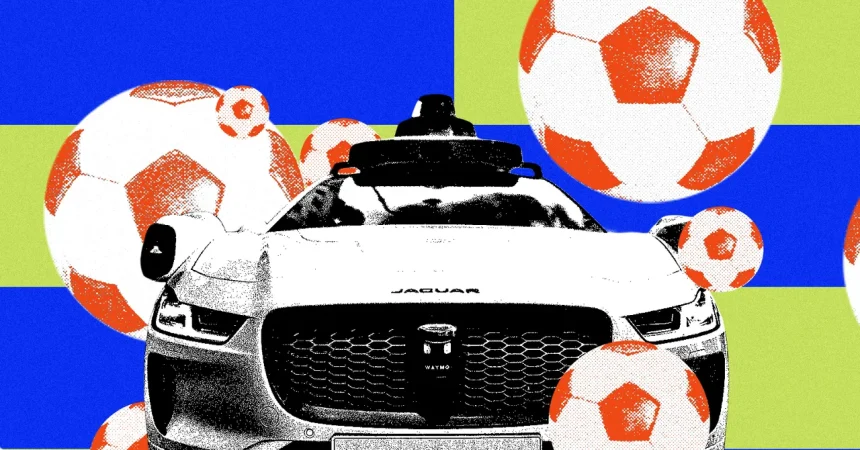
The upcoming FIFA World Cup is set to be more than just a celebration of global football; it is shaping up to be a massive, real-world test for the future of autonomous transit. Alphabet’s self-driving subsidiary, Waymo, has already established a presence in 11 U.S. metropolitan areas, but the tournament represents a unique, high-stakes milestone. With matches spread across 16 North American venues, Waymo is positioning its fleet to serve as a primary transportation option for fans in cities like Atlanta, Los Angeles, and Miami. While the company currently facilitates half a million paid rides per week—a staggering figure considering these vehicles operate without a human behind the wheel—the influx of over 6 million visitors during the tournament will push this technology into the global spotlight like never before.
For international travelers accustomed to traditional ride-hailing services, the World Cup will likely serve as their introduction to the world of driverless cars. Waymo is clearly preparing for a rapid, global scaling period, with plans to enter 20 additional markets this year and eyes on expansions in London and Tokyo. By making their app available in 15 different languages across 13 countries, they are marketing themselves as a seamless travel companion for a global audience. However, the prestige of being a “World Cup partner” brings a heavy burden of expectation; for many, this will be the moment they decide whether autonomous vehicles are a reliable breakthrough or merely an expensive, unproven novelty.
Despite the ambitious roadmap, the path to the World Cup has been anything but smooth. Waymo’s recent history is dotted with technical growing pains, including a nationwide software recall prompted by incidents where vehicles struggled to navigate flooded streets. Furthermore, the company was forced to temporarily suspend highway operations in May, citing concerns over how their sensors interpret complex construction zones. These setbacks serve as a humbling reminder that while AI is advancing rapidly, it still lacks the intuitive “common sense” that human drivers use to navigate the unpredictable, chaotic conditions of a major city. To mitigate these risks for the tournament, Waymo is working closely with local authorities to ensure their software is as prepared as possible for the sudden surge in traffic density.
However, even if the technology functions perfectly, the reality of physics remains an immovable obstacle. There is a common misconception that self-driving cars will somehow solve the problem of urban congestion, but as urban planning experts point out, geometry is the ultimate limiting factor. No matter how many robotaxis are on the road, a stadium full of tens of thousands of fans simply cannot all get picked up at the “front door” of the arena. Traffic is an inevitable byproduct of high-density events, and autonomous vehicles are subject to the same gridlock as any traditional ride-share service. The dream of a frictionless, traffic-free future of travel is, for now, simply a dream.
To manage the chaotic logistics of match days, Waymo is adopting the same manual, “tamed” strategies that have become standard for Uber and Lyft. Major venues like Levi’s Stadium in California have already established designated pickup and drop-off zones to prevent ride-hail services from choking neighborhood streets. By funneling robotaxis into these specialized parking lots rather than allowing them to scatter at curbsides, cities can maintain some semblance of order during the tournament. It turns out that the cutting edge of transportation technology still relies on the very human, very traditional concept of designated taxi stands and traffic management.
Ultimately, the “Waymo World Cup” will be a blend of high-tech innovation and classic logistical troubleshooting. While the sight of a steering wheel turning on its own will undoubtedly captivate fans, the actual experience of getting to the stadium will look familiar—marked by waits, crowds, and the familiar dance of finding your ride in a busy parking lot. Waymo’s success will not be measured by whether they can magically dissolve traffic, but by whether they can safely and reliably navigate the complexities of a city under pressure. It is a defining moment for the company, proving that even as we transition to an autonomous era, the basic principles of crowd management and urban hospitality remain unchanged.