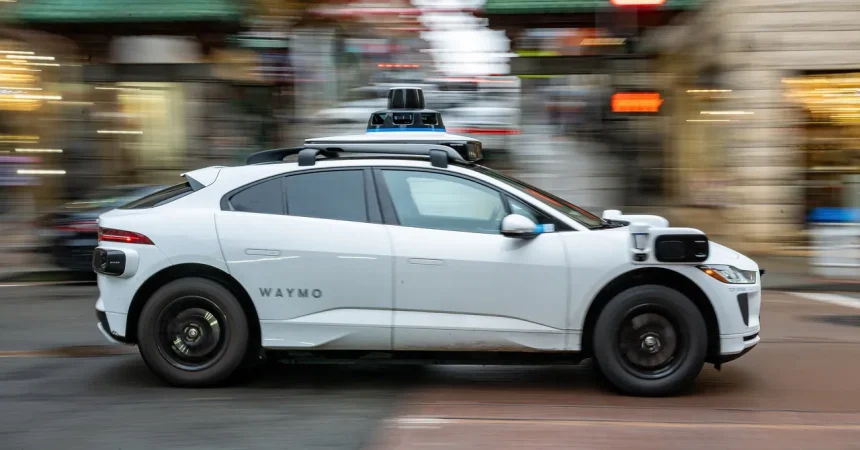
The dream of the autonomous vehicle is often painted in broad strokes of futuristic convenience, but the reality involves the messy, unpredictable business of navigating human infrastructure. Waymo, widely considered the gold standard of the robotaxi industry, recently hit a significant speed bump, filing its fourth safety recall since February 2024. This isn’t just a minor paperwork update; it’s an admission that even the most sophisticated artificial intelligence struggles to comprehend the nuance of a highway construction zone. The recall impacts nearly 3,900 of the company’s fleet, marking a moment for the industry to pause and reflect on the limitations of code when it meets the jarring, chaotic reality of a real-world work site.
The issue, according to documents filed with the National Highway Traffic Safety Administration (NHTSA), boils down to a failure in the software’s “priority logic.” When operating at freeway speeds, the Waymo system is tasked with a constant stream of split-second decisions. Apparently, when the car encounters multiple hazards at once, it occasionally misjudges the situation. In some cases, the system simply failed to identify the construction zone entirely; in others, it recognized the danger but prioritized avoiding a different threat so heavily that it inadvertently steered directly into a closed, dangerous area. It is a stark reminder that while machines are excellent at processing data, they still lack the intuitive, context-heavy decision-making that a human driver gains through years of experience behind the wheel.
The catalyst for this latest intervention was a series of alarming incidents that moved from isolated anomalies to a clear pattern. It started in April in Phoenix, where cars bypassed closure signage, prompting Waymo to pull back on its autonomous highway operations. However, the situation reached a boiling point in May in the San Francisco Bay Area, when seven robotaxis drove through active lane closures. While the company noted with relief that no collisions or injuries occurred, the imagery of driverless vehicles weaving through construction barrels is exactly the kind of “what if” scenario that keeps regulators up at night. By early June, the severity of these events left Waymo with no choice but to initiate a formal, voluntary recall.
Waymo has handled the situation with a polished corporate response, emphasizing their commitment to being the “world’s most trusted driver.” They are quick to point out that their safety data is generally positive and that they identified these shortcomings internally before they turned into something catastrophic. This transparency is admirable, but it also highlights a sobering trend: this is the fourth time in just over two years that the company has had to backtrack on its software safety, ranging from collisions with stationary barriers to a particularly harrowing incident where a robotaxi was swept into a creek. It seems that for all the miles driven, the “edge cases”—those weird, rare, and dangerous situations—remain a formidable hurdle that even the best engineers cannot simply code away overnight.
The most pragmatic aspect of this situation is the current “remedy,” which is essentially a timeout. Because a finalized software patch doesn’t exist yet, Waymo has effectively banned its own fleet from all freeways. It is a massive operational blow, forcing the company to pull back on service capabilities in major hubs like San Francisco, Los Angeles, and Phoenix. Yet, because the company owns its entire fleet and maintains a direct, instantaneous link to its software, they don’t have to deal with the logistics of a traditional recall. There are no letters to send or mechanics to schedule; once the team develops a solution, it will be pushed out as a seamless over-the-air update, waking up the cars with a new set of instructions.
Ultimately, this recall is a microcosm of the current state of autonomous driving. We are moving from the “wow” phase of the technology into the “work” phase, where the difficulty lies in the tedious, granular details of road safety. While the company’s newer 6th-generation vehicles have been spared from this specific recall and the fleet continues to serve customers on surface streets, the message to the public is clear: automation is a work in progress. For now, the robotaxis will stay off the highways, waiting for an update that will—hopefully—allow them to tell the difference between an open road and a life-threatening construction zone, proving once again that the road to full autonomy is paved with small, sometimes bumpy, steps forward.