We’ve all been there: you climb into bed with the noble intention of catching up on your reading, but when your device fails to power up, your muscle memory takes over. Suddenly, you’re scrolling through social media—watching those bite-sized videos that Gen X-ers somehow end up consuming on Instagram—fully intending to call it a night after just one more clip. But twenty minutes turns into an hour, and before you know it, you’ve sacrificed sixty-five minutes of your life to the glowing void of a smartphone screen. It’s a universal, modern-day frustration. You stare at that tiny clock, feeling that familiar, stinging cocktail of self-disappointment and regret. You make the same vow everyone else makes: “Tomorrow night, the phone stays in the kitchen.” And, just like everyone else, you find that your willpower is no match for the pull of the algorithm, and you do absolutely nothing to change the habit.
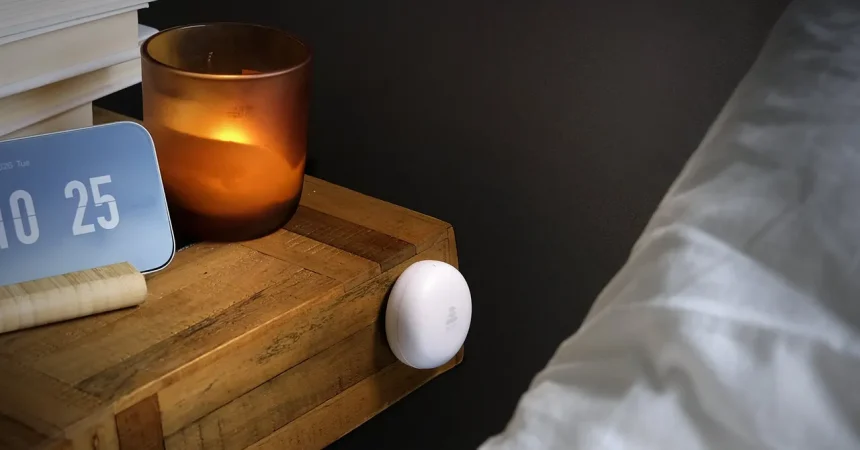
Then, out of the blue, a small white puck called “Halo” arrived in my mailbox, sent by the team at ScreenZen. My initial reaction was one of skepticism; I’ve navigated the landscape of app-blockers before, from tags to subscription-heavy software, and most of them felt either too cumbersome to use or frustratingly easy to bypass. It’s a strange irony of our time that we now have to spend significant money on external hardware just to reclaim the agency over the expensive devices we already own. Because I had grown disillusioned with the recurring annual fees and the gimmicky nature of these products, my expectations for Halo were subterranean. I was braced for another piece of tech that would end up gathering dust in a junk drawer, serving as nothing more than a monument to my own failed discipline.
However, Halo manages to be different, primarily because it changes the philosophy of how we disconnect. The system pairs a physical puck with the free ScreenZen app to create a geo-fenced “halo” around a specific area. Once you cross into that physical space—whether it’s your bedroom, your home office, or even your car—the apps you’ve designated as “distractions” simply vanish behind a digital wall. You can customize the radius, tailor the schedule, and choose exactly which apps you want to silence. Unlike other solutions that rely on you manually tapping a tag or constantly toggling a software switch, this is an ambient, “set it and forget it” intervention. By tethering the restriction to a physical location rather than a timer, it transforms the bedroom back into a space meant for rest, rather than a scrolling lounge.
What makes this particularly clever is how it taps into the psychology of environmental design. Other popular block-ware, like Brick, utilizes a physical “tap” to unlock your apps. It’s an interesting concept, but it feels like a chore—an extra hurdle that can become annoying rather than helpful. Halo, on the other hand, mimics the feeling of leaving your phone in another room without actually having to banish the device entirely. It creates an invisible barrier that respects your boundaries. Because it’s location-aware, it doesn’t try to micromanage your entire day; it only fights the battles where you actually need the air cover. It’s not about being a technophobe or punishing yourself for owning a phone; it’s about architecting your home so that your technology serves your life, rather than the other way around.
The brilliance here is that the barrier is physical, not just habitual. When you’re in your bed, the phone knows you’re in the “sleep zone.” The restriction feels less like a corporate lockout and more like a gentle suggestion from your environment to turn off the lights. It bridges the gap between our high-minded goals and our low-energy midnight impulses. Even better, the parent company, ScreenZen, isn’t holding your focus hostage behind a predatory paywall. The app itself is free and lacks the typical, aggressive upsells that make contemporary productivity tools feel like they have an ulterior motive. By making the tech invisible, they’ve made the habit-breaking process feel entirely natural, turning a high-tech problem into an elegant, low-tech experience.
Ultimately, we are all struggling to maintain our humanity in an attention economy designed to treat our time as coal for its furnace. Trying to use individual willpower alone to overcome algorithms designed by thousands of engineers is a fool’s errand; we need systems that provide us with a tactical advantage. Halo isn’t a cure-all, and it won’t fix a deeper lack of purpose, but it does remove the friction of decision-making. By creating a physical space where distraction simply cannot exist, it allows you to reclaim your sleep and your sanity without having to summon a superhuman amount of restraint every night. It’s a rare piece of technology that actually helps you spend less time with it, and for that alone, it’s a refreshing change of pace in a world that never stops screaming at us to look at our screens.